
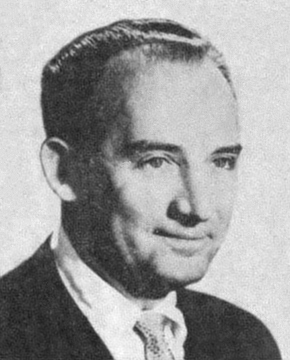
Historical · U.S. House · New Jersey · District 12
Paul Krebs
Former U.S. Representative · New Jersey District 12 · 1965–1967 · Democratic
Paul Krebs represented New Jersey's District 12 in the United States House of Representatives (1965–1967) for the Democratic party. The page below collects sourced biographical facts, term history, committee roles, and provenance for Krebs.
Bioguide ID: K000326
Key facts
- Full name
- Paul Krebs
- State
- New Jersey
- District
- District 12
- Party
- Democratic
- House service
- 1965–1967
- First House term
- 1965
- Status
- Left office
- Current term ends
- —
- Born
- 1912
- Bioguide ID
- K000326
- Committee assignments
- —
- Dataset version
- 1.20260605
Biographical narrative
891 words · sourced from the Wikipedia REST extract
Paul Krebs was an American politician and labor union leader who served as a U.S. Representative for New Jersey's 12th congressional district. A member of the Democratic Party, Krebs held office for a single term from 1965 to 1967. His career was marked by significant involvement in labor organizations, which shaped his political outlook and legislative priorities. After leaving Congress, he continued to engage in public service and attempted to further his political career through additional electoral bids.
Early life and career
Paul Krebs was born on May 26, 1912. His early life and formative years laid the groundwork for his later involvement in labor and politics. Before entering the political arena, Krebs made a name for himself in the labor movement, where he held several prominent positions. He served as President of the New Jersey State Congress of Industrial Organizations (CIO) from 1954 to 1961. This organization was a significant player in the labor movement, representing various unions and advocating for workers' rights during a time when labor issues were at the forefront of American social and economic policy.
Following his tenure with the CIO, Krebs became the President of the New Jersey United Auto Workers Council from 1961 to 1965. In this role, he represented the interests of auto workers in New Jersey, a state that was home to a number of automobile manufacturing plants and related industries. His leadership in these organizations not only provided him with a deep understanding of labor issues but also helped him build a network of connections that would prove valuable in his subsequent political career.
Krebs's background in labor advocacy and his leadership roles within significant labor organizations positioned him as a candidate who could effectively represent the interests of working-class constituents. His experience in the labor movement informed his political ideology and legislative priorities, emphasizing the importance of workers' rights and economic justice.
House tenure
Krebs entered the political arena when he was elected to the 89th United States Congress in 1964. His election to the House of Representatives marked a significant transition from labor leadership to legislative responsibilities. He served as a U.S. Representative for New Jersey's 12th congressional district, a position he held from 1965 until the conclusion of his term in January 1967. During this time, he was part of a Congress that dealt with various pressing issues, including civil rights, economic policy, and the Vietnam War.
Krebs's tenure in the House was characterized by his commitment to the Democratic Party's platform, which included support for labor rights, social welfare programs, and civil rights initiatives. His background in labor advocacy likely influenced his legislative priorities, as he sought to advance policies that would benefit workers and their families.
Despite his efforts and contributions during his time in office, Krebs did not seek reelection in 1966. The decision was influenced by the redistricting process, which resulted in the elimination of his congressional seat. This redistricting was part of a broader trend in which congressional districts were adjusted to reflect changes in population and demographics. As a result, Krebs's time in Congress was limited to a single term, marking the end of his direct legislative career.
Legislative focus and committees
During his time in Congress, Paul Krebs was involved in various legislative initiatives that reflected his commitment to labor and social issues. Although specific details about the bills he sponsored or supported are not provided, it can be inferred that his background in labor advocacy influenced his legislative focus. He likely championed issues related to workers' rights, economic equity, and social justice, aligning with the broader goals of the Democratic Party during the mid-1960s.
In addition to his legislative work, Krebs's experience in labor organizations may have positioned him to serve on committees that dealt with labor, commerce, and social welfare. These committees would have allowed him to contribute to discussions and decisions that directly impacted the lives of working-class Americans. His insights as a former labor leader would have been valuable in shaping policies that aimed to improve working conditions, increase wages, and enhance the overall quality of life for his constituents.
After leaving Congress, Krebs continued to engage in public service. He served as the director of the New Jersey State Office of Consumer Protection from 1967 to 1970 under Governor Richard J. Hughes. This role allowed him to advocate for consumer rights and protections, further extending his commitment to public service beyond his congressional tenure.
Krebs's political aspirations did not end with his congressional term. In 1972, he ran for the United States Senate against the Republican incumbent Clifford P. Case. However, he faced a significant electoral defeat, losing by a substantial margin. Following this, he attempted to return to the House of Representatives in 1974 but was unsuccessful in the Democratic primary against Frederick Bohen. Bohen would later lose the general election to Millicent Fenwick, marking a period of transition in New Jersey's political landscape.
Paul Krebs passed away on September 17, 1996, in Hallandale, Florida. His life and career reflect a commitment to labor advocacy and public service, illustrating the interconnectedness of these domains in shaping American political life during the mid-20th century. His contributions to labor rights and his brief tenure in Congress remain a part of New Jersey's political history, highlighting the role of labor leaders in the legislative process.
Notable legislation
Sponsored and co-sponsored legislation for Paul Krebs is pending operator curation. The biographical narrative above carries the same provenance trail until per-bill rows are written.
Sources
- [1]https://en.wikipedia.org/wiki/Paul_J._KrebsWikipedia · retrieved 2026-06-05
Notable quotes
Sourced quotes for Paul Krebs are pending operator curation. Narrative-scope provenance remains attached below.
Sources
- [1]https://en.wikipedia.org/wiki/Paul_J._KrebsWikipedia · retrieved 2026-06-05
Key positions
Curated policy positions for Paul Krebs are pending operator review. The biographical narrative above carries the same provenance trail until per-topic positions are written.
Sources
- [1]https://en.wikipedia.org/wiki/Paul_J._KrebsWikipedia · retrieved 2026-06-05
Terms served
- 1965–1967U.S. House · Term 1 · Democratic
Sources & provenance
Every attributable claim above carries a per-section [N] marker that resolves to the corresponding URL below. Each entry records the upstream provider, the canonical URL, and the timestamp at which the source was retrieved by the ingest pipeline.
Key facts
- https://bioguide.congress.gov/search/bio/K000326bioguide · retrieved 2026-06-05
- https://www.govtrack.us/congress/members/406480govtrack · retrieved 2026-06-05
Biographical narrative
- https://en.wikipedia.org/wiki/Paul_J._Krebswikipedia · retrieved 2026-06-05
Find your representative
Every U.S. state elects representatives by district. Browse New Jersey’s delegation, the full former-representative roster, or explore the role and term length.
Related on The Candidate
- Preceded by George WallhauserEarlier holder of the New Jersey District 12 House seat · Republican.Open
- Succeeded by James CourterLater holder of the New Jersey District 12 House seat · Republican.Open
- Andrew HayFormer U.S. Representative · New Jersey District 1 · WhigOpen
- Charles WolvertonFormer U.S. Representative · New Jersey District 1 · RepublicanOpen
- Christopher BergenFormer U.S. Representative · New Jersey District 1 · RepublicanOpen
- Clement SinnicksonFormer U.S. Representative · New Jersey District 1 · RepublicanOpen