
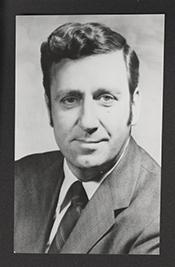
Historical · U.S. House · New Jersey · District 2
William Hughes
Former U.S. Representative · New Jersey District 2 · 1975–1995 · Democratic
William Hughes represented New Jersey's District 2 in the United States House of Representatives (1975–1995) for the Democratic party. The page below collects sourced biographical facts, term history, committee roles, and provenance for Hughes.
Bioguide ID: H000930
Key facts
- Full name
- William Hughes
- State
- New Jersey
- District
- District 2
- Party
- Democratic
- House service
- 1975–1995
- First House term
- 1975
- Status
- Left office
- Current term ends
- —
- Born
- 1932
- Bioguide ID
- H000930
- Committee assignments
- —
- Dataset version
- 1.20260605
Biographical narrative
968 words · sourced from the Wikipedia REST extract
William J. Hughes was an American politician and diplomat who served as a Democratic member of the U.S. House of Representatives from 1975 to 1995, representing New Jersey's Second Congressional District. This district encompasses significant areas along the Jersey Shore and the Pine Barrens, including the cities of Vineland and Atlantic City, as well as parts of several counties such as Salem, Cumberland, Atlantic, Cape May, and portions of Gloucester. Following his congressional career, Hughes was appointed by President Bill Clinton as the United States Ambassador to Panama, a role he held until 1998, during a pivotal period that included the transition of the Panama Canal to Panamanian control.
Early life and career
William John "Jack" Hughes was born on October 17, 1932, in Salem, New Jersey. He was the son of Pauline Mehaffey and William W. Hughes. Hughes completed his secondary education at Penns Grove High School, graduating in 1950. He pursued higher education at Rutgers University, where he earned a bachelor's degree in 1955. Following this, he attended Rutgers Law School, obtaining his law degree in 1958. He was admitted to the New Jersey bar in 1959 and began his legal practice in Ocean City, New Jersey.
Hughes's early career included significant public service roles. He served as the township solicitor for Upper Township from 1959 to 1961 and was appointed as an assistant prosecutor for Cape May County in 1960. He was subsequently reappointed as the first assistant prosecutor in 1961, a position he held until 1970. His legal expertise and commitment to public service led to his appointment by the New Jersey Supreme Court to the Advisory Committee on Professional Ethics in 1972. Prior to his election to Congress in 1974, Hughes was the president of the law firm Loveland, Hughes and Garrett in Ocean City.
In 1956, Hughes married Nancy L. Gibson of Moorestown, with whom he had four children. The couple remained married until Nancy's death in 2018. After retiring from Congress, Hughes transitioned into academia, teaching at Stockton State College in Pomona, New Jersey. His contributions to the institution were recognized with the establishment of the William J. Hughes Center for Public Policy in 2008. Hughes also received several honorary degrees from various educational institutions, including Rutgers University and Rowan University, and was inducted into the Rutgers Hall of Distinguished Alumni in 1997. He spent his later years as a resident of Ocean City, where he passed away on October 30, 2019, at the age of 87.
House tenure
Hughes's tenure in the U.S. House of Representatives spanned two decades, beginning in 1975 and concluding in 1995. Throughout his ten terms, he was known for his active involvement in legislative matters pertinent to his district and the nation. His district, which included coastal areas, allowed him to focus on issues relevant to maritime and environmental concerns, among others.
During his time in Congress, Hughes was a member of the House Judiciary Committee, where he played a significant role in shaping legislation related to crime and justice. He chaired the Subcommittee on Crime from 1981 to 1990, a period during which he was instrumental in sponsoring and advancing numerous anti-crime initiatives. His leadership in this area was marked by a commitment to addressing drug-related crimes and enhancing the legal framework for law enforcement.
Hughes's legislative efforts included a variety of bills aimed at combating drug trafficking and related criminal activities. He was involved in the development of key legislation that provided law enforcement with enhanced tools to address drug-related offenses. His work in the House Judiciary Committee was characterized by a focus on creating laws that not only penalized criminal behavior but also aimed to prevent such activities through comprehensive policy measures.
Legislative focus and committees
Hughes's legislative focus during his time in Congress was primarily centered on crime prevention and justice reform. As chair of the Subcommittee on Crime, he oversaw the introduction and passage of several significant pieces of legislation. Among these was the Comprehensive Drug Penalties Act, which enhanced the government's ability to seize assets acquired through drug trafficking, thereby disrupting the financial incentives for such criminal activities. This act became a cornerstone of the government's strategy in the war against drugs.
Additionally, Hughes was a key proponent of the Money Laundering Penalties Act, which aimed to restrict the movement of drug-related funds outside the United States, thereby complicating the financial operations of drug dealers. His efforts also led to the Chemical Diversion and Trafficking Act of 1988, which empowered the federal government to regulate chemicals used in the production of illegal drugs.
Under his leadership, the Subcommittee on Crime produced a range of other important legislative initiatives, including the Major Fraud Act of 1988, the Child Sexual Abuse and Pornography Act, and the Antiterrorism Act. Hughes also played a role in the Computer Fraud and Abuse Act, which addressed crimes involving computer systems and data. His work contributed to the establishment of the Federal Anti-Tampering Act, which imposed criminal penalties for tampering with drugs or consumer products, and the Justice Assistance Act, which provided federal matching grants to support state and local anti-crime programs.
Hughes's legislative contributions extended beyond crime-related issues, as he also served on the House Committee on Merchant Marine and Fisheries. This committee had jurisdiction over various matters relevant to his coastal district, allowing him to advocate for policies that would benefit the maritime industry and address environmental concerns.
In summary, William J. Hughes's career in the U.S. House of Representatives was marked by a strong focus on crime prevention and justice reform, along with a commitment to serving the interests of his constituents in New Jersey's Second Congressional District. His legislative legacy includes significant contributions to anti-crime legislation and a dedication to public service that continued beyond his time in Congress.
Notable legislation
Sponsored and co-sponsored legislation for William Hughes is pending operator curation. The biographical narrative above carries the same provenance trail until per-bill rows are written.
Sources
- [1]https://en.wikipedia.org/wiki/William_J._HughesWikipedia · retrieved 2026-06-05
Notable quotes
Sourced quotes for William Hughes are pending operator curation. Narrative-scope provenance remains attached below.
Sources
- [1]https://en.wikipedia.org/wiki/William_J._HughesWikipedia · retrieved 2026-06-05
Key positions
Curated policy positions for William Hughes are pending operator review. The biographical narrative above carries the same provenance trail until per-topic positions are written.
Sources
- [1]https://en.wikipedia.org/wiki/William_J._HughesWikipedia · retrieved 2026-06-05
Terms served
- 1975–1977U.S. House · Term 1 · Democratic
- 1977–1979U.S. House · Term 2 · Democratic
- 1979–1981U.S. House · Term 3 · Democratic
- 1981–1983U.S. House · Term 4 · Democratic
- 1983–1985U.S. House · Term 5 · Democratic
- 1985–1987U.S. House · Term 6 · Democratic
- 1987–1989U.S. House · Term 7 · Democratic
- 1989–1991U.S. House · Term 8 · Democratic
- 1991–1993U.S. House · Term 9 · Democratic
- 1993–1995U.S. House · Term 10 · Democratic
Sources & provenance
Every attributable claim above carries a per-section [N] marker that resolves to the corresponding URL below. Each entry records the upstream provider, the canonical URL, and the timestamp at which the source was retrieved by the ingest pipeline.
Key facts
- https://bioguide.congress.gov/search/bio/H000930bioguide · retrieved 2026-06-05
- https://www.govtrack.us/congress/members/405775govtrack · retrieved 2026-06-05
Biographical narrative
- https://en.wikipedia.org/wiki/William_J._Hugheswikipedia · retrieved 2026-06-05
Find your representative
Every U.S. state elects representatives by district. Browse New Jersey’s delegation, the full former-representative roster, or explore the role and term length.
Related on The Candidate
- Preceded by Charles Sandman Jr.Earlier holder of the New Jersey District 2 House seat · Republican.Open
- Succeeded by Frank LoBiondoLater holder of the New Jersey District 2 House seat · Republican.Open
- Andrew HayFormer U.S. Representative · New Jersey District 1 · WhigOpen
- Charles WolvertonFormer U.S. Representative · New Jersey District 1 · RepublicanOpen
- Christopher BergenFormer U.S. Representative · New Jersey District 1 · RepublicanOpen
- Clement SinnicksonFormer U.S. Representative · New Jersey District 1 · RepublicanOpen