
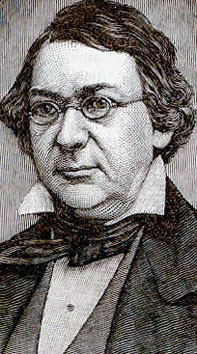
Historical · U.S. House · New Jersey · District 5
Alexander Pennington
Former U.S. Representative · New Jersey District 5 · 1853–1857 · Ind. Republican-Democrat
Alexander Pennington represented New Jersey's District 5 in the United States House of Representatives (1853–1857) for the Ind. Republican-Democrat party. The page below collects sourced biographical facts, term history, committee roles, and provenance for Pennington.
Bioguide ID: P000213
Key facts
- Full name
- Alexander Pennington
- State
- New Jersey
- District
- District 5
- Party
- Ind. Republican-Democrat
- House service
- 1853–1857
- First House term
- 1853
- Status
- Left office
- Current term ends
- —
- Born
- 1810
- Bioguide ID
- P000213
- Committee assignments
- —
- Dataset version
- 1.20260606
Biographical narrative
922 words · sourced from the Wikipedia REST extract
Alexander Pennington was an American politician who served as a U.S. Representative for New Jersey's 5th congressional district during the mid-19th century. A member of the Whig Party, he held office from 1853 to 1857 and was known for his role in the House of Representatives during a tumultuous period in American history. His legislative career was marked by his involvement in significant national issues, particularly those related to foreign affairs. Pennington's background in law and his early political experiences in New Jersey contributed to his later success in Congress. After concluding his congressional service, he relocated to New York City, where he lived until his death in 1867.
Early life and career
Alexander Cummings McWhorter Pennington was born on July 2, 1810, in Newark, New Jersey. His early education included attendance at the prestigious United States Military Academy at West Point, New York, from 1826 to 1828. Although his time at West Point was brief, it provided him with a foundation in discipline and leadership that would influence his later career. Following his military education, Pennington pursued a legal career, studying law and eventually being admitted to the bar in 1833. He began practicing law in Newark, where he established himself as a competent attorney.
Pennington's entry into politics began in the late 1830s when he was elected to the New Jersey General Assembly, serving two consecutive terms in 1837 and 1838. His political involvement continued as he took on the role of alderman in Newark from 1837 to 1840. These early experiences in local government allowed him to build a network and gain insights into the political landscape of New Jersey, which would later serve him well in his congressional career. His family background also played a role in his political life; he was a grandnephew of William Sandford Pennington, the 6th Governor of New Jersey, and a cousin of William Pennington, who served as the 13th Governor of New Jersey and the 27th Speaker of the U.S. House of Representatives.
House tenure
Pennington's congressional career began when he was elected as a member of the Whig Party to the Thirty-third Congress. He officially took office on March 4, 1853, representing New Jersey's 5th congressional district. During his time in Congress, he was re-elected to the Thirty-fourth Congress, serving until March 3, 1857. His tenure in the House of Representatives occurred during a period characterized by significant national strife, including debates over slavery, territorial expansion, and foreign relations.
As a member of Congress, Pennington was actively involved in various legislative matters, but he is particularly noted for his role as chairman of the Committee on Foreign Affairs during the Thirty-fourth Congress. This position placed him at the forefront of discussions regarding the United States' international relations and foreign policy, which were increasingly important as the nation expanded its influence on the global stage. His leadership in this committee allowed him to contribute to shaping policies that would affect the country's diplomatic relationships and engagement with other nations.
Pennington's legislative work was reflective of the broader political dynamics of the time, as the Whig Party grappled with internal divisions and external pressures. The party was often caught between the interests of its Northern and Southern factions, particularly regarding issues related to slavery and territorial expansion. Pennington's ability to navigate these complexities was indicative of his political acumen and understanding of the issues facing his constituents and the nation.
Legislative focus and committees
Throughout his congressional career, Pennington's legislative focus was primarily on foreign affairs, a critical area of concern for the United States during the mid-19th century. His role as chairman of the Committee on Foreign Affairs allowed him to engage with a variety of pressing issues, including trade relations, diplomatic negotiations, and the implications of foreign conflicts on American interests. The mid-1850s were marked by significant events, such as the ongoing tensions related to the expansion of slavery into new territories and the broader implications of the United States' role in global affairs.
While specific legislative initiatives and votes during his tenure are not detailed, it is clear that Pennington's contributions to discussions surrounding foreign policy were significant. His committee work would have involved collaboration with other members of Congress, as well as engagement with the executive branch, to address the complexities of international relations. This period in American history was characterized by a growing awareness of the United States' emerging role as a global power, and Pennington's work in Congress contributed to the shaping of policies that would influence the nation's trajectory.
After concluding his service in the House of Representatives in 1857, Pennington moved to New York City. His post-congressional life saw him remain engaged in various pursuits until his death on January 25, 1867. His legacy includes not only his contributions to the legislative process but also his familial connections to notable political figures in New Jersey's history. His son, Alexander Cummings McWhorter Pennington, Jr., achieved distinction as a brigadier general in the United States Army, serving in both the American Civil War and the Spanish–American War, further extending the Pennington family's involvement in public service and military affairs.
In summary, Alexander Pennington's career as a U.S. Representative was marked by his commitment to addressing the pressing issues of his time, particularly in the realm of foreign affairs. His early experiences in law and local government provided a strong foundation for his legislative work, and his connections to prominent political figures in New Jersey highlight the significance of his family's legacy in American politics.
Notable legislation
Sponsored and co-sponsored legislation for Alexander Pennington is pending operator curation. The biographical narrative above carries the same provenance trail until per-bill rows are written.
Sources
- [1]https://en.wikipedia.org/wiki/Alexander_C._M._Pennington_(politician)Wikipedia · retrieved 2026-06-06
Notable quotes
Sourced quotes for Alexander Pennington are pending operator curation. Narrative-scope provenance remains attached below.
Sources
- [1]https://en.wikipedia.org/wiki/Alexander_C._M._Pennington_(politician)Wikipedia · retrieved 2026-06-06
Key positions
Curated policy positions for Alexander Pennington are pending operator review. The biographical narrative above carries the same provenance trail until per-topic positions are written.
Sources
- [1]https://en.wikipedia.org/wiki/Alexander_C._M._Pennington_(politician)Wikipedia · retrieved 2026-06-06
Terms served
- 1853–1855U.S. House · Term 1 · Whig
- 1855–1857U.S. House · Term 2 · Ind. Republican-Democrat
Sources & provenance
Every attributable claim above carries a per-section [N] marker that resolves to the corresponding URL below. Each entry records the upstream provider, the canonical URL, and the timestamp at which the source was retrieved by the ingest pipeline.
Key facts
- https://bioguide.congress.gov/search/bio/P000213bioguide · retrieved 2026-06-06
- https://www.govtrack.us/congress/members/408616govtrack · retrieved 2026-06-06
Biographical narrative
- https://en.wikipedia.org/wiki/Alexander_C._M._Pennington_(politician)wikipedia · retrieved 2026-06-06
Find your representative
Every U.S. state elects representatives by district. Browse New Jersey’s delegation, the full former-representative roster, or explore the role and term length.
Related on The Candidate
- Preceded by Rodman PriceEarlier holder of the New Jersey District 5 House seat · Democratic.Open
- Succeeded by Jacob WortendykeLater holder of the New Jersey District 5 House seat · Democratic.Open
- Andrew HayFormer U.S. Representative · New Jersey District 1 · WhigOpen
- Charles WolvertonFormer U.S. Representative · New Jersey District 1 · RepublicanOpen
- Christopher BergenFormer U.S. Representative · New Jersey District 1 · RepublicanOpen
- Clement SinnicksonFormer U.S. Representative · New Jersey District 1 · RepublicanOpen