
Historical · U.S. House · New Jersey · District 5
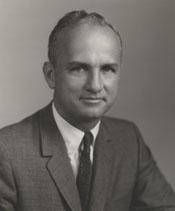
Peter Frelinghuysen Jr.
Former U.S. Representative · New Jersey District 5 · 1953–1975 · Republican
Peter Frelinghuysen Jr. represented New Jersey's District 5 in the United States House of Representatives (1953–1975) for the Republican party. The page below collects sourced biographical facts, term history, committee roles, and provenance for Jr..
Bioguide ID: F000371
Key facts
- Full name
- Peter Frelinghuysen Jr.
- State
- New Jersey
- District
- District 5
- Party
- Republican
- House service
- 1953–1975
- First House term
- 1953
- Status
- Left office
- Current term ends
- —
- Born
- 1916
- Bioguide ID
- F000371
- Committee assignments
- —
- Dataset version
- 1.20260605
Biographical narrative
918 words · sourced from the Wikipedia REST extract
Peter H. B. Frelinghuysen was an American politician and attorney who served as a U.S. Representative for New Jersey's fifth congressional district from 1953 until 1975. A member of the Republican Party, Frelinghuysen's political career spanned over two decades during which he participated in significant legislative actions and held various positions within the House of Representatives. His tenure was marked by a commitment to moderate Republican values and a focus on issues such as civil rights and environmental conservation.
Early life and career
Frelinghuysen was born on January 17, 1916, in New York City. He was the son of Peter H. B. Frelinghuysen and Adaline Havemeyer. His family had deep roots in New Jersey, tracing back to 18th-century Dutch settlers in Somerset County. This lineage included several notable political figures, such as four U.S. senators and two members of the House of Representatives. Frelinghuysen's grandfather, George Griswold Frelinghuysen, and great-grandfather, Frederick T. Frelinghuysen, were among those who contributed to the family's political legacy.
Frelinghuysen attended St. Mark's School in Southborough, Massachusetts, before pursuing higher education at Princeton University, where he graduated in 1938. He continued his studies at Yale Law School, earning his law degree in 1941. Following his education, he began his career in law, practicing in New York City.
During World War II, Frelinghuysen served in the Office of Naval Intelligence from September 1942 until December 1945, achieving the rank of lieutenant. After the war, he furthered his education at Columbia University from 1946 to 1947. In 1948, he worked as part of the Foreign Affairs Task Force of the Hoover Commission, which aimed to improve the efficiency of the federal government. After this experience, he returned to the private sector and took on the role of director at Howard Savings Bank in Livingston, New Jersey.
House tenure
In 1952, Frelinghuysen was elected to the U.S. House of Representatives, representing New Jersey's 5th congressional district. He began his first term in 1953 and continued to serve until his retirement in 1975, completing a total of 11 terms in office. Throughout his congressional career, Frelinghuysen was recognized as a moderate Republican. His voting record included support for several key civil rights measures, such as the Civil Rights Acts of 1957, 1960, 1964, and 1968, as well as the Voting Rights Act of 1965 and the 24th Amendment to the U.S. Constitution. However, he did not support the War on Poverty initiatives introduced by the Johnson administration, although he did vote in favor of Medicare, which expanded healthcare access for the elderly.
Frelinghuysen was also involved in significant local issues during his time in Congress. In December 1959, he played a role in opposing the development of an international airport near his estate in Morris County. This initiative, proposed by the Port of New York Authority, faced strong resistance from local residents and conservationists, including Frelinghuysen. The efforts of the Jersey Jetport Site Association, which he supported, led to the acquisition of nearly 3,000 acres of the targeted land, ultimately resulting in its designation as part of the Great Swamp National Wildlife Refuge in 1960.
In January 1965, Frelinghuysen was nominated by House Minority Leader Gerald Ford to serve as Minority Whip. However, he lost the election for this position to the incumbent, Les Arends, in a secret ballot among the Republican caucus.
Frelinghuysen's career faced challenges as well. In 1966, he became the target of an extortion scheme that involved blackmail. The incident, which involved threats of public exposure related to a sexual encounter, led Frelinghuysen to pay $50,000 to the extortionists. Following the incident, he cooperated with an FBI investigation into the extortion ring. However, the situation prompted the Justice Department to inform House leadership, resulting in Frelinghuysen's removal from the Armed Services Committee.
Legislative focus and committees
During his time in Congress, Frelinghuysen's legislative focus reflected a blend of moderate Republican principles and a commitment to addressing both national and local issues. His support for civil rights legislation indicated a willingness to engage with the social changes occurring in the United States during the 1960s. By voting in favor of landmark legislation aimed at promoting equality and protecting voting rights, he aligned himself with a broader movement toward civil rights, despite some divergence from the more progressive elements of the Republican Party.
Frelinghuysen's involvement in environmental conservation was particularly notable. His opposition to the proposed airport development in Morris County demonstrated his commitment to preserving natural landscapes and promoting environmental protection. The successful establishment of the Great Swamp National Wildlife Refuge was a significant achievement that underscored his dedication to conservation efforts.
Throughout his congressional career, Frelinghuysen served on various committees, contributing to discussions and decisions on a range of issues. His experiences in law and government provided him with a foundation for navigating complex legislative matters. After leaving Congress in 1975, Frelinghuysen continued to engage with civic and cultural institutions, serving on the boards of several nonprofit organizations, including the Metropolitan Museum of Art and the New York Botanical Garden.
Frelinghuysen's personal life included his marriage to Beatrice Sterling Procter in 1940, with whom he had two children. He resided in a Georgian Colonial home in Harding Township, New Jersey, which was designed in 1948. Following the death of his wife in 1996, Frelinghuysen lived until May 23, 2011, when he passed away at his home in Harding Township. His legacy includes not only his contributions to American politics but also his family's longstanding involvement in public service and civic life.
Notable legislation
Sponsored and co-sponsored legislation for Peter Frelinghuysen Jr. is pending operator curation. The biographical narrative above carries the same provenance trail until per-bill rows are written.
Sources
- [1]https://en.wikipedia.org/wiki/Peter_Frelinghuysen_Jr.Wikipedia · retrieved 2026-06-05
Notable quotes
Sourced quotes for Peter Frelinghuysen Jr. are pending operator curation. Narrative-scope provenance remains attached below.
Sources
- [1]https://en.wikipedia.org/wiki/Peter_Frelinghuysen_Jr.Wikipedia · retrieved 2026-06-05
Key positions
Curated policy positions for Peter Frelinghuysen Jr. are pending operator review. The biographical narrative above carries the same provenance trail until per-topic positions are written.
Sources
- [1]https://en.wikipedia.org/wiki/Peter_Frelinghuysen_Jr.Wikipedia · retrieved 2026-06-05
Terms served
- 1953–1955U.S. House · Term 1 · Republican
- 1955–1957U.S. House · Term 2 · Republican
- 1957–1959U.S. House · Term 3 · Republican
- 1959–1961U.S. House · Term 4 · Republican
- 1961–1963U.S. House · Term 5 · Republican
- 1963–1965U.S. House · Term 6 · Republican
- 1965–1967U.S. House · Term 7 · Republican
- 1967–1969U.S. House · Term 8 · Republican
- 1969–1971U.S. House · Term 9 · Republican
- 1971–1973U.S. House · Term 10 · Republican
- 1973–1975U.S. House · Term 11 · Republican
Sources & provenance
Every attributable claim above carries a per-section [N] marker that resolves to the corresponding URL below. Each entry records the upstream provider, the canonical URL, and the timestamp at which the source was retrieved by the ingest pipeline.
Key facts
- https://bioguide.congress.gov/search/bio/F000371bioguide · retrieved 2026-06-05
- https://www.govtrack.us/congress/members/404317govtrack · retrieved 2026-06-05
Biographical narrative
- https://en.wikipedia.org/wiki/Peter_Frelinghuysen_Jr.wikipedia · retrieved 2026-06-05
Find your representative
Every U.S. state elects representatives by district. Browse New Jersey’s delegation, the full former-representative roster, or explore the role and term length.
Related on The Candidate
- Preceded by Charles EatonEarlier holder of the New Jersey District 5 House seat · Republican.Open
- Succeeded by Millicent FenwickLater holder of the New Jersey District 5 House seat · Republican.Open
- Andrew HayFormer U.S. Representative · New Jersey District 1 · WhigOpen
- Charles WolvertonFormer U.S. Representative · New Jersey District 1 · RepublicanOpen
- Christopher BergenFormer U.S. Representative · New Jersey District 1 · RepublicanOpen
- Clement SinnicksonFormer U.S. Representative · New Jersey District 1 · RepublicanOpen