
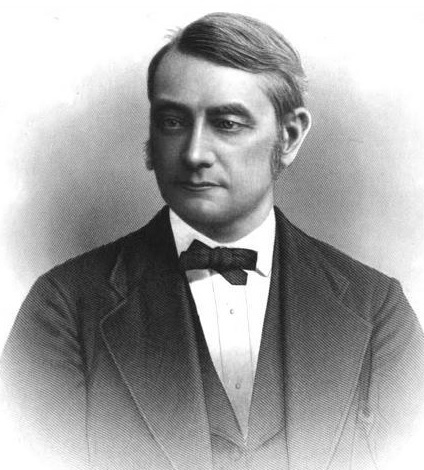
Historical · U.S. House · New Jersey · District 6
Frederick Teese
Former U.S. Representative · New Jersey District 6 · 1875–1877 · Democratic
Frederick Teese represented New Jersey's District 6 in the United States House of Representatives (1875–1877) for the Democratic party. The page below collects sourced biographical facts, term history, committee roles, and provenance for Teese.
Bioguide ID: T000111
Key facts
- Full name
- Frederick Teese
- State
- New Jersey
- District
- District 6
- Party
- Democratic
- House service
- 1875–1877
- First House term
- 1875
- Status
- Left office
- Current term ends
- —
- Born
- 1823
- Bioguide ID
- T000111
- Committee assignments
- —
- Dataset version
- 1.20260606
Biographical narrative
926 words · sourced from the Wikipedia REST extract
Frederick Teese was an American lawyer and politician who served as a U.S. Representative for New Jersey's 6th congressional district from 1875 to 1877. A member of the Democratic Party, Teese's political career included notable positions in both state and federal government. His legal career began after graduating from Princeton University, and he became a prominent figure in New Jersey's legal and political landscape during the mid-19th century. After serving one term in Congress, he returned to his legal practice until his death in 1894.
Early life and career
Frederick Halstead Teese was born on October 21, 1823, in Newark, New Jersey. He pursued higher education at Princeton University, where he graduated in 1843. Following his graduation, Teese studied law under the guidance of Asa Whitehead, a well-known attorney of the time. He was admitted to the bar in 1846, marking the beginning of his legal career in Newark. Teese established himself as a capable lawyer, engaging in various legal practices that contributed to his reputation in the community.
Teese's political career began at the state level. He served in the New Jersey State Assembly during the years 1860 and 1861. His leadership abilities were recognized when he was elected as the Speaker of the Assembly in 1861, a role that placed him at the forefront of legislative discussions and decisions in the state. This experience in state politics provided him with a foundation for his later endeavors in Congress.
In addition to his legislative work, Teese held a significant judicial position as the presiding judge of the Essex County Court of Common Pleas. He served in this capacity from 1864 until his resignation in 1872. His tenure as a judge further solidified his standing in the legal community and demonstrated his commitment to public service. After stepping down from the bench, Teese returned to private practice, where he continued to influence the legal landscape of New Jersey.
House tenure
Frederick Teese's entry into national politics came when he was elected as a Democrat to the Forty-fourth Congress, which convened on March 4, 1875. His election to the U.S. House of Representatives represented a significant step in his political career, allowing him to engage in federal legislative matters. During his time in Congress, Teese served until March 3, 1877, completing a full term. His legislative activities during this period included participation in various discussions and debates that were pertinent to the issues facing the nation at the time.
Despite his involvement in Congress, Teese chose not to seek reelection in 1876. This decision marked the end of his congressional career, as he opted to return to his legal practice rather than pursue further political ambitions. The reasons for his decision not to run again are not detailed in the available records, but it reflects a common trend among politicians who, after serving a term, may choose to focus on their professional careers or personal lives.
Teese's single term in Congress was characterized by the political dynamics of the mid-1870s, a period marked by significant changes in American society and governance. The nation was grappling with the aftermath of the Civil War and the complexities of Reconstruction, which influenced legislative priorities and debates. Although specific details of his contributions during his congressional tenure are not extensively documented, his background in law and state politics likely informed his perspectives on various issues.
Legislative focus and committees
While specific details regarding the committees on which Frederick Teese served during his time in Congress are not provided, it is reasonable to infer that his legal background and experience in state government would have shaped his legislative focus. Members of Congress often draw upon their professional experiences to inform their work, and Teese's legal expertise would have been valuable in discussions surrounding legal reform, civil rights, and governance.
During the 1870s, Congress dealt with a variety of pressing issues, including economic recovery, civil rights for newly freed African Americans, and the ongoing challenges of Reconstruction. As a member of the Democratic Party, Teese would have been part of a political group that had its own perspectives on these matters, often advocating for states' rights and a more limited federal government. The political climate of the time was contentious, with debates often reflecting the divisions that had emerged during the Civil War.
Teese's involvement in the New Jersey State Assembly and his role as a judge likely provided him with insights into the legislative process and the importance of law in shaping society. His experience in state politics may have influenced his approach to federal legislation, particularly in areas related to judicial matters and the rights of individuals.
After concluding his term in Congress, Teese returned to his legal practice, where he continued to contribute to the legal community in Newark. His decision to step away from politics may have allowed him to focus on his professional endeavors and family life. He married Ann Caroline Darcy in 1856, and together they had two daughters, Mary and Catharine. Teese's family life and professional commitments were integral to his identity, reflecting the balance many public figures strive to maintain between their personal and professional responsibilities.
Frederick Teese passed away on January 7, 1894, in New York City. His contributions to New Jersey's legal and political landscape, though limited to a single term in Congress, remain a part of the historical record of American governance during a transformative period. He was interred in Mount Pleasant Cemetery in Newark, New Jersey, where his legacy as a lawyer and politician continues to be recognized.
Notable legislation
Sponsored and co-sponsored legislation for Frederick Teese is pending operator curation. The biographical narrative above carries the same provenance trail until per-bill rows are written.
Sources
- [1]https://en.wikipedia.org/wiki/Frederick_H._TeeseWikipedia · retrieved 2026-06-06
Notable quotes
Sourced quotes for Frederick Teese are pending operator curation. Narrative-scope provenance remains attached below.
Sources
- [1]https://en.wikipedia.org/wiki/Frederick_H._TeeseWikipedia · retrieved 2026-06-06
Key positions
Curated policy positions for Frederick Teese are pending operator review. The biographical narrative above carries the same provenance trail until per-topic positions are written.
Sources
- [1]https://en.wikipedia.org/wiki/Frederick_H._TeeseWikipedia · retrieved 2026-06-06
Terms served
- 1875–1877U.S. House · Term 1 · Democratic
Sources & provenance
Every attributable claim above carries a per-section [N] marker that resolves to the corresponding URL below. Each entry records the upstream provider, the canonical URL, and the timestamp at which the source was retrieved by the ingest pipeline.
Key facts
- https://bioguide.congress.gov/search/bio/T000111bioguide · retrieved 2026-06-06
- https://www.govtrack.us/congress/members/410693govtrack · retrieved 2026-06-06
Biographical narrative
- https://en.wikipedia.org/wiki/Frederick_H._Teesewikipedia · retrieved 2026-06-06
Find your representative
Every U.S. state elects representatives by district. Browse New Jersey’s delegation, the full former-representative roster, or explore the role and term length.
Related on The Candidate
- Preceded by Marcus WardEarlier holder of the New Jersey District 6 House seat · Republican.Open
- Succeeded by Thomas PeddieLater holder of the New Jersey District 6 House seat · Republican.Open
- Andrew HayFormer U.S. Representative · New Jersey District 1 · WhigOpen
- Charles WolvertonFormer U.S. Representative · New Jersey District 1 · RepublicanOpen
- Christopher BergenFormer U.S. Representative · New Jersey District 1 · RepublicanOpen
- Clement SinnicksonFormer U.S. Representative · New Jersey District 1 · RepublicanOpen