
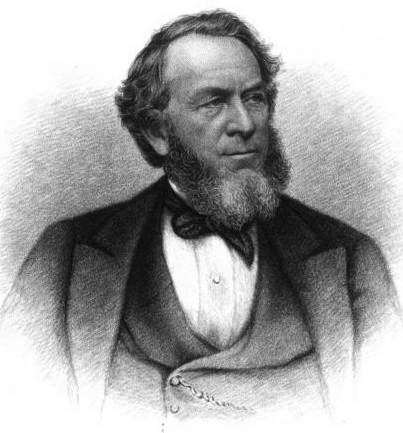
Historical · U.S. House · New Jersey · District 6
Marcus Ward
Former U.S. Representative · New Jersey District 6 · 1873–1875 · Republican
Marcus Ward represented New Jersey's District 6 in the United States House of Representatives (1873–1875) for the Republican party. The page below collects sourced biographical facts, term history, committee roles, and provenance for Ward.
Bioguide ID: W000137
Key facts
- Full name
- Marcus Ward
- State
- New Jersey
- District
- District 6
- Party
- Republican
- House service
- 1873–1875
- First House term
- 1873
- Status
- Left office
- Current term ends
- —
- Born
- 1812
- Bioguide ID
- W000137
- Committee assignments
- —
- Dataset version
- 1.20260606
Biographical narrative
1,227 words · sourced from the Wikipedia REST extract
Marcus Ward was an American politician affiliated with the Republican Party, who served as a U.S. Representative for New Jersey's 6th congressional district from 1873 to 1875. Prior to his tenure in the House of Representatives, Ward was notably the 21st governor of New Jersey, holding office from 1866 to 1869. His career was marked by significant involvement in civic affairs, philanthropy, and the political landscape of his time, particularly during the Civil War and the Reconstruction era.
Early life and career
Marcus Lawrence Ward was born on November 9, 1812, in Newark, New Jersey, to Moses and Fanny (née Brown) Ward. His father, Moses Ward, was a successful candle manufacturer and a descendant of one of Newark's founders, John Ward, who established the city in 1666. Growing up in a family with a strong business background, Marcus attended public schools in Newark and subsequently joined his family's soap and candle-making enterprise. Over time, he became a partner in the family business, which was operated alongside his uncle.
In addition to his work in the family business, Ward was involved in various other commercial ventures. He served as a director of the National State Bank and held the position of secretary at the Lawrence Cement and Manufacturing Company. His business acumen and success allowed him to dedicate a considerable amount of his time to civic causes and philanthropic efforts by the 1840s. He took on leadership roles in several organizations, including serving as chairman of the executive committee of the New Jersey Historical Society. Furthermore, he was instrumental in founding both the Newark Library Association and the New Jersey Art Union, reflecting his commitment to cultural and educational initiatives in his community.
As the nation approached the mid-19th century, Ward's interests began to shift towards the pressing social issues of the time, particularly the abolition of slavery. By 1856, he became actively engaged in the burgeoning movement advocating for the end of slavery, which led him to join the newly formed Republican Party. His political involvement deepened when he traveled to Kansas in 1858 to support the free-state cause amidst the violent conflicts between pro-slavery and anti-slavery factions. Upon returning to Newark, he became increasingly involved in local politics and was a delegate to the 1860 Republican National Convention, further solidifying his commitment to the party's principles.
During the American Civil War, Ward emerged as a prominent advocate for the Union cause. He gained recognition for his philanthropic efforts to support soldiers and their families. He developed one of the first systems in New Jersey that allowed soldiers to allocate portions of their pay to be sent home, earning him the nickname "the soldiers' friend." His commitment extended beyond financial support; he invested his personal resources to establish a hospital for convalescing soldiers and played a key role in founding a home for wounded and disabled veterans. Ward's advocacy for veterans included creating an office dedicated to assisting them in obtaining pensions, medical care, and other benefits. Despite his efforts, he faced accusations from Democratic critics who alleged that he profited from managing soldiers' pay, claims that he and his Republican allies denied.
House tenure
Ward's political career continued to evolve after the Civil War. In 1862, he was nominated by the National Union Party for the governorship of New Jersey, a position he sought due to his popularity and bipartisan support stemming from his philanthropic work. However, he lost the election to Democrat Joel Parker, which was partly attributed to the inability of soldiers serving in the field to vote and the prevailing opposition to emancipation in the state.
Following his unsuccessful gubernatorial bid, Ward remained active in politics and played a significant role in the 1864 presidential election as the chairman and treasurer of the National Union Party in New Jersey. His political fortunes changed in the post-war environment, which was more favorable for Republicans. In 1865, he sought the Republican nomination to represent Newark, East Jersey, and veterans in the state legislature. His candidacy faced competition from Alexander G. Cattell, a wealthy grain merchant. The nomination process was contentious, resulting in a deadlock that persisted until the fourth ballot, when a coalition of Civil War veteran delegates ultimately supported Ward. His nomination was made unanimous, and he went on to win the general election against Theodore Runyon by a substantial margin, buoyed by strong support from veterans.
Ward served as governor from 1866 to 1869, during which time his administration was characterized by active engagement in the federal Reconstruction process. This approach contrasted sharply with that of his predecessor, Joel Parker. Although the Thirteenth Amendment had been ratified without New Jersey's vote, Ward prioritized the state's symbolic ratification of the amendment to demonstrate a commitment to the principles of freedom and equality. He also led efforts to ratify the Fourteenth Amendment, further aligning New Jersey with the Reconstruction efforts.
In addition to his focus on federal issues, Ward's administration sought to implement progressive policies at the state level. He advocated for reforms in the state prison system, the establishment of a state reform school, and the enhancement of public education. His administration also instituted a uniform health code across the state and called for state action regarding riparian water rights, emphasizing the need for landowners to compensate the state for improvements made on underwater land. Despite his efforts, Ward's governorship faced internal divisions within the Republican Party, which ultimately contributed to the party's decline in New Jersey. He attempted to navigate these challenges by appointing individuals from various factions, including George Robeson as Attorney General, but faced criticism for perceived favoritism towards Newark Republicans.
After completing his term as governor, Ward returned to his business and civic interests. In 1872, he successfully ran for Congress, representing Essex County in New Jersey's 6th district. He served one term in the U.S. House of Representatives from 1873 until 1875. However, his congressional career was short-lived, as he was defeated in the 1874 election by Democrat Frederick H. Teese.
Legislative focus and committees
During his time in the House of Representatives, Ward's legislative focus reflected the issues and challenges of the post-Civil War era. His background in business and philanthropy likely influenced his approach to governance, as he sought to address the needs of his constituents and the broader community. Although specific details regarding the bills he sponsored or the committees he served on during his congressional tenure are not provided, it is reasonable to infer that his experiences as a businessman and a former governor informed his legislative priorities.
Ward's commitment to civic engagement and social reform remained evident throughout his career. His previous work in advocating for veterans' rights and his involvement in educational and cultural initiatives likely shaped his perspective on the role of government in addressing societal needs. As a member of Congress, he would have been positioned to contribute to discussions on issues such as veterans' affairs, education, and economic development, drawing on his extensive experience in both the private and public sectors.
After leaving Congress in 1875, Ward continued to engage in various business and civic activities until his death on April 25, 1884. His legacy as a public servant is marked by his dedication to the principles of the Republican Party, his philanthropic efforts during the Civil War, and his commitment to social reform in New Jersey.
Notable legislation
Sponsored and co-sponsored legislation for Marcus Ward is pending operator curation. The biographical narrative above carries the same provenance trail until per-bill rows are written.
Sources
- [1]https://en.wikipedia.org/wiki/Marcus_Lawrence_WardWikipedia · retrieved 2026-06-06
Notable quotes
Sourced quotes for Marcus Ward are pending operator curation. Narrative-scope provenance remains attached below.
Sources
- [1]https://en.wikipedia.org/wiki/Marcus_Lawrence_WardWikipedia · retrieved 2026-06-06
Key positions
Curated policy positions for Marcus Ward are pending operator review. The biographical narrative above carries the same provenance trail until per-topic positions are written.
Sources
- [1]https://en.wikipedia.org/wiki/Marcus_Lawrence_WardWikipedia · retrieved 2026-06-06
Terms served
- 1873–1875U.S. House · Term 1 · Republican
Sources & provenance
Every attributable claim above carries a per-section [N] marker that resolves to the corresponding URL below. Each entry records the upstream provider, the canonical URL, and the timestamp at which the source was retrieved by the ingest pipeline.
Key facts
- https://bioguide.congress.gov/search/bio/W000137bioguide · retrieved 2026-06-06
- https://www.govtrack.us/congress/members/411312govtrack · retrieved 2026-06-06
Biographical narrative
- https://en.wikipedia.org/wiki/Marcus_Lawrence_Wardwikipedia · retrieved 2026-06-06
Find your representative
Every U.S. state elects representatives by district. Browse New Jersey’s delegation, the full former-representative roster, or explore the role and term length.
Related on The Candidate
- Succeeded by Frederick TeeseLater holder of the New Jersey District 6 House seat · Democratic.Open
- Andrew HayFormer U.S. Representative · New Jersey District 1 · WhigOpen
- Charles WolvertonFormer U.S. Representative · New Jersey District 1 · RepublicanOpen
- Christopher BergenFormer U.S. Representative · New Jersey District 1 · RepublicanOpen
- Clement SinnicksonFormer U.S. Representative · New Jersey District 1 · RepublicanOpen
- Republican PartyFederal candidates and office holders on the Republican line.Open