
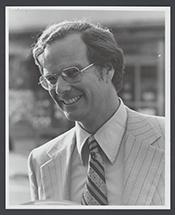
Historical · U.S. House · New Jersey · District 7
Gene Maguire
Former U.S. Representative · New Jersey District 7 · 1975–1981 · Democratic
Gene Maguire represented New Jersey's District 7 in the United States House of Representatives (1975–1981) for the Democratic party. The page below collects sourced biographical facts, term history, committee roles, and provenance for Maguire.
Bioguide ID: M000058
Key facts
- Full name
- Gene Maguire
- State
- New Jersey
- District
- District 7
- Party
- Democratic
- House service
- 1975–1981
- First House term
- 1975
- Status
- Left office
- Current term ends
- —
- Born
- 1939
- Bioguide ID
- M000058
- Committee assignments
- —
- Dataset version
- 1.20260605
Biographical narrative
910 words · sourced from the Wikipedia REST extract
Gene Andrew Maguire is a former American politician who served three terms as a Democratic member of the United States House of Representatives, representing New Jersey's 7th congressional district from 1975 until 1981. His tenure in Congress was marked by his involvement in various legislative initiatives, particularly in health, environmental, and energy policies. After leaving Congress, Maguire continued to engage in public service and policy advocacy through various roles in organizations focused on international development and environmental issues.
Early life and career
Andrew Maguire was born on March 11, 1939. He spent his early years in Los Angeles, California, where he attended Budlong Elementary School. He later graduated from Ridgewood High School in Ridgewood, New Jersey, in 1956. Maguire pursued higher education at Oberlin College, where he earned a Bachelor of Arts degree in 1961. He furthered his academic career at Harvard University, obtaining a Ph.D. in government in 1966. Throughout his educational journey, he received several prestigious scholarships, including those from the George F. Baker Foundation, the Danforth Foundation, the Woodrow Wilson Foundation, and the Ford Foundation’s Foreign Area Training program.
Maguire's professional career began in the realm of public service. From 1966 to 1969, he worked as an advisor on political and security affairs at the United States Department of State. His role included serving as a member of the United States Delegation to the United Nations General Assembly, where he engaged in international diplomatic efforts. Following his tenure at the State Department, he took on the position of director of the Urban Development Program in Jamaica, Queens, New York, from 1969 to 1972. This role involved overseeing initiatives aimed at urban improvement and community development.
In the early 1970s, Maguire transitioned to a consulting role within the National Affairs Division of the Ford Foundation, where he worked from 1972 until 1974. His experiences in government and urban development laid the groundwork for his future political career, providing him with insights into the complexities of public policy and community needs.
House tenure
Maguire's political career advanced when he was elected to the United States House of Representatives as a Democrat, beginning his first term on January 3, 1975. He represented New Jersey's 7th congressional district, which encompasses western Bergen County. His election was notable as he won in a district that had historically leaned Republican, defeating William B. Widnall, a senior Republican incumbent. Maguire's ability to secure a seat in Congress reflected his commitment to addressing the needs and concerns of his constituents.
During his time in Congress, Maguire served on several subcommittees within the House Commerce Committee, including those focused on health and environment, energy, and oversight. He was also instrumental in founding the New Members’ Caucus, which aimed to foster collaboration among newly elected representatives. His legislative work encompassed a wide array of issues, reflecting his dedication to public service and advocacy for his district.
Maguire's congressional tenure lasted until January 3, 1981, during which he was re-elected for two additional terms. His legislative efforts were characterized by a focus on health and mental health policies, environmental regulations, energy conservation, and foreign policy issues. He was particularly active in advocating for occupational safety and health measures, as well as expanding health programs for children and youth.
Legislative focus and committees
Throughout his time in Congress, Andrew Maguire concentrated on several key areas of legislation that had significant implications for both his constituents and the nation. His work in health policy included efforts to improve occupational safety and health standards, as well as initiatives aimed at expanding health programs specifically designed for children and youth. These efforts underscored his commitment to addressing public health concerns and ensuring access to necessary services for vulnerable populations.
In the realm of environmental policy, Maguire played a role in shaping legislation related to the Clean Air Act and the control of toxic waste. He authored amendments to the National Cancer Act, which became known as the Maguire Amendments, highlighting his focus on cancer research and prevention. His advocacy for environmental protection was part of a broader commitment to sustainable development and public health.
Maguire also engaged in energy policy discussions, addressing issues related to the supply and pricing of fossil fuels, as well as the promotion of renewable energy sources. His work included advocating for energy conservation measures, such as auto mileage efficiency standards, reflecting a forward-thinking approach to energy use and environmental sustainability.
In addition to these areas, Maguire was involved in foreign policy discussions, particularly concerning arms control, democracy initiatives, and trade relations. His experience in international affairs informed his legislative priorities, allowing him to contribute meaningfully to discussions on global issues.
Maguire's commitment to congressional ethics reform was another significant aspect of his legislative focus. He recognized the importance of maintaining integrity and transparency within the legislative process, advocating for measures that would enhance the accountability of elected officials.
To foster greater engagement with his constituents, Maguire held regular issue forums in his district, encouraging citizen participation in public policy discussions. These forums provided a platform for residents to voice their concerns and engage directly with their representative, reinforcing the democratic process and community involvement.
After his congressional career, Maguire continued to be active in public service and policy advocacy through various roles in non-profit organizations and international initiatives. His contributions to public policy and community development have left a lasting impact, reflecting his dedication to improving the lives of individuals both domestically and globally.
Notable legislation
Sponsored and co-sponsored legislation for Gene Maguire is pending operator curation. The biographical narrative above carries the same provenance trail until per-bill rows are written.
Sources
- [1]https://en.wikipedia.org/wiki/Andrew_Maguire_(politician)Wikipedia · retrieved 2026-06-05
Notable quotes
Sourced quotes for Gene Maguire are pending operator curation. Narrative-scope provenance remains attached below.
Sources
- [1]https://en.wikipedia.org/wiki/Andrew_Maguire_(politician)Wikipedia · retrieved 2026-06-05
Key positions
Curated policy positions for Gene Maguire are pending operator review. The biographical narrative above carries the same provenance trail until per-topic positions are written.
Sources
- [1]https://en.wikipedia.org/wiki/Andrew_Maguire_(politician)Wikipedia · retrieved 2026-06-05
Terms served
- 1975–1977U.S. House · Term 1 · Democratic
- 1977–1979U.S. House · Term 2 · Democratic
- 1979–1981U.S. House · Term 3 · Democratic
Sources & provenance
Every attributable claim above carries a per-section [N] marker that resolves to the corresponding URL below. Each entry records the upstream provider, the canonical URL, and the timestamp at which the source was retrieved by the ingest pipeline.
Key facts
- https://bioguide.congress.gov/search/bio/M000058bioguide · retrieved 2026-06-05
- https://www.govtrack.us/congress/members/407086govtrack · retrieved 2026-06-05
Biographical narrative
- https://en.wikipedia.org/wiki/Andrew_Maguire_(politician)wikipedia · retrieved 2026-06-05
Find your representative
Every U.S. state elects representatives by district. Browse New Jersey’s delegation, the full former-representative roster, or explore the role and term length.
Related on The Candidate
- Preceded by William WidnallEarlier holder of the New Jersey District 7 House seat · Republican.Open
- Succeeded by Bob FranksLater holder of the New Jersey District 7 House seat · Republican.Open
- Andrew HayFormer U.S. Representative · New Jersey District 1 · WhigOpen
- Charles WolvertonFormer U.S. Representative · New Jersey District 1 · RepublicanOpen
- Christopher BergenFormer U.S. Representative · New Jersey District 1 · RepublicanOpen
- Clement SinnicksonFormer U.S. Representative · New Jersey District 1 · RepublicanOpen