
Historical · U.S. House · New Jersey · District 7
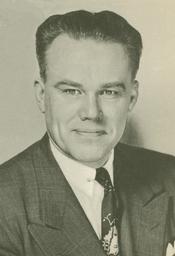
William Widnall
Former U.S. Representative · New Jersey District 7 · 1949–1975 · Republican
William Widnall represented New Jersey's District 7 in the United States House of Representatives (1949–1975) for the Republican party. The page below collects sourced biographical facts, term history, committee roles, and provenance for Widnall.
Bioguide ID: W000445
Key facts
- Full name
- William Widnall
- State
- New Jersey
- District
- District 7
- Party
- Republican
- House service
- 1949–1975
- First House term
- 1949
- Status
- Left office
- Current term ends
- —
- Born
- 1906
- Bioguide ID
- W000445
- Committee assignments
- —
- Dataset version
- 1.20260605
Biographical narrative
979 words · sourced from the Wikipedia REST extract
William B. Widnall was a prominent Republican politician who represented New Jersey's 7th congressional district in the United States House of Representatives for a substantial period. His congressional career spanned 24 years, during which he served a total of 13 terms. Widnall's tenure in Congress was marked by his involvement in significant legislative actions, particularly in the realm of civil rights. He was born on March 17, 1906, in Hackensack, New Jersey, and his educational and professional background laid the foundation for his political career. Widnall's life and work reflect the political landscape of mid-20th century America, particularly in relation to the evolving civil rights movement and the legislative challenges of the time. He passed away on December 28, 1983, in Ridgewood, New Jersey.
Early life and career
William Beck Widnall was born in Hackensack, New Jersey, where he attended local public schools. He graduated from Hackensack High School in 1922, demonstrating a commitment to education from an early age. Following high school, he pursued higher education at Brown University, where he earned a Bachelor of Philosophy degree in 1926. This academic achievement was an important stepping stone in his career, as it provided him with a broad educational foundation.
After completing his undergraduate studies, Widnall continued his education at the New Jersey Law School, which is now known as Rutgers School of Law–Newark. He graduated with a law degree in 1931, which allowed him to practice law in his hometown of Hackensack. His legal career provided him with valuable experience and insights into the workings of the legal system, which would later inform his legislative work.
In addition to his legal practice, Widnall entered the political arena by serving in the New Jersey General Assembly from 1946 to 1950. This role marked the beginning of his formal political career and allowed him to gain experience in governance and public policy. His time in the Assembly was characterized by his engagement with local issues and his development as a Republican leader in New Jersey.
Widnall's transition to national politics came in 1950 when he was elected to the United States House of Representatives. His election followed a special election held on February 6, 1950, to fill the vacancy left by J. Parnell Thomas, who had resigned after being convicted of corruption. This context of his election highlights the political challenges of the time and the shifting dynamics within the Republican Party.
House tenure
William B. Widnall's congressional career began in 1949, and he served in the House of Representatives until January 3, 1975. Over the course of his 13 terms, he became a notable figure in the House, representing the interests of New Jersey's 7th congressional district. His long tenure is indicative of his ability to connect with constituents and navigate the complexities of national politics.
During his time in Congress, Widnall was involved in various legislative initiatives and debates that shaped the direction of the country. He was known for his support of civil rights legislation, voting in favor of several key acts aimed at promoting equality and combating discrimination. These included the Civil Rights Acts of 1957, 1960, 1964, and 1968, as well as the Voting Rights Act of 1965. His support for these measures reflects a commitment to advancing civil rights during a pivotal era in American history.
Despite his legislative achievements, Widnall faced challenges in his later years in Congress. He ultimately resigned from his position on December 31, 1974, after an unsuccessful bid for re-election in that year. This marked the end of his long and influential career in the House, but it also underscored the shifting political landscape of the 1970s, as new issues and challenges emerged in American society.
Legislative focus and committees
Throughout his congressional career, William B. Widnall was involved in a range of legislative issues, with a particular focus on civil rights and social justice. His support for significant civil rights legislation positioned him as a participant in the broader movement for equality during a time of significant social change in the United States. The Civil Rights Acts and the Voting Rights Act were landmark pieces of legislation that aimed to dismantle systemic racism and ensure equal rights for all citizens, particularly African Americans.
In addition to his work on civil rights, Widnall's legislative focus extended to other areas of public policy. He was known to have expressed opposition to certain projects, such as the construction of the Kennedy Center in Washington, D.C., citing concerns about its accessibility and connection to the larger Metro system. This reflects his engagement with urban development and infrastructure issues, which were important topics of discussion during his time in Congress.
Widnall's committee assignments during his tenure in the House allowed him to influence a variety of legislative areas. While specific details about his committee memberships are not provided, it is common for members of Congress to serve on committees that align with their interests and expertise. These committees play a crucial role in shaping legislation, conducting hearings, and overseeing government functions.
After leaving Congress, Widnall continued to contribute to public service by taking on the role of chairman of the National Commission on Electronic Fund Transfers from November 1975 until 1981. This position allowed him to engage with emerging issues in finance and technology, reflecting the evolving landscape of American society.
William B. Widnall's life and career exemplify the complexities of American political life in the mid-20th century. His contributions to civil rights and his long-standing service in the House of Representatives highlight the significant role that legislators play in shaping policy and addressing the needs of their constituents. His legacy continues to be a part of the historical narrative of New Jersey and the United States. Widnall passed away on December 28, 1983, in Ridgewood, New Jersey, leaving behind a record of public service that spanned over two decades.
Notable legislation
Sponsored and co-sponsored legislation for William Widnall is pending operator curation. The biographical narrative above carries the same provenance trail until per-bill rows are written.
Sources
- [1]https://en.wikipedia.org/wiki/William_B._WidnallWikipedia · retrieved 2026-06-05
Notable quotes
Sourced quotes for William Widnall are pending operator curation. Narrative-scope provenance remains attached below.
Sources
- [1]https://en.wikipedia.org/wiki/William_B._WidnallWikipedia · retrieved 2026-06-05
Key positions
Curated policy positions for William Widnall are pending operator review. The biographical narrative above carries the same provenance trail until per-topic positions are written.
Sources
- [1]https://en.wikipedia.org/wiki/William_B._WidnallWikipedia · retrieved 2026-06-05
Terms served
- 1949–1951U.S. House · Term 1 · Republican
- 1951–1953U.S. House · Term 2 · Republican
- 1953–1955U.S. House · Term 3 · Republican
- 1955–1957U.S. House · Term 4 · Republican
- 1957–1959U.S. House · Term 5 · Republican
- 1959–1961U.S. House · Term 6 · Republican
- 1961–1963U.S. House · Term 7 · Republican
- 1963–1965U.S. House · Term 8 · Republican
- 1965–1967U.S. House · Term 9 · Republican
- 1967–1969U.S. House · Term 10 · Republican
- 1969–1971U.S. House · Term 11 · Republican
- 1971–1973U.S. House · Term 12 · Republican
- 1973–1975U.S. House · Term 13 · Republican
Sources & provenance
Every attributable claim above carries a per-section [N] marker that resolves to the corresponding URL below. Each entry records the upstream provider, the canonical URL, and the timestamp at which the source was retrieved by the ingest pipeline.
Key facts
- https://bioguide.congress.gov/search/bio/W000445bioguide · retrieved 2026-06-05
- https://www.govtrack.us/congress/members/411602govtrack · retrieved 2026-06-05
Biographical narrative
- https://en.wikipedia.org/wiki/William_B._Widnallwikipedia · retrieved 2026-06-05
Find your representative
Every U.S. state elects representatives by district. Browse New Jersey’s delegation, the full former-representative roster, or explore the role and term length.
Related on The Candidate
- Preceded by Randolph PerkinsEarlier holder of the New Jersey District 7 House seat · Republican.Open
- Succeeded by Gene MaguireLater holder of the New Jersey District 7 House seat · Democratic.Open
- Andrew HayFormer U.S. Representative · New Jersey District 1 · WhigOpen
- Charles WolvertonFormer U.S. Representative · New Jersey District 1 · RepublicanOpen
- Christopher BergenFormer U.S. Representative · New Jersey District 1 · RepublicanOpen
- Clement SinnicksonFormer U.S. Representative · New Jersey District 1 · RepublicanOpen