
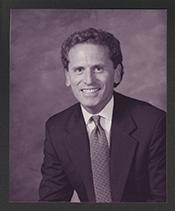
Historical · U.S. House · New Jersey · District 8
William Martini
Former U.S. Representative · New Jersey District 8 · 1995–1997 · Republican
William Martini represented New Jersey's District 8 in the United States House of Representatives (1995–1997) for the Republican party. The page below collects sourced biographical facts, term history, committee roles, and provenance for Martini.
Bioguide ID: M000207
Key facts
- Full name
- William Martini
- State
- New Jersey
- District
- District 8
- Party
- Republican
- House service
- 1995–1997
- First House term
- 1995
- Status
- Left office
- Current term ends
- —
- Born
- 1947
- Bioguide ID
- M000207
- Committee assignments
- —
- Dataset version
- 1.20260605
Biographical narrative
954 words · sourced from the Wikipedia REST extract
William J. Martini is a former U.S. Representative who served New Jersey's 8th congressional district from 1995 to 1997. A member of the Republican Party, Martini's tenure in the House of Representatives was marked by his election during the significant political shift known as the 1994 Republican Revolution. After his congressional service, he transitioned into a judicial role, ultimately becoming a senior United States district judge for the District of New Jersey. His judicial career included notable cases, such as the corruption trial of former Newark Mayor Sharpe James.
Early life and career
William John Martini was born on February 10, 1947, in Passaic, New Jersey. He completed his secondary education at Passaic High School before pursuing higher education. Martini earned a Bachelor of Arts degree from Villanova University, located in Philadelphia, Pennsylvania. Following his undergraduate studies, he attended Rutgers School of Law—Newark, where he obtained his Juris Doctor in 1972.
After completing his law degree, Martini began his legal career by clerking for Judge Joseph P. Hanrahan on the Superior Court of New Jersey from 1972 to 1973. This experience provided him with foundational insights into the judicial process. Subsequently, he joined the Hudson County prosecutor's office as an assistant in 1973. The following year, he transitioned to the U.S. Attorney's Office for the District of New Jersey, where he served as an assistant United States attorney until 1977. This role allowed him to gain substantial experience in federal law enforcement and prosecution.
After his tenure in the U.S. Attorney's Office, Martini entered private legal practice, where he continued to build his career in law. His involvement in local politics began in the early 1990s when he was elected to the city council in Clifton, New Jersey, in 1990. He further expanded his political engagement by securing a position on the Passaic County Board of Chosen Freeholders in 1992. His local political experience laid the groundwork for his future candidacy for federal office.
In 1994, Martini was nominated by the Republican Party to run for Congress in New Jersey's 8th congressional district. He faced incumbent Herbert Klein, who had lost favor with the electorate. The political climate at the time, characterized by a nationwide Republican wave, contributed to Martini's successful campaign, resulting in his election to the House of Representatives. His victory was significant, as he became the first Republican to win in the district since Gordon Canfield's last re-election in 1958.
House tenure
Martini's term in the U.S. House of Representatives began on January 3, 1995, and lasted until January 3, 1997. During his time in Congress, he was part of a larger Republican majority that emerged following the 1994 elections, which were marked by a significant shift in political power. This period saw the Republican Party gaining control of the House of Representatives, which had been dominated by Democrats for decades.
As a freshman congressman, Martini participated in various legislative activities and contributed to the Republican agenda. His election was part of a broader movement that sought to implement conservative policies and reform government operations. However, his time in office was relatively brief, as he faced challenges in securing re-election. In 1996, he was defeated by Bill Pascrell, the mayor of Paterson, New Jersey. This loss was part of a trend where several Republican representatives elected during the 1994 Republican Revolution were unable to maintain their seats in the subsequent election cycle.
Martini's defeat marked the end of his political career in the House of Representatives, as he did not seek further elected office after his congressional term. His experience in Congress, however, would later inform his judicial career, as he transitioned from politics to the judiciary.
Legislative focus and committees
During his time in the House, Martini's specific legislative focus and committee assignments are not detailed in the available records. However, as a member of the Republican Party during a time of significant political change, it can be inferred that he was involved in discussions and initiatives aligned with the party's priorities, which included issues such as tax reform, welfare reform, and reducing the size of government.
Following his congressional tenure, Martini's career took a notable turn when he was nominated for a judgeship on the United States District Court for the District of New Jersey. On January 23, 2002, he was nominated by President George W. Bush and confirmed by the Senate later that year. He received his commission on November 19, 2002, and served actively until he assumed senior status on February 10, 2015.
As a federal judge, Martini presided over a variety of cases, including high-profile matters. One of his most notable cases involved the corruption trial of Sharpe James, the former mayor of Newark. Martini sentenced James to 27 months in prison, a decision that drew attention due to the contrasting views on the appropriate length of the sentence. The case highlighted Martini's role in the judicial system and his approach to sentencing, which considered the defendant's years of public service.
Martini also dealt with significant civil rights issues during his judicial career. In a case involving allegations of unlawful surveillance by the New York Police Department against a group of New Jersey Muslims, Martini dismissed the lawsuit, stating that the surveillance was likely aimed at identifying potential terrorist activities. This ruling sparked controversy and led to an appeal, which ultimately resulted in the case being reversed by the Court of Appeals.
Throughout his career, both as a congressman and a judge, Martini's experiences reflected the complexities of public service and the intersections of law, politics, and community engagement. His journey from local politics to the federal judiciary illustrates the diverse pathways individuals can take in their careers while contributing to public life.
Notable legislation
Sponsored and co-sponsored legislation for William Martini is pending operator curation. The biographical narrative above carries the same provenance trail until per-bill rows are written.
Sources
- [1]https://en.wikipedia.org/wiki/Bill_MartiniWikipedia · retrieved 2026-06-05
Notable quotes
Sourced quotes for William Martini are pending operator curation. Narrative-scope provenance remains attached below.
Sources
- [1]https://en.wikipedia.org/wiki/Bill_MartiniWikipedia · retrieved 2026-06-05
Key positions
Curated policy positions for William Martini are pending operator review. The biographical narrative above carries the same provenance trail until per-topic positions are written.
Sources
- [1]https://en.wikipedia.org/wiki/Bill_MartiniWikipedia · retrieved 2026-06-05
Terms served
- 1995–1997U.S. House · Term 1 · Republican
Sources & provenance
Every attributable claim above carries a per-section [N] marker that resolves to the corresponding URL below. Each entry records the upstream provider, the canonical URL, and the timestamp at which the source was retrieved by the ingest pipeline.
Key facts
- https://bioguide.congress.gov/search/bio/M000207bioguide · retrieved 2026-06-05
- https://www.govtrack.us/congress/members/407226govtrack · retrieved 2026-06-05
Biographical narrative
- https://en.wikipedia.org/wiki/Bill_Martiniwikipedia · retrieved 2026-06-05
Find your representative
Every U.S. state elects representatives by district. Browse New Jersey’s delegation, the full former-representative roster, or explore the role and term length.
Related on The Candidate
- Preceded by Herbert KleinEarlier holder of the New Jersey District 8 House seat · Democratic.Open
- Succeeded by Albio SiresLater holder of the New Jersey District 8 House seat · Democratic.Open
- Andrew HayFormer U.S. Representative · New Jersey District 1 · WhigOpen
- Charles WolvertonFormer U.S. Representative · New Jersey District 1 · RepublicanOpen
- Christopher BergenFormer U.S. Representative · New Jersey District 1 · RepublicanOpen
- Clement SinnicksonFormer U.S. Representative · New Jersey District 1 · RepublicanOpen