
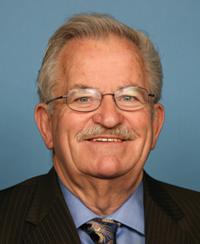
Historical · U.S. House · New Mexico · District 2
Harry Teague
Former U.S. Representative · New Mexico District 2 · 2009–2011 · Democratic
Harry Teague represented New Mexico's District 2 in the United States House of Representatives (2009–2011) for the Democratic party. The page below collects sourced biographical facts, term history, committee roles, and provenance for Teague.
Bioguide ID: T000466
Key facts
- Full name
- Harry Teague
- State
- New Mexico
- District
- District 2
- Party
- Democratic
- House service
- 2009–2011
- First House term
- 2009
- Status
- Left office
- Current term ends
- —
- Born
- 1949
- Bioguide ID
- T000466
- Committee assignments
- —
- Dataset version
- 1.20260605
Biographical narrative
973 words · sourced from the Wikipedia REST extract
Harry Teague is a former U.S. Representative who served New Mexico's 2nd congressional district from 2009 until 2011. A member of the Democratic Party, Teague's tenure in Congress followed a career in business and local government, where he developed a reputation for his involvement in the oil and gas industry. His election to the House marked a significant political shift in a district that had been under Republican representation for nearly three decades.
Early life and career
Harry Teague was born on June 29, 1949, into a family of sharecroppers in rural central Oklahoma. His early life was marked by economic hardship, as he lived without running water for the first nine years of his life. At the age of nine, his family relocated to Hobbs, New Mexico, where he would later attend Hobbs High School. However, Teague left school at the age of 17 to work in the oil fields, a decision driven by the need to support his ailing parents.
Teague's professional background is rooted in the oil and gas industry. He became a small business owner, establishing a company that grew to employ approximately 250 individuals. His involvement in this sector also led him to become a member of the New Mexico Oil and Gas Association, reflecting his deep ties to the local economy and energy sector.
In addition to his business endeavors, Teague entered local politics. He was elected as a Democrat to the Lea County Board of Commissioners, which was under Republican control at the time. His tenure on the Board lasted for eight years, during which he was elected chairman for three and a half years by his peers. This experience in local governance laid the groundwork for his subsequent run for the U.S. House of Representatives.
House tenure
Teague's congressional career began with his election to the U.S. House of Representatives in 2008. The incumbent, Republican Steve Pearce, chose not to seek re-election in order to run for a U.S. Senate seat. Teague secured the Democratic nomination after defeating Bill McCamley in the primary, garnering 52 percent of the vote. In the general election, he faced Republican candidate Edward R. Tinsley, a rancher and business owner. Despite the district's historical lean towards conservatism, Teague won the election with 56 percent of the vote, marking a significant political shift as the district had not elected a Democrat in 28 years.
During his time in Congress, Teague was active in introducing and co-sponsoring various pieces of legislation. Early in the 111th Congress, he proposed legislation aimed at modifying the Internal Revenue Code to provide refundability for the child tax credit and to extend credits for renewable energy production. This legislation was referred to the House Ways and Means Committee for further consideration.
Teague also co-sponsored the Southwest Border Violence Reduction Act of 2009, which sought to enhance resources for the Bureau of Alcohol, Tobacco, Firearms, and Explosives to combat firearms trafficking across the U.S.-Mexico border. This bill was referred to both the House Committee on the Judiciary and the House Committee on Foreign Affairs, indicating its broad implications for national security and law enforcement.
In January 2009, Teague's amendment to the American Recovery and Reinvestment Act was agreed upon by the House. His amendment mandated that the Recovery.gov website include links to job information from public agencies and private firms receiving funding under the legislation. This was part of a broader effort to ensure transparency and accountability in the use of federal funds.
Teague's voting record included notable decisions on significant legislation. He was one of 39 Democrats to oppose the Affordable Healthcare for America Act and also voted against the reconciled Senate version of the bill in March 2010. In contrast, he supported the American Clean Energy and Security Act in June 2009, reflecting his engagement with energy policy issues.
Teague's time in Congress was not without challenges. Following his vote on the American Clean Energy and Security Act, he faced backlash from constituents, including disruptions from Tea Party activists during a meeting. This incident underscored the contentious political climate surrounding energy policy at the time, particularly in a district with strong ties to the oil and gas industry.
Teague's congressional career concluded after the 2010 elections, where he was defeated by Steve Pearce, who had returned to reclaim his former seat. In that election, Teague received 45 percent of the vote, while Pearce garnered 55 percent, marking the end of Teague's term in the House.
Legislative focus and committees
Throughout his tenure in Congress, Teague served on several committees that aligned with his interests and the needs of his constituents. He was a member of the Committee on Transportation and Infrastructure, which oversees a wide range of issues related to transportation systems and infrastructure development. Within this committee, he participated in the Subcommittee on Railroads, Pipelines, and Hazardous Materials, as well as the Subcommittee on Water Resources and Environment, both of which are critical to the economic and environmental health of his district.
Additionally, Teague served on the Committee on Veterans' Affairs, where he was involved in issues affecting veterans and their families. Within this committee, he participated in the Subcommittee on Economic Opportunity and the Subcommittee on Health, focusing on improving services and support for veterans.
After leaving Congress, Teague remained engaged in political discourse. In 2020, he endorsed Republican candidate Yvette Herrell in her campaign for the congressional seat he once held, demonstrating his continued involvement in the political landscape of New Mexico.
Harry Teague's career reflects a blend of business acumen and public service, shaped by his early life experiences and his commitment to his community. His legislative focus during his time in the House was influenced by the economic realities of his district, particularly in relation to energy and infrastructure, as well as the needs of veterans and families.
Notable legislation
Sponsored and co-sponsored legislation for Harry Teague is pending operator curation. The biographical narrative above carries the same provenance trail until per-bill rows are written.
Sources
- [1]https://en.wikipedia.org/wiki/Harry_TeagueWikipedia · retrieved 2026-06-05
Notable quotes
Sourced quotes for Harry Teague are pending operator curation. Narrative-scope provenance remains attached below.
Sources
- [1]https://en.wikipedia.org/wiki/Harry_TeagueWikipedia · retrieved 2026-06-05
Key positions
Curated policy positions for Harry Teague are pending operator review. The biographical narrative above carries the same provenance trail until per-topic positions are written.
Sources
- [1]https://en.wikipedia.org/wiki/Harry_TeagueWikipedia · retrieved 2026-06-05
Terms served
- 2009–2011U.S. House · Term 1 · Democratic
Sources & provenance
Every attributable claim above carries a per-section [N] marker that resolves to the corresponding URL below. Each entry records the upstream provider, the canonical URL, and the timestamp at which the source was retrieved by the ingest pipeline.
Key facts
- https://bioguide.congress.gov/search/bio/T000466bioguide · retrieved 2026-06-05
- http://teague.house.govhouse.gov · retrieved 2026-06-05
Biographical narrative
- https://en.wikipedia.org/wiki/Harry_Teaguewikipedia · retrieved 2026-06-05
Find your representative
Every U.S. state elects representatives by district. Browse New Mexico’s delegation, the full former-representative roster, or explore the role and term length.
Related on The Candidate
- Preceded by Joseph SkeenEarlier holder of the New Mexico District 2 House seat · Republican.Open
- Succeeded by Xochitl Torres SmallLater holder of the New Mexico District 2 House seat · Democratic.Open
- Albert SimmsFormer U.S. Representative · New Mexico District 1 · RepublicanOpen
- Benigno HernándezFormer U.S. Representative · New Mexico District 1 · RepublicanOpen
- Debra HaalandFormer U.S. Representative · New Mexico District 1 · DemocraticOpen
- Harvey FergussonFormer U.S. Representative · New Mexico District 1 · DemocraticOpen