
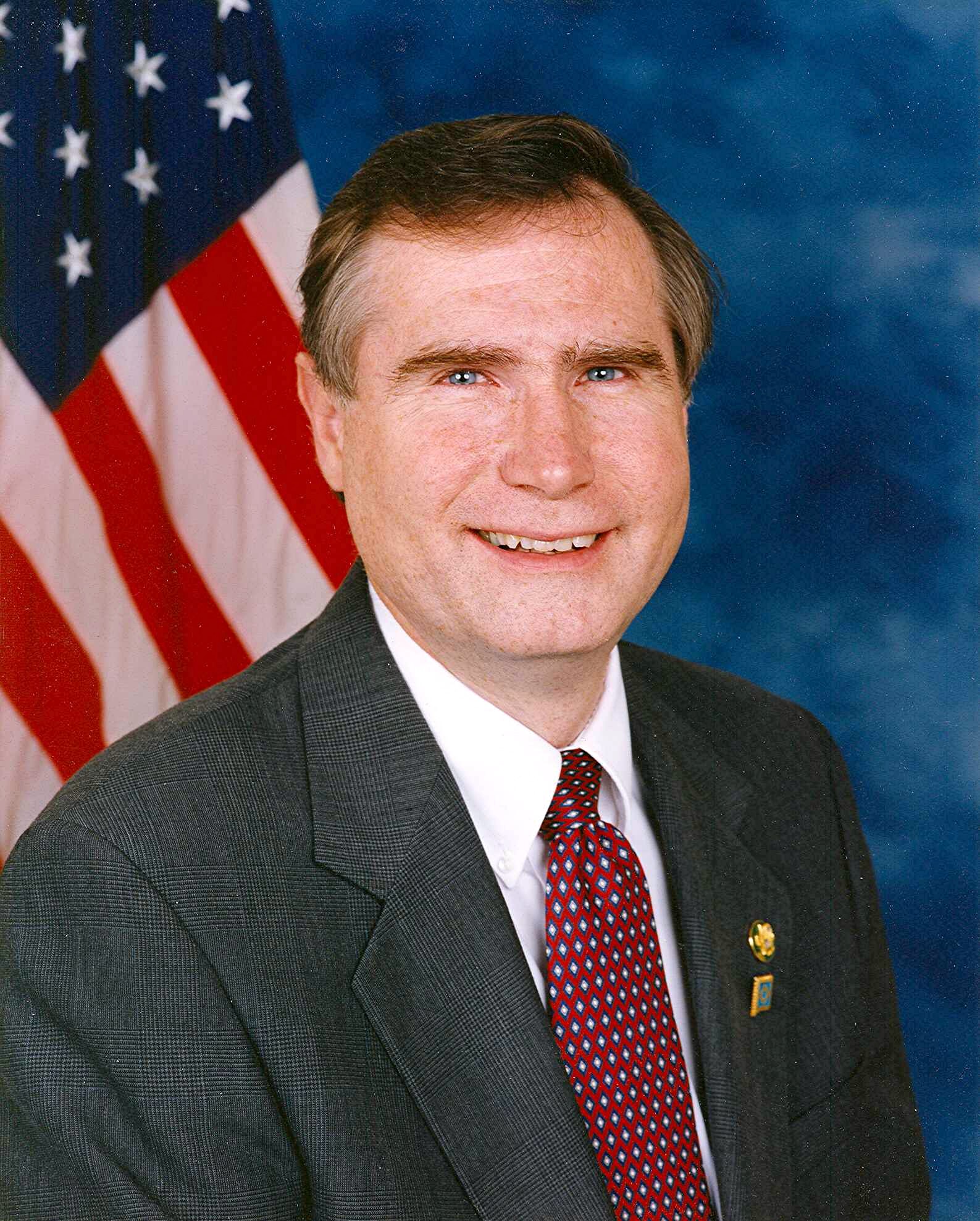
Historical · U.S. House · New Mexico · District 3
William Redmond
Former U.S. Representative · New Mexico District 3 · 1997–1999 · Republican
William Redmond represented New Mexico's District 3 in the United States House of Representatives (1997–1999) for the Republican party. The page below collects sourced biographical facts, term history, committee roles, and provenance for Redmond.
Bioguide ID: R000567
Key facts
- Full name
- William Redmond
- State
- New Mexico
- District
- District 3
- Party
- Republican
- House service
- 1997–1999
- First House term
- 1997
- Status
- Left office
- Current term ends
- —
- Born
- 1954
- Bioguide ID
- R000567
- Committee assignments
- —
- Dataset version
- 1.20260605
Biographical narrative
925 words · sourced from the Wikipedia REST extract
William Thomas Redmond, commonly known as Bill Redmond, is a former American politician and minister who served as a Republican member of the United States House of Representatives, representing New Mexico's 3rd congressional district. His tenure in Congress was notable for being the only instance of a Republican holding this seat, which has historically leaned Democratic. Redmond's political career was marked by his conservative voting record and his efforts on various issues, including land grants and Native American rights.
Early life and career
Bill Redmond was born on January 28, 1954, in Chicago, Illinois. His early education laid the groundwork for his future endeavors in both ministry and politics. He attended Murray State University, where he pursued a dual major in political science and accounting. This academic background provided him with a solid foundation in both governance and financial matters, which would later inform his political career.
In 1979, Redmond graduated from Lincoln Christian College, where he was ordained as a minister in the independent Christian Church. His commitment to ministry was further solidified when he earned a Master of Divinity (MDiv.) degree in theology and philosophy from Lincoln Christian Seminary in 1988. Following his education, Redmond relocated to New Mexico, where he began his professional career.
In addition to his ministerial duties at the Santa Fe Christian Church, Redmond contributed to the educational landscape by teaching at the University of New Mexico–Los Alamos. His involvement in both religious and academic circles demonstrated his commitment to community service and education. Furthermore, Redmond served in the United States Army Reserve from 1985 until 1993, participating in an Army chaplain candidate program. This experience not only underscored his dedication to service but also provided him with insights into the challenges faced by military personnel and their families.
House tenure
Redmond's political journey began in earnest when he ran for Congress in 1996, seeking to unseat the long-serving Democratic incumbent, Bill Richardson. Although he was ultimately unsuccessful in that election, Redmond's political aspirations did not wane. Just three months after the election, Richardson resigned from Congress to take on a new role as the United States Ambassador to the United Nations. This unexpected vacancy prompted a special election to fill the remainder of Richardson's term.
Initially viewed as an underdog in the special election, Redmond managed to secure a victory by a margin of 3,017 votes. His win was aided by the presence of a Green Party candidate, Carol Miller, who garnered a significant portion of the vote, thus drawing potential support away from his Democratic opponent, Eric Serna. Miller's campaign, which attracted 17% of the total votes, played a crucial role in Redmond's success, demonstrating the impact of third-party candidates in electoral contests.
Redmond's time in Congress began in 1997, and he served until January 3, 1999. Despite representing a district that had a strong Democratic majority, he maintained a conservative voting record throughout his tenure. This alignment with conservative principles was evident in his legislative priorities and public statements, which often resonated with the Republican base.
In 1998, Redmond sought a full term in Congress but faced a challenging election against Tom Udall, the state Attorney General. Ultimately, Redmond lost this race, receiving 43% of the vote compared to Udall's 53%. His defeat highlighted the Democratic stronghold in New Mexico's 3rd congressional district, a trend that has continued in subsequent elections, with no Republican candidate making a serious bid for the seat since Redmond's departure from Congress.
Legislative focus and committees
During his time in the House of Representatives, Redmond focused on several key issues that were pertinent to his constituents and aligned with his conservative values. His legislative efforts included significant work on land grant issues, which have historically been a point of contention in New Mexico. Redmond was recognized for achieving more progress on these matters in a short period than any other elected official had in over a century. This accomplishment was noted by various groups, including Democrats who acknowledged his effectiveness in addressing the complexities surrounding land grants.
Additionally, Redmond introduced an amendment to the Radiation Exposure Compensation Act, which aimed to provide justice for uranium miners affected by exposure to radiation. This initiative demonstrated his commitment to addressing the health and safety concerns of workers in New Mexico, particularly those in industries that have historically faced regulatory challenges.
Redmond's efforts on behalf of Native American rights also garnered attention during his congressional tenure. He received endorsements from organizations such as the All Indian Pueblo Council, which recognized his advocacy for the rights and interests of Native American communities. This aspect of his legislative focus highlighted his willingness to engage with diverse constituencies and address their specific needs.
After his congressional career, Redmond continued to be involved in politics, winning the Republican nomination for the U.S. Senate in 2000. However, he was defeated by the Democratic incumbent, Jeff Bingaman, by a substantial margin. This loss marked the end of his direct involvement in federal politics, but his earlier contributions to New Mexico's political landscape remain noteworthy.
In summary, Bill Redmond's career as a U.S. Representative was characterized by his unique position as the only Republican to represent New Mexico's 3rd congressional district. His background in ministry and education, coupled with his military service, informed his approach to governance and public service. Despite the challenges he faced in a predominantly Democratic district, Redmond's legislative efforts on land grants, uranium miners' rights, and Native American issues reflect a commitment to addressing the needs of his constituents during his time in office.
Notable legislation
Sponsored and co-sponsored legislation for William Redmond is pending operator curation. The biographical narrative above carries the same provenance trail until per-bill rows are written.
Sources
- [1]https://en.wikipedia.org/wiki/Bill_RedmondWikipedia · retrieved 2026-06-05
Notable quotes
Sourced quotes for William Redmond are pending operator curation. Narrative-scope provenance remains attached below.
Sources
- [1]https://en.wikipedia.org/wiki/Bill_RedmondWikipedia · retrieved 2026-06-05
Key positions
Curated policy positions for William Redmond are pending operator review. The biographical narrative above carries the same provenance trail until per-topic positions are written.
Sources
- [1]https://en.wikipedia.org/wiki/Bill_RedmondWikipedia · retrieved 2026-06-05
Terms served
- 1997–1999U.S. House · Term 1 · Republican
Sources & provenance
Every attributable claim above carries a per-section [N] marker that resolves to the corresponding URL below. Each entry records the upstream provider, the canonical URL, and the timestamp at which the source was retrieved by the ingest pipeline.
Key facts
- https://bioguide.congress.gov/search/bio/R000567bioguide · retrieved 2026-06-05
- https://www.govtrack.us/congress/members/409087govtrack · retrieved 2026-06-05
Biographical narrative
- https://en.wikipedia.org/wiki/Bill_Redmondwikipedia · retrieved 2026-06-05
Find your representative
Every U.S. state elects representatives by district. Browse New Mexico’s delegation, the full former-representative roster, or explore the role and term length.
Related on The Candidate
- Preceded by William RichardsonEarlier holder of the New Mexico District 3 House seat · Democratic.Open
- Albert SimmsFormer U.S. Representative · New Mexico District 1 · RepublicanOpen
- Benigno HernándezFormer U.S. Representative · New Mexico District 1 · RepublicanOpen
- Debra HaalandFormer U.S. Representative · New Mexico District 1 · DemocraticOpen
- Harvey FergussonFormer U.S. Representative · New Mexico District 1 · DemocraticOpen
- Republican PartyFederal candidates and office holders on the Republican line.Open