
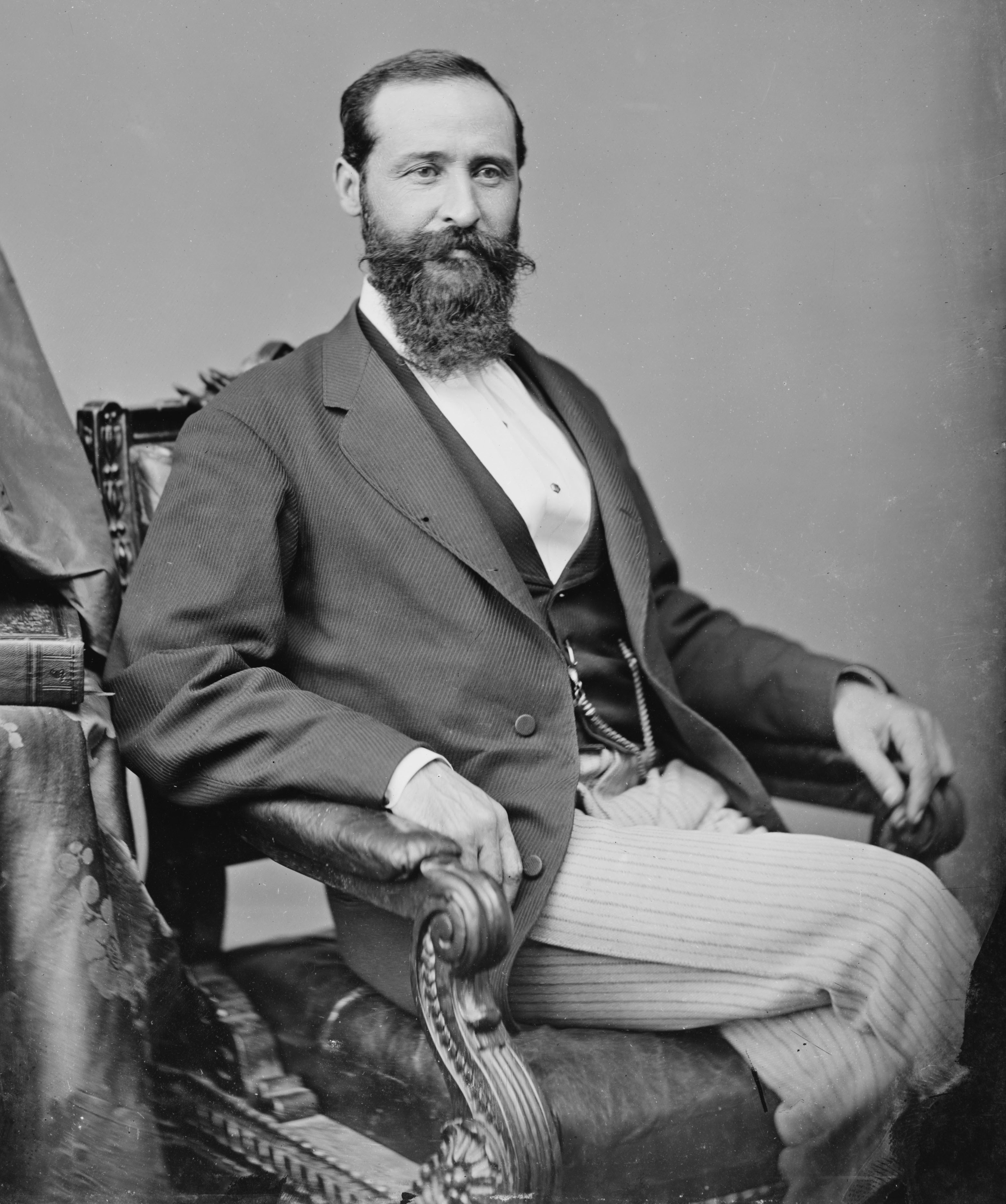
Historical · U.S. House · New Mexico · At-Large
José Chaves
Former U.S. Representative · New Mexico At-Large · 1865–1871 · Republican
José Chaves represented New Mexico's At-Large in the United States House of Representatives (1865–1871) for the Republican party. The page below collects sourced biographical facts, term history, committee roles, and provenance for Chaves.
Bioguide ID: C000337
Key facts
- Full name
- José Chaves
- State
- New Mexico
- District
- At-Large
- Party
- Republican
- House service
- 1865–1871
- First House term
- 1865
- Status
- Left office
- Current term ends
- —
- Born
- 1833
- Bioguide ID
- C000337
- Committee assignments
- —
- Dataset version
- 1.20260606
Biographical narrative
965 words · sourced from the Wikipedia REST extract
José Chaves was a prominent figure in the political and military landscape of the New Mexico Territory during the 19th century. Serving as a U.S. Representative for New Mexico's at-large district, Chaves was a member of the Republican Party and held office during a transformative period in American history. His career spanned military service during the Civil War, a series of terms in the U.S. House of Representatives, and various roles in local governance and education. Born in 1833, Chaves' life was marked by his contributions to both the military and political arenas, as well as his involvement in the development of New Mexico as it transitioned from a territory to a state.
Early life and career
José Francisco Chaves was born on June 27, 1833, in Los Padillas, New Mexico, which was then part of the Departmento de Nuevo México under Mexican rule. He was born into a family with a rich political heritage; his father, Don Mariano Chaves, held significant military and political positions, including serving as chief of staff under Governor Manuel Armijo during the 1837 revolution and later as pro-tem governor. His mother, Dolores Perea, was connected to influential local families, further embedding José in the region's social and political fabric.
Chaves received his early education in St. Louis, Missouri, before pursuing medical studies at the New York College of Physicians and Surgeons. However, he eventually turned his focus to livestock raising in the New Mexico Territory, a venture that would become a significant part of his life. In 1857, he married Mary Bowie, with whom he had two daughters, Lola and Francesca. His family life was marked by personal tragedy, as Mary passed away in 1874.
Before entering politics, Chaves served in the military, participating in campaigns against the Navajo people prior to the Civil War. His military career began in earnest when he was commissioned as a major in the 1st Regiment New Mexico Volunteers, where he was later promoted to lieutenant colonel under Colonel Kit Carson. Chaves distinguished himself during the Battle of Valverde in 1862 and played a crucial role in establishing Fort Wingate, where he served as post commander. He completed his military service honorably in 1865.
Following his military career, Chaves turned to law, studying and eventually being admitted to the bar. His entry into politics was marked by his election to the territorial legislative assembly in 1860, where he represented the interests of the New Mexico Territory. His political affiliations aligned with the Republican Party, which was significant during the tumultuous years of the Civil War and Reconstruction.
House tenure
Chaves' tenure in the U.S. House of Representatives began in 1865 when he was elected as a delegate from the New Mexico Territory. He served in the 39th and 40th Congresses, representing the territory during a critical time in its history. His first term lasted until 1867, after which he was re-elected in 1868. In 1869, he successfully contested the election of Charles P. Clever, allowing him to serve again until 1871. His congressional career was characterized by his commitment to the interests of New Mexico, although he faced challenges in securing re-election in 1870.
After his time in Congress, Chaves continued to engage in public service. In 1875, he was elected to the legislative council from Valencia County and was re-elected to each subsequent legislature, demonstrating his sustained influence in local governance. He held the position of president of the New Mexico Territorial Council for eight sessions, further solidifying his role as a key political figure in the territory.
Chaves' political career was not limited to the legislative assembly. He served as the district attorney for the second judicial district from 1875 to 1877, where he was involved in legal matters that shaped the judicial landscape of New Mexico. His commitment to education and public service was evident when he was appointed as the New Mexico Superintendent of Public Instruction in 1903, a role he held until his death in 1904.
Legislative focus and committees
During his time in the U.S. House of Representatives, Chaves was involved in various legislative matters that reflected the interests and needs of the New Mexico Territory. His focus included issues pertinent to the development of the territory, including land rights, infrastructure, and the integration of New Mexico into the broader national framework. As a representative of a territory seeking statehood, Chaves played a crucial role in advocating for the rights and needs of his constituents.
Chaves' participation in congressional committees would have been pivotal in shaping the legislative agenda during his terms. While specific committee assignments are not detailed, it is common for representatives to serve on committees that align with their interests and the needs of their constituents. Given his background in law and military service, it is likely that he contributed to discussions on legal reform, military affairs, and territorial governance.
In addition to his legislative work, Chaves was a member of the New Mexico constitutional convention in 1889, where he contributed to the foundational governance structures of the territory as it moved toward statehood. His involvement in this convention underscored his commitment to the political development of New Mexico and his desire to see the territory fully integrated into the United States.
Chaves' legacy is marked by his multifaceted contributions to the military, legal, and political spheres in New Mexico. His life and career reflect the complexities of 19th-century American politics, particularly in the context of territorial governance and the challenges faced by newly integrated regions. His assassination in 1904 ended a life dedicated to public service, leaving a lasting impact on the history of New Mexico and its political landscape. He was interred in Santa Fe National Cemetery, a testament to his service and contributions to the territory he represented.
Notable legislation
Sponsored and co-sponsored legislation for José Chaves is pending operator curation. The biographical narrative above carries the same provenance trail until per-bill rows are written.
Sources
- [1]https://en.wikipedia.org/wiki/Jos%C3%A9_Francisco_ChavesWikipedia · retrieved 2026-06-06
Notable quotes
Sourced quotes for José Chaves are pending operator curation. Narrative-scope provenance remains attached below.
Sources
- [1]https://en.wikipedia.org/wiki/Jos%C3%A9_Francisco_ChavesWikipedia · retrieved 2026-06-06
Key positions
Curated policy positions for José Chaves are pending operator review. The biographical narrative above carries the same provenance trail until per-topic positions are written.
Sources
- [1]https://en.wikipedia.org/wiki/Jos%C3%A9_Francisco_ChavesWikipedia · retrieved 2026-06-06
Terms served
- 1865–1867U.S. House · Term 1 · Republican
- 1867–1869U.S. House · Term 2 · Republican
- 1869–1871U.S. House · Term 3 · Republican
Sources & provenance
Every attributable claim above carries a per-section [N] marker that resolves to the corresponding URL below. Each entry records the upstream provider, the canonical URL, and the timestamp at which the source was retrieved by the ingest pipeline.
Key facts
- https://bioguide.congress.gov/search/bio/C000337bioguide · retrieved 2026-06-06
- https://www.govtrack.us/congress/members/402477govtrack · retrieved 2026-06-06
Biographical narrative
- https://en.wikipedia.org/wiki/Jos%C3%A9_Francisco_Chaveswikipedia · retrieved 2026-06-06
Find your representative
Every U.S. state elects representatives by district. Browse New Mexico’s delegation, the full former-representative roster, or explore the role and term length.
Related on The Candidate
- Preceded by Francisco PereaEarlier holder of the New Mexico At-Large House seat · Republican.Open
- Succeeded by Trinidad RomeroLater holder of the New Mexico At-Large House seat · Republican.Open
- Albert SimmsFormer U.S. Representative · New Mexico District 1 · RepublicanOpen
- Benigno HernándezFormer U.S. Representative · New Mexico District 1 · RepublicanOpen
- Debra HaalandFormer U.S. Representative · New Mexico District 1 · DemocraticOpen
- Harvey FergussonFormer U.S. Representative · New Mexico District 1 · DemocraticOpen