
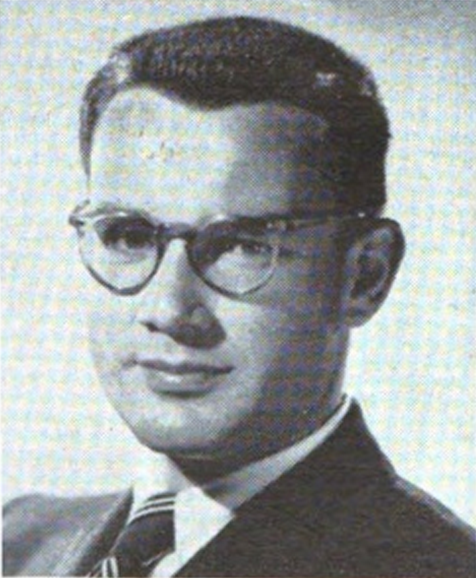
Historical · U.S. House · New York · District 1
Stuyvesant Wainwright
Former U.S. Representative · New York District 1 · 1953–1961 · Republican
Stuyvesant Wainwright represented New York's District 1 in the United States House of Representatives (1953–1961) for the Republican party. The page below collects sourced biographical facts, term history, committee roles, and provenance for Wainwright.
Bioguide ID: W000024
Key facts
- Full name
- Stuyvesant Wainwright
- State
- New York
- District
- District 1
- Party
- Republican
- House service
- 1953–1961
- First House term
- 1953
- Status
- Left office
- Current term ends
- —
- Born
- 1921
- Bioguide ID
- W000024
- Committee assignments
- —
- Dataset version
- 1.20260605
Biographical narrative
939 words · sourced from the Wikipedia REST extract
Stuyvesant Wainwright was a Republican politician who served as a U.S. Representative for New York's 1st congressional district from 1953 until 1961. Born on March 16, 1921, in New York City, Wainwright's early life was marked by a prominent family background and a distinguished military service during World War II. After his tenure in Congress, he continued to engage in various professional pursuits, including teaching and practicing law, until his passing on March 6, 2010.
Early life and career
Stuyvesant Wainwright was born into a notable family in New York City. His father, Carroll Livingston Wainwright, and his mother, Edith Catherine Gould, were part of a lineage that included prominent financiers and military figures. His maternal grandfather, George Jay Gould, was a well-known financier, while his great-uncle, General Jonathan Mayhew Wainwright, gained fame as a four-star general during World War II. Wainwright had two siblings: Carroll L. Wainwright Jr. and Caroline Wainwright.
In 1927, the Wainwright family relocated to East Hampton, New York, where they built a substantial residence known as "Gulf Crest." The family faced challenges when his parents divorced in 1932, after which his mother remarried a Scottish shipowner. Wainwright attended several prestigious educational institutions, including the Lawrenceville School and Westminster School in Connecticut. He later enrolled at Yale University, where he pursued a law degree.
Wainwright's academic pursuits were interrupted by World War II. In January 1942, he enlisted in the United States Army at the age of 20. He attended officers' candidate school and was deployed overseas in December 1943. During the war, he served as a commanding officer in the Office of Strategic Services, which was a precursor to the Central Intelligence Agency. He returned to the United States in June 1945 and concluded his military service as a Captain in December of that year. Following the war, he remained in the Active Army Reserve and achieved the rank of Lieutenant Colonel before retiring in 1960.
After completing his military service, Wainwright resumed his legal studies at Yale, graduating in 1947. He was admitted to the New York State Bar in 1948 and began practicing law in New York City as a partner in the firm Walker, Beale, Wainwright & Wolf.
House tenure
Stuyvesant Wainwright entered politics during a significant shift in the American political landscape. In 1952, he was elected to the United States House of Representatives as part of a Republican wave that saw the party gain control of both chambers of Congress and the presidency. Wainwright officially began his congressional career on January 3, 1953, representing New York's 1st congressional district. He served four consecutive terms in the House, participating in the 83rd, 84th, and 85th United States Congresses.
During his time in Congress, Wainwright was involved in several key legislative committees. He served on the House Armed Services Committee, which oversees military policy and funding, as well as the Foreign Affairs Committee, which deals with international relations and foreign policy. Additionally, he was a member of the Education and Labor Committee, which focuses on issues related to education, labor rights, and workforce development, and the Merchant Marine Committee, which addresses matters concerning maritime commerce and the U.S. merchant marine.
Wainwright's legislative record included votes in favor of significant civil rights legislation, specifically the Civil Rights Acts of 1957 and 1960, which aimed to address racial discrimination and protect voting rights for African Americans. His tenure in Congress was characterized by a commitment to the Republican Party's platform during a transformative period in American politics.
Despite his efforts and contributions, Wainwright faced challenges in his political career. In 1960, he narrowly lost his re-election bid to Democrat Otis G. Pike, marking the end of his time in the House of Representatives on January 3, 1961.
Legislative focus and committees
Throughout his congressional tenure, Stuyvesant Wainwright's legislative focus reflected the priorities of the Republican Party during the 1950s. His involvement in the House Armed Services Committee underscored his commitment to national defense and military readiness during the Cold War era. This committee played a crucial role in shaping U.S. military policy and funding, particularly in light of the geopolitical tensions of the time.
Wainwright's participation in the Foreign Affairs Committee indicated his engagement with international issues, including diplomacy and foreign relations. This committee was instrumental in addressing the complexities of U.S. interactions with other nations, especially in the context of post-World War II reconstruction and the emerging Cold War dynamics.
His work on the Education and Labor Committee highlighted his interest in domestic policy, particularly in areas related to education reform and labor rights. This committee was pivotal in addressing the needs of American workers and students during a time of significant social change.
Wainwright's support for the Civil Rights Acts of 1957 and 1960 demonstrated his alignment with the broader civil rights movement, which sought to eliminate racial discrimination and ensure equal voting rights. These legislative efforts were part of a larger national dialogue about civil rights and social justice, and Wainwright's votes reflected a recognition of the importance of these issues in American society.
After leaving Congress, Wainwright transitioned to a career in academia, teaching political science at Rutgers University for a brief period before returning to the legal profession. He practiced law with a firm in New York City and held leadership positions in various organizations, including serving as president of the Miltope Corporation.
Stuyvesant Wainwright's life and career were marked by a blend of public service, military duty, and legal practice. His contributions to American politics during a transformative era continue to be recognized as part of the historical narrative of the United States Congress.
Notable legislation
Sponsored and co-sponsored legislation for Stuyvesant Wainwright is pending operator curation. The biographical narrative above carries the same provenance trail until per-bill rows are written.
Sources
- [1]https://en.wikipedia.org/wiki/Stuyvesant_WainwrightWikipedia · retrieved 2026-06-05
Notable quotes
Sourced quotes for Stuyvesant Wainwright are pending operator curation. Narrative-scope provenance remains attached below.
Sources
- [1]https://en.wikipedia.org/wiki/Stuyvesant_WainwrightWikipedia · retrieved 2026-06-05
Key positions
Curated policy positions for Stuyvesant Wainwright are pending operator review. The biographical narrative above carries the same provenance trail until per-topic positions are written.
Sources
- [1]https://en.wikipedia.org/wiki/Stuyvesant_WainwrightWikipedia · retrieved 2026-06-05
Terms served
- 1953–1955U.S. House · Term 1 · Republican
- 1955–1957U.S. House · Term 2 · Republican
- 1957–1959U.S. House · Term 3 · Republican
- 1959–1961U.S. House · Term 4 · Republican
Sources & provenance
Every attributable claim above carries a per-section [N] marker that resolves to the corresponding URL below. Each entry records the upstream provider, the canonical URL, and the timestamp at which the source was retrieved by the ingest pipeline.
Key facts
- https://bioguide.congress.gov/search/bio/W000024bioguide · retrieved 2026-06-05
- https://www.govtrack.us/congress/members/411203govtrack · retrieved 2026-06-05
Biographical narrative
- https://en.wikipedia.org/wiki/Stuyvesant_Wainwrightwikipedia · retrieved 2026-06-05
Find your representative
Every U.S. state elects representatives by district. Browse New York’s delegation, the full former-representative roster, or explore the role and term length.
Related on The Candidate
- Preceded by Ernest GreenwoodEarlier holder of the New York District 1 House seat · Democratic.Open
- Succeeded by Otis PikeLater holder of the New York District 1 House seat · Democratic.Open
- Abel HuntingtonFormer U.S. Representative · New York District 1 · JacksonOpen
- Alfred ChapinFormer U.S. Representative · New York District 1 · DemocraticOpen
- Cadwallader ColdenFormer U.S. Representative · New York District 1 · FederalistOpen
- Charles FloydFormer U.S. Representative · New York District 1 · DemocraticOpen