
Historical · U.S. House · New York · District 1
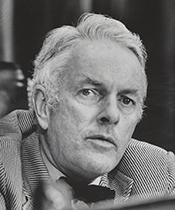
Otis Pike
Former U.S. Representative · New York District 1 · 1961–1979 · Democratic
Otis Pike represented New York's District 1 in the United States House of Representatives (1961–1979) for the Democratic party. The page below collects sourced biographical facts, term history, committee roles, and provenance for Pike.
Bioguide ID: P000348
Key facts
- Full name
- Otis Pike
- State
- New York
- District
- District 1
- Party
- Democratic
- House service
- 1961–1979
- First House term
- 1961
- Status
- Left office
- Current term ends
- —
- Born
- 1921
- Bioguide ID
- P000348
- Committee assignments
- —
- Dataset version
- 1.20260605
Biographical narrative
945 words · sourced from the Wikipedia REST extract
Otis G. Pike was an American lawyer and politician who served as a Democratic member of the United States House of Representatives for New York's 1st congressional district from 1961 until 1979. During his nine terms in Congress, he was involved in various legislative efforts, particularly in areas related to environmental protection and intelligence oversight. Pike's career was marked by his participation in significant congressional committees and his advocacy for pro-environmental legislation.
Early life and career
Otis Grey Pike was born on August 31, 1921, in Riverhead, New York. His early life was shaped by his experiences during World War II, where he served in the United States Marine Corps as a dive bomber and night fighter pilot from 1942 until 1946. Following his military service, Pike pursued higher education, earning an A.B. degree from the School of Public and International Affairs at Princeton University in 1943. His senior thesis focused on American-Chinese relations, specifically the years 1931 to 1941, reflecting an early interest in international affairs.
After completing his undergraduate studies, Pike attended Columbia Law School, where he received his Juris Doctor in 1948. His legal education prepared him for a career in public service and law. Pike's entry into politics began at the local level when he was elected as a Justice of the Peace in the Town of Riverhead, marking the start of his public service career.
House tenure
Pike's political journey took a significant turn when he ran for Congress in New York's 1st congressional district in 1958. Although he lost to the incumbent, Stuyvesant Wainwright, he persisted and successfully won the seat in 1960, narrowly defeating Wainwright in the subsequent election. He officially took office on January 3, 1961, and served until January 3, 1979, completing a total of nine terms in the House of Representatives.
Throughout his tenure, Pike was an active member of the House Armed Services Committee. In the mid-1970s, he chaired the Congressional Special Select Committee on Intelligence, which was established to investigate the activities of U.S. intelligence agencies. This committee was a response to growing concerns about government oversight and accountability, particularly following revelations of illegal activities conducted by the CIA. The Pike Committee's work was significant as it marked a shift towards greater scrutiny of intelligence operations, a trend that had not been prevalent in previous decades.
Despite the committee's efforts, the report it produced faced challenges regarding its release. The House of Representatives voted to restrict the publication of the Pike report unless it was certified by the President as free of classified information. Nevertheless, parts of the report were leaked to the press, and it was later published in full by an independent publisher, highlighting the tensions between Congress and the executive branch regarding oversight of intelligence activities.
Pike's legislative focus included environmental issues, and he was a proponent of legislation aimed at protecting natural resources. One notable achievement was his role in the establishment of the Fire Island National Seashore on Long Island, which includes the Otis G. Pike Wilderness Area. This initiative underscored his commitment to environmental conservation and the preservation of public lands.
In addition to his environmental advocacy, Pike's political positions included support for military funding. He voted to end the Philadelphia Plan, which had established affirmative action policies for hiring practices in government contracts. His decisions reflected a complex approach to issues of social policy and military engagement.
Pike chose not to seek a tenth term in 1978, concluding his congressional career in January 1979. His time in office was characterized by a blend of legislative achievements and challenges, particularly in the realm of intelligence oversight.
Legislative focus and committees
During his nine terms in Congress, Otis Pike's legislative focus encompassed a range of issues, with particular emphasis on environmental protection and intelligence oversight. His role as chair of the Pike Committee was pivotal in bringing attention to the activities of the intelligence community, particularly in the wake of scandals involving the CIA. This committee's investigations were among the first to provide significant congressional scrutiny of the intelligence apparatus, which had previously operated with minimal oversight.
The Pike Committee's work was part of a broader movement in the 1970s aimed at reforming intelligence practices in the United States. The committee sought to uncover abuses and promote transparency within the intelligence community, a goal that was met with resistance from some government officials. The challenges faced by the Pike Committee highlighted the complexities of balancing national security with the need for accountability in government operations.
In addition to his work on intelligence, Pike's commitment to environmental issues was evident in his legislative initiatives. His advocacy for the creation of the Fire Island National Seashore demonstrated a proactive approach to preserving natural landscapes for future generations. This focus on environmental legislation was part of a larger trend during the 1960s and 1970s, as public awareness of environmental issues grew.
Pike's participation in various committees, including the Ways and Means Committee in his later years in Congress, allowed him to engage with a wide array of policy issues, from taxation to social welfare. His legislative career reflected a dedication to addressing both local and national concerns, as he navigated the complexities of American politics during a transformative period.
After retiring from Congress, Pike continued to engage with the public as a syndicated columnist for Newhouse Newspapers from 1979 to 1999, sharing his insights on political and social issues. He passed away on January 20, 2014, in a hospice in Florida after an illness, leaving behind a legacy of public service and legislative contributions that shaped the discourse on intelligence oversight and environmental protection in the United States.
Notable legislation
Sponsored and co-sponsored legislation for Otis Pike is pending operator curation. The biographical narrative above carries the same provenance trail until per-bill rows are written.
Sources
- [1]https://en.wikipedia.org/wiki/Otis_G._PikeWikipedia · retrieved 2026-06-05
Notable quotes
Sourced quotes for Otis Pike are pending operator curation. Narrative-scope provenance remains attached below.
Sources
- [1]https://en.wikipedia.org/wiki/Otis_G._PikeWikipedia · retrieved 2026-06-05
Key positions
Curated policy positions for Otis Pike are pending operator review. The biographical narrative above carries the same provenance trail until per-topic positions are written.
Sources
- [1]https://en.wikipedia.org/wiki/Otis_G._PikeWikipedia · retrieved 2026-06-05
Terms served
- 1961–1963U.S. House · Term 1 · Democratic
- 1963–1965U.S. House · Term 2 · Democratic
- 1965–1967U.S. House · Term 3 · Democratic
- 1967–1969U.S. House · Term 4 · Democratic
- 1969–1971U.S. House · Term 5 · Democratic
- 1971–1973U.S. House · Term 6 · Democratic
- 1973–1975U.S. House · Term 7 · Democratic
- 1975–1977U.S. House · Term 8 · Democratic
- 1977–1979U.S. House · Term 9 · Democratic
Sources & provenance
Every attributable claim above carries a per-section [N] marker that resolves to the corresponding URL below. Each entry records the upstream provider, the canonical URL, and the timestamp at which the source was retrieved by the ingest pipeline.
Key facts
- https://bioguide.congress.gov/search/bio/P000348bioguide · retrieved 2026-06-05
- https://www.govtrack.us/congress/members/408745govtrack · retrieved 2026-06-05
Biographical narrative
- https://en.wikipedia.org/wiki/Otis_G._Pikewikipedia · retrieved 2026-06-05
Find your representative
Every U.S. state elects representatives by district. Browse New York’s delegation, the full former-representative roster, or explore the role and term length.
Related on The Candidate
- Preceded by Stuyvesant WainwrightEarlier holder of the New York District 1 House seat · Republican.Open
- Succeeded by William CarneyLater holder of the New York District 1 House seat · Republican.Open
- Abel HuntingtonFormer U.S. Representative · New York District 1 · JacksonOpen
- Alfred ChapinFormer U.S. Representative · New York District 1 · DemocraticOpen
- Cadwallader ColdenFormer U.S. Representative · New York District 1 · FederalistOpen
- Charles FloydFormer U.S. Representative · New York District 1 · DemocraticOpen