
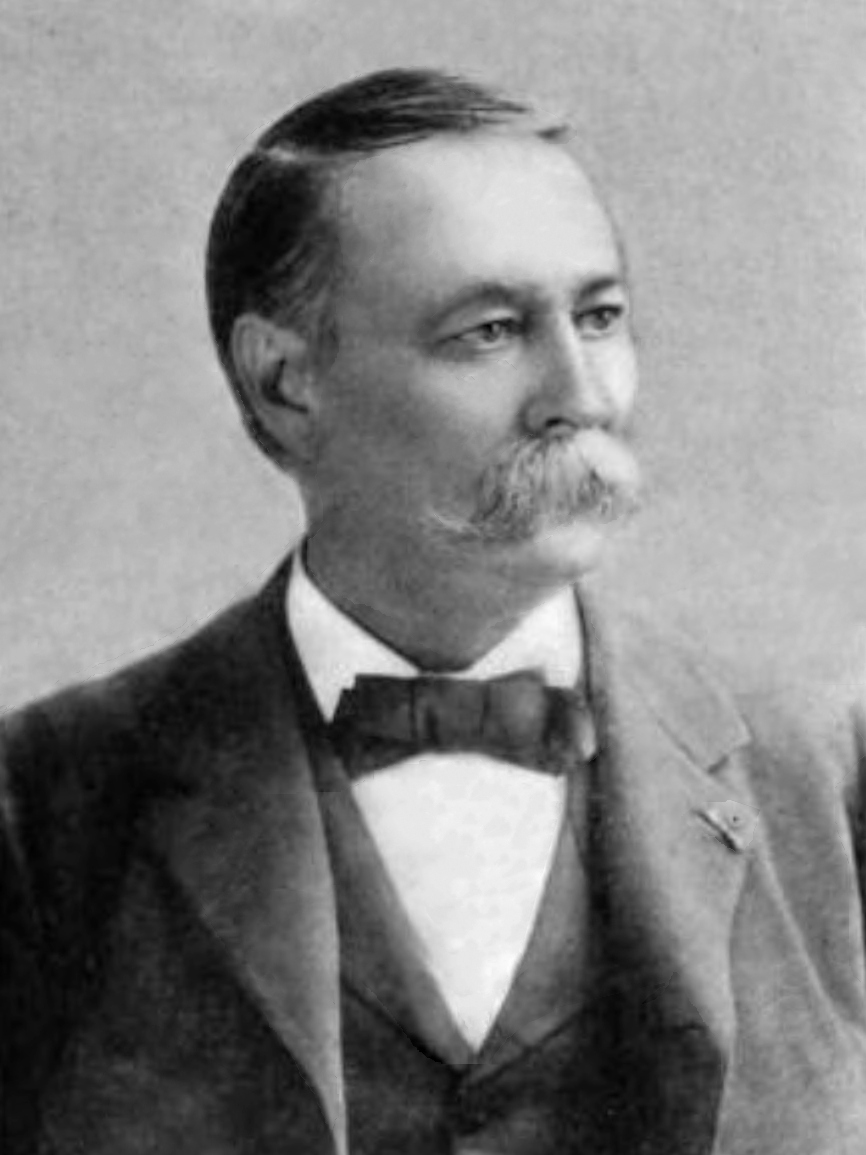
Historical · U.S. House · New York · District 10
Amos Cummings
Former U.S. Representative · New York District 10 · 1887–1903 · Democratic
Amos Cummings represented New York's District 10 in the United States House of Representatives (1887–1903) for the Democratic party. The page below collects sourced biographical facts, term history, committee roles, and provenance for Cummings.
Bioguide ID: C000983
Key facts
- Full name
- Amos Cummings
- State
- New York
- District
- District 10
- Party
- Democratic
- House service
- 1887–1903
- First House term
- 1887
- Status
- Left office
- Current term ends
- —
- Born
- 1841
- Bioguide ID
- C000983
- Committee assignments
- —
- Dataset version
- 1.20260606
Biographical narrative
993 words · sourced from the Wikipedia REST extract
Amos Cummings was an American newspaperman, Civil War veteran, and politician who served as a United States Representative for New York's 10th congressional district. He was a member of the Democratic Party and had a notable career in both journalism and politics. Cummings was born on May 15, 1841, in Conklin, New York, and his life was marked by his dedication to public service, both in military and legislative capacities. He served in the U.S. House of Representatives from 1887 until his death in 1902, completing a total of eight terms in Congress. His contributions to the military were recognized with the Medal of Honor, the highest military decoration awarded by the United States.
Early life and career
Amos Cummings was born in a small town in New York State, where he received his early education in the common schools. At the young age of twelve, he began an apprenticeship in the printing trade, which laid the foundation for his future career in journalism. This early exposure to the world of print media would later influence his work as a newspaperman and politician.
Cummings' early life included a brief involvement in international affairs, as he claimed to have participated in William Walker's last invasion of Nicaragua in 1858. However, this assertion has been met with skepticism by biographers, indicating that the details of his early adventures may not be entirely reliable.
His military service began during the American Civil War when he enlisted in the army in September 1862 at Irvington, New Jersey. Cummings served as a sergeant major in the 26th New Jersey Volunteer Infantry Regiment. His bravery and leadership during the war were recognized when he earned the Medal of Honor for his actions at Salem Heights, Virginia, on May 4, 1863. The citation for his medal noted his significant contribution to rescuing field batteries from a perilous situation during combat. Although he was mustered out of service in June 1863, the formal awarding of his Medal of Honor did not occur until March 28, 1894, many years after the events that earned him this distinction.
Following his military service, Cummings transitioned into journalism, where he held editorial positions at several prominent newspapers. He worked for the New York Tribune under the leadership of Horace Greeley, a significant figure in American journalism and politics. Cummings also contributed to The New York Sun and the New York Express, where he published a series of popular travel accounts that highlighted his experiences in Florida and the American West. His work in journalism not only showcased his writing skills but also helped him build a network that would later support his political aspirations. Additionally, he was a member of the International Typographical Union No. 6 in New York, reflecting his commitment to labor rights and the printing profession.
House tenure
Amos Cummings began his congressional career when he was elected as a Democrat to the 50th Congress, serving from March 4, 1887, to March 3, 1889. Although he declined renomination in 1888, he returned to Congress after being elected to the 51st Congress to fill the vacancy left by the death of Samuel S. Cox. Cummings was subsequently reelected to the 52nd and 53rd Congresses, serving from November 5, 1889, until his resignation on November 21, 1894. His tenure during this period was marked by active participation in legislative matters, and he was appointed as the chairman of the Committee on Naval Affairs during the 53rd Congress.
After a brief hiatus from Congress, Cummings was elected to the 54th Congress to fill the vacancy caused by the death of Representative-elect Andrew J. Campbell. He continued to serve in the House, being reelected to the 55th, 56th, and 57th Congresses, ultimately serving from November 5, 1895, until his death on May 2, 1902. Throughout his time in office, Cummings was known for his dedication to his constituents and his commitment to addressing the issues facing his district and the nation.
Cummings' legislative career spanned a period of significant change in American society, including the aftermath of the Civil War and the rise of industrialization. His experience as a Civil War veteran and a member of the Democratic Party positioned him to engage with the pressing issues of his time, including veterans' affairs, labor rights, and naval policy.
Legislative focus and committees
During his time in the House of Representatives, Amos Cummings focused on various legislative issues, particularly those related to naval affairs, which aligned with his role as chairman of the Committee on Naval Affairs. His leadership in this committee allowed him to influence policies related to the United States Navy, especially during a time when naval power was becoming increasingly important in international relations. The late 19th century was marked by a growing recognition of the need for a strong naval presence, and Cummings' contributions to this area reflected his understanding of military and strategic issues.
In addition to his work on naval affairs, Cummings was involved in broader legislative discussions that impacted his constituents and the nation. His background as a newspaperman likely informed his perspective on the importance of communication and information dissemination in the political process. Cummings' commitment to public service was evident in his willingness to engage with the challenges of his time, advocating for policies that he believed would benefit both his district and the country as a whole.
Cummings' legislative career came to an end with his death on May 2, 1902, in Baltimore, Maryland, where he succumbed to pneumonia. He was interred in Clinton Cemetery in Irvington, New Jersey. His legacy as a Civil War veteran, a dedicated public servant, and a member of the House of Representatives remains a part of the historical narrative of American politics in the late 19th and early 20th centuries. Cummings' life and career exemplify the intersection of military service, journalism, and politics, illustrating the diverse pathways through which individuals can contribute to their communities and the nation.
Notable legislation
Sponsored and co-sponsored legislation for Amos Cummings is pending operator curation. The biographical narrative above carries the same provenance trail until per-bill rows are written.
Sources
- [1]https://en.wikipedia.org/wiki/Amos_J._CummingsWikipedia · retrieved 2026-06-06
Notable quotes
Sourced quotes for Amos Cummings are pending operator curation. Narrative-scope provenance remains attached below.
Sources
- [1]https://en.wikipedia.org/wiki/Amos_J._CummingsWikipedia · retrieved 2026-06-06
Key positions
Curated policy positions for Amos Cummings are pending operator review. The biographical narrative above carries the same provenance trail until per-topic positions are written.
Sources
- [1]https://en.wikipedia.org/wiki/Amos_J._CummingsWikipedia · retrieved 2026-06-06
Terms served
- 1887–1889U.S. House · Term 1 · Democratic
- 1889–1891U.S. House · Term 2 · Democratic
- 1891–1893U.S. House · Term 3 · Democratic
- 1893–1895U.S. House · Term 4 · Democratic
- 1895–1897U.S. House · Term 5 · Democratic
- 1897–1899U.S. House · Term 6 · Democratic
- 1899–1901U.S. House · Term 7 · Democratic
- 1901–1903U.S. House · Term 8 · Democratic
Sources & provenance
Every attributable claim above carries a per-section [N] marker that resolves to the corresponding URL below. Each entry records the upstream provider, the canonical URL, and the timestamp at which the source was retrieved by the ingest pipeline.
Key facts
- https://bioguide.congress.gov/search/bio/C000983bioguide · retrieved 2026-06-06
- https://www.govtrack.us/congress/members/403092govtrack · retrieved 2026-06-06
Biographical narrative
- https://en.wikipedia.org/wiki/Amos_J._Cummingswikipedia · retrieved 2026-06-06
Find your representative
Every U.S. state elects representatives by district. Browse New York’s delegation, the full former-representative roster, or explore the role and term length.
Related on The Candidate
- Preceded by Abram HewittEarlier holder of the New York District 10 House seat · Democratic.Open
- Succeeded by Herman MetzLater holder of the New York District 10 House seat · Democratic.Open
- Abel HuntingtonFormer U.S. Representative · New York District 1 · JacksonOpen
- Alfred ChapinFormer U.S. Representative · New York District 1 · DemocraticOpen
- Cadwallader ColdenFormer U.S. Representative · New York District 1 · FederalistOpen
- Charles FloydFormer U.S. Representative · New York District 1 · DemocraticOpen