
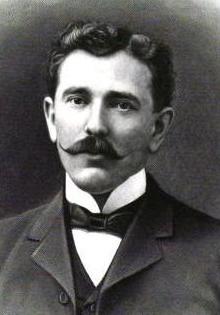
Historical · U.S. House · New York · District 10
Herman Metz
Former U.S. Representative · New York District 10 · 1913–1915 · Democratic
Herman Metz represented New York's District 10 in the United States House of Representatives (1913–1915) for the Democratic party. The page below collects sourced biographical facts, term history, committee roles, and provenance for Metz.
Bioguide ID: M000677
Key facts
- Full name
- Herman Metz
- State
- New York
- District
- District 10
- Party
- Democratic
- House service
- 1913–1915
- First House term
- 1913
- Status
- Left office
- Current term ends
- —
- Born
- 1867
- Bioguide ID
- M000677
- Committee assignments
- —
- Dataset version
- 1.20260606
Biographical narrative
830 words · sourced from the Wikipedia REST extract
Herman August Metz was an American businessman and politician who served as a U.S. Representative for New York's 10th congressional district from 1913 to 1915. A member of the Democratic Party, Metz had a diverse career that spanned business, politics, and military service. He was born on October 19, 1867, in New York City to German immigrant parents and became a notable figure in both the political and business landscapes of early 20th-century America.
Early life and career
Herman Metz was born in New York City to Edward J. Metz and Frances K. Metz, who had immigrated from Germany. His early education included attendance at both private and public schools, which laid the foundation for his future endeavors. Metz's academic achievements were recognized later in life when he received honorary degrees, including a Doctor of Science from Union College and a Doctor of Laws from Manhattan College.
Metz began his professional career at a young age, entering the workforce as an office boy at P. Schulze-Berge in 1881. Over the years, he advanced through the ranks of the company, which underwent several consolidations and name changes. By 1893, he had become the vice president and general manager, and by 1899, he was the majority stockholder and president of what had become Victor Koehl & Co., a firm specializing in pharmaceuticals, chemicals, and dyestuffs. In 1903, Metz established H. A. Metz & Co. after separating the chemical and dyestuff department from the parent company. He also held leadership positions in various other companies, including H. A. Metz Laboratories, Inc., and Consolidated Color and Chemical Co.
In addition to his business ventures, Metz was actively involved in numerous chemical and industrial societies and served on the boards of several banks. His business acumen and leadership in the chemical industry were significant contributors to his reputation as a prominent businessman in New York.
House tenure
Metz's political career began to take shape as he became increasingly active in local Democratic politics. He was one of the founders and served as president of the Kings County Democratic Club in Brooklyn. His political involvement included serving on the Board of Education for both Brooklyn and New York City, and he held the position of Comptroller of New York City from 1906 to 1910. His influence extended to the drafting of the New York City Charter, where he participated in commissions appointed by Governors Hughes and Miller.
In 1912, Metz was nominated by Kings County to run for governor but withdrew in favor of another candidate, William Sulzer. Instead, he sought election to the U.S. House of Representatives, successfully winning a seat in the Sixty-third Congress, which lasted from March 4, 1913, to March 3, 1915. During his time in Congress, Metz served on the Committee on Claims and the Committee on Patents. His congressional district was predominantly Republican, and he was not a resident of the district he represented.
Despite his efforts, Metz did not seek renomination in 1914 and returned to his business pursuits after his term in Congress. His political career included participation as a delegate at the Democratic National Conventions in 1904, 1908, and 1920. He later attempted to return to Congress as a candidate for the Sixty-eighth Congress in 1922, but he was unsuccessful.
Legislative focus and committees
During his tenure in the U.S. House of Representatives, Herman Metz focused on issues pertinent to his background in business and manufacturing. He was particularly interested in matters related to claims and patents, reflecting his experience in the chemical and industrial sectors. As a German-American businessman, Metz advocated for American neutrality during the early years of World War I, a position that aligned with his extensive ties to German manufacturing interests.
Metz's legislative work was characterized by his involvement in two key committees: the Committee on Claims and the Committee on Patents. These committees dealt with issues that were important to his constituents and aligned with his professional expertise. His contributions in these areas were part of a broader effort to address the needs and concerns of the American public during a time of significant change and uncertainty.
After leaving Congress, Metz continued to engage in various business activities, further solidifying his legacy as a businessman. His political and civic contributions were recognized through his involvement in local organizations and his role in shaping the governance of New York City.
Herman Metz passed away on May 17, 1934, in New Rochelle, New York. He was survived by his second wife, four sons, and a brother. His contributions to both the business and political arenas were commemorated posthumously, including the naming of Hamilton-Metz Field in Brooklyn, which honors his legacy alongside that of founding father Alexander Hamilton. Metz's life and career reflect the complexities of early 20th-century American society, where business, politics, and community service intersected. He was interred in Kensico Cemetery in Westchester, New York, leaving behind a multifaceted legacy that continues to be recognized in the communities he served.
Notable legislation
Sponsored and co-sponsored legislation for Herman Metz is pending operator curation. The biographical narrative above carries the same provenance trail until per-bill rows are written.
Sources
- [1]https://en.wikipedia.org/wiki/Herman_A._MetzWikipedia · retrieved 2026-06-06
Notable quotes
Sourced quotes for Herman Metz are pending operator curation. Narrative-scope provenance remains attached below.
Sources
- [1]https://en.wikipedia.org/wiki/Herman_A._MetzWikipedia · retrieved 2026-06-06
Key positions
Curated policy positions for Herman Metz are pending operator review. The biographical narrative above carries the same provenance trail until per-topic positions are written.
Sources
- [1]https://en.wikipedia.org/wiki/Herman_A._MetzWikipedia · retrieved 2026-06-06
Terms served
- 1913–1915U.S. House · Term 1 · Democratic
Sources & provenance
Every attributable claim above carries a per-section [N] marker that resolves to the corresponding URL below. Each entry records the upstream provider, the canonical URL, and the timestamp at which the source was retrieved by the ingest pipeline.
Key facts
- https://bioguide.congress.gov/search/bio/M000677bioguide · retrieved 2026-06-06
- https://www.govtrack.us/congress/members/407662govtrack · retrieved 2026-06-06
Biographical narrative
- https://en.wikipedia.org/wiki/Herman_A._Metzwikipedia · retrieved 2026-06-06
Find your representative
Every U.S. state elects representatives by district. Browse New York’s delegation, the full former-representative roster, or explore the role and term length.
Related on The Candidate
- Preceded by William SulzerEarlier holder of the New York District 10 House seat · Democratic.Open
- Succeeded by Reuben HaskellLater holder of the New York District 10 House seat · Republican.Open
- Abel HuntingtonFormer U.S. Representative · New York District 1 · JacksonOpen
- Alfred ChapinFormer U.S. Representative · New York District 1 · DemocraticOpen
- Cadwallader ColdenFormer U.S. Representative · New York District 1 · FederalistOpen
- Charles FloydFormer U.S. Representative · New York District 1 · DemocraticOpen