
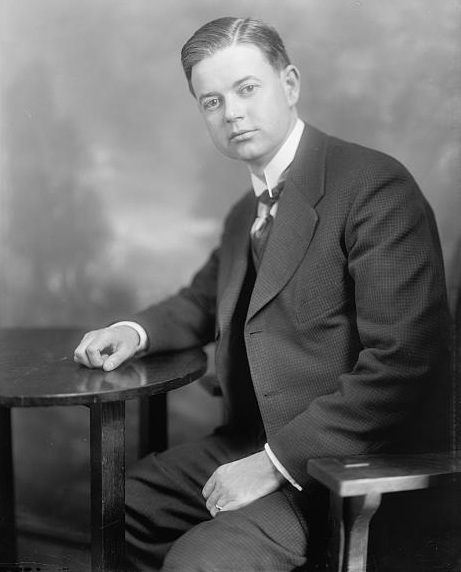
Historical · U.S. House · New York · District 10
Reuben Haskell
Former U.S. Representative · New York District 10 · 1915–1921 · Republican
Reuben Haskell represented New York's District 10 in the United States House of Representatives (1915–1921) for the Republican party. The page below collects sourced biographical facts, term history, committee roles, and provenance for Haskell.
Bioguide ID: H000319
Key facts
- Full name
- Reuben Haskell
- State
- New York
- District
- District 10
- Party
- Republican
- House service
- 1915–1921
- First House term
- 1915
- Status
- Left office
- Current term ends
- —
- Born
- 1878
- Bioguide ID
- H000319
- Committee assignments
- —
- Dataset version
- 1.20260606
Biographical narrative
836 words · sourced from the Wikipedia REST extract
Reuben Haskell was a U.S. Representative from New York, serving the 10th congressional district as a member of the Republican Party. His congressional career spanned three terms from 1915 until his resignation in 1919, after which he transitioned into a judicial role. Haskell was also known for his involvement in local politics and his service in the military during the Spanish-American War.
Early life and career
Reuben Haskell was born on October 5, 1878, in Brooklyn, New York. He completed his secondary education at Hempstead High School in Hempstead, New York, graduating in 1894. Following this, he pursued further studies at Ithaca High School in the subsequent years and attended New York Law School for two years, from 1896 to 1897. Haskell earned his Bachelor of Laws (LL.B.) degree from Cornell Law School in 1898. After being admitted to the bar in 1899, he began his legal practice in New York City.
Haskell's early career was marked by his military service. He enlisted in the 2nd Regiment of New York Volunteers during the Spanish-American War, where he served with distinction. After the war, he continued his military involvement with the New York National Guard's 13th Regiment, where he progressed through the ranks from private to corporal and then to sergeant before his discharge in 1902. His commitment to veterans' affairs was evident as he remained active in the United Spanish War Veterans organization.
In addition to his military service, Haskell became increasingly engaged in local politics as a member of the Republican Party. By his twenties, he had taken on leadership roles, including serving as the leader of the 23rd Assembly District Club. His political involvement extended to the state level, where he was a delegate to the Republican National Conventions in both 1908 and 1920. Haskell was also a member of the state Republican Committee from 1907 to 1913 and again from 1914 to 1919.
Haskell's career in public service began to take shape when he served as counsel to the Kings County Clerk from 1908 to 1909. He held various positions in Brooklyn's local government, including Borough Secretary from 1910 to 1913 and Deputy Commissioner of Public Works from 1913 to 1915. His political aspirations led him to run for a seat in the U.S. Congress in 1912, although he was not successful in that election.
House tenure
Reuben Haskell's congressional career commenced with his election to the 64th Congress in 1914. He officially took office on March 4, 1915, representing New York's 10th congressional district. Haskell was reelected for two additional terms, serving in the House until December 31, 1919, when he resigned to accept a judicial appointment. During his time in Congress, he was notably appointed as the chairman of the Committee on Expenditures in the Department of the Navy during the 66th Congress.
Haskell's tenure in the House of Representatives was characterized by his involvement in various legislative matters, although specific details of his voting record and the bills he supported are not extensively documented. His focus on naval expenditures suggests a commitment to military and defense issues, which may have been influenced by his own military background.
After serving three terms in Congress, Haskell resigned in late 1919 to transition into a judicial role, marking a significant shift in his career from legislative duties to the judiciary.
Legislative focus and committees
During his time in the U.S. House of Representatives, Reuben Haskell was primarily associated with issues related to military expenditures and public works, reflecting his background and interests. As chairman of the Committee on Expenditures in the Department of the Navy, he played a role in overseeing and managing budgetary allocations for naval operations, which was particularly relevant during the post-World War I era when military readiness and expenditures were of national concern.
Haskell's legislative focus was likely influenced by the broader political context of his time, including the aftermath of World War I and the evolving role of the United States on the global stage. His military service and legal background provided him with a unique perspective on issues related to defense and public infrastructure.
After leaving Congress, Haskell continued his public service as a judge on the Kings County Court from 1920 to 1925. His judicial career followed a brief period of electoral defeat in 1924, after which he returned to the practice of law. Furthermore, he served on the New York State Transit Commission from 1932 to 1942, contributing to the development and management of public transportation systems in the state.
Reuben Haskell's life after his congressional service was marked by continued engagement in public affairs and community service. He spent his later years in Hillsdale, New Jersey, where he passed away on October 2, 1971. His contributions to both local and national politics, as well as his service in the military and judiciary, reflect a career dedicated to public service and governance. Haskell was interred at Mt. Repose Cemetery in Haverstraw, New York, leaving behind a legacy of civic involvement and leadership.
Notable legislation
Sponsored and co-sponsored legislation for Reuben Haskell is pending operator curation. The biographical narrative above carries the same provenance trail until per-bill rows are written.
Sources
- [1]https://en.wikipedia.org/wiki/Reuben_L._HaskellWikipedia · retrieved 2026-06-06
Notable quotes
Sourced quotes for Reuben Haskell are pending operator curation. Narrative-scope provenance remains attached below.
Sources
- [1]https://en.wikipedia.org/wiki/Reuben_L._HaskellWikipedia · retrieved 2026-06-06
Key positions
Curated policy positions for Reuben Haskell are pending operator review. The biographical narrative above carries the same provenance trail until per-topic positions are written.
Sources
- [1]https://en.wikipedia.org/wiki/Reuben_L._HaskellWikipedia · retrieved 2026-06-06
Terms served
- 1915–1917U.S. House · Term 1 · Republican
- 1917–1919U.S. House · Term 2 · Republican
- 1919–1921U.S. House · Term 3 · Republican
Sources & provenance
Every attributable claim above carries a per-section [N] marker that resolves to the corresponding URL below. Each entry records the upstream provider, the canonical URL, and the timestamp at which the source was retrieved by the ingest pipeline.
Key facts
- https://bioguide.congress.gov/search/bio/H000319bioguide · retrieved 2026-06-06
- https://www.govtrack.us/congress/members/405192govtrack · retrieved 2026-06-06
Biographical narrative
- https://en.wikipedia.org/wiki/Reuben_L._Haskellwikipedia · retrieved 2026-06-06
Find your representative
Every U.S. state elects representatives by district. Browse New York’s delegation, the full former-representative roster, or explore the role and term length.
Related on The Candidate
- Preceded by Herman MetzEarlier holder of the New York District 10 House seat · Democratic.Open
- Succeeded by Emanuel CellerLater holder of the New York District 10 House seat · Democratic.Open
- Abel HuntingtonFormer U.S. Representative · New York District 1 · JacksonOpen
- Alfred ChapinFormer U.S. Representative · New York District 1 · DemocraticOpen
- Cadwallader ColdenFormer U.S. Representative · New York District 1 · FederalistOpen
- Charles FloydFormer U.S. Representative · New York District 1 · DemocraticOpen