
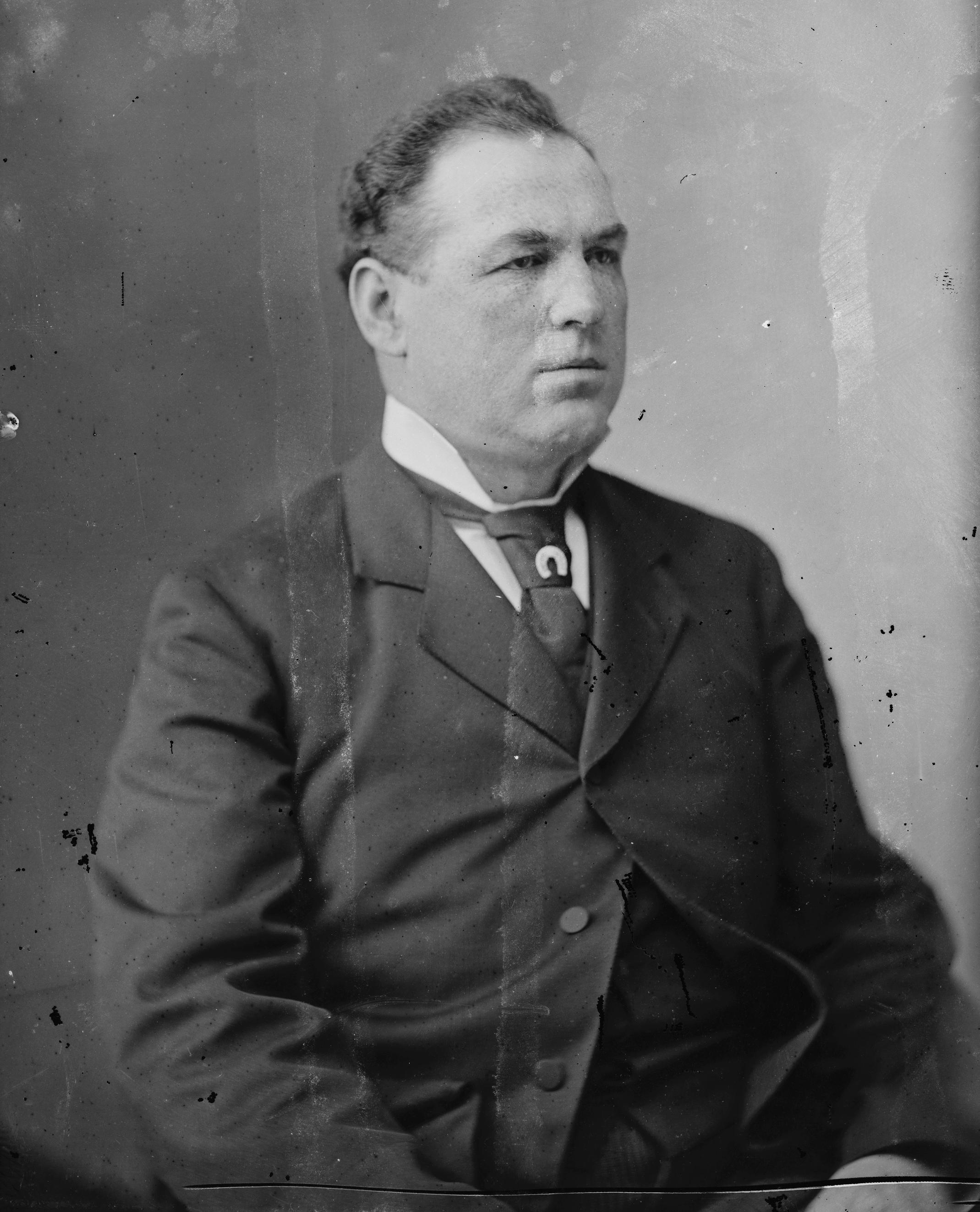
Historical · U.S. House · New York · District 10
James O’Brien
Former U.S. Representative · New York District 10 · 1879–1881 · Ind. Democrat
James O’Brien represented New York's District 10 in the United States House of Representatives (1879–1881) for the Ind. Democrat party. The page below collects sourced biographical facts, term history, committee roles, and provenance for O’Brien.
Bioguide ID: O000011
Key facts
- Full name
- James O’Brien
- State
- New York
- District
- District 10
- Party
- Ind. Democrat
- House service
- 1879–1881
- First House term
- 1879
- Status
- Left office
- Current term ends
- —
- Born
- 1841
- Bioguide ID
- O000011
- Committee assignments
- —
- Dataset version
- 1.20260606
Biographical narrative
893 words · sourced from the Wikipedia REST extract
James O’Brien was a U.S. Representative from New York, serving in the House of Representatives from 1879 to 1881. He was affiliated with the Independent Democrat party. Born in Ireland, O’Brien immigrated to the United States in the early 1860s and became involved in local politics, where he gained a reputation for his opposition to political corruption. His tenure in Congress was marked by his efforts to address issues of governance and public integrity, although he served only one term before returning to private life.
Early life and career
James O’Brien was born on March 13, 1841, in King's County, Ireland, which is now known as County Offaly. He received his education in the common schools of his home country before making the significant decision to immigrate to the United States in 1861. Settling in New York City, O’Brien quickly became involved in local governance and politics.
His political career began when he was elected as an alderman in New York City, serving in this capacity in 1864 and again in 1866. His role as an alderman provided him with valuable experience in municipal governance and laid the groundwork for his future political endeavors. In 1867, he was appointed Sheriff of New York County, a position that further elevated his profile in the political landscape of the city.
O’Brien is notably recognized for his role in exposing the corruption associated with the Tweed Ring, a powerful political organization in New York City during the 19th century. In 1871, he played a crucial part in the downfall of this corrupt group by providing financial accounts to the New York Times, which helped to publicize the malfeasance of the Tweed Ring. His actions contributed to the broader movement against political corruption in the city, marking him as a figure of integrity in a time when such values were often compromised.
Following his tenure as Sheriff, O’Brien served in the New York State Senate from 1872 to 1873. During this time, he founded the Apollo Hall Democracy, a political organization that aimed to promote democratic ideals and challenge the established political order. His political aspirations continued as he sought the mayoralty of New York City in 1873, although he was unsuccessful in that bid. Additionally, he ran for a seat in the Forty-fourth Congress in 1874 but did not secure election.
O’Brien's political career was marked by contention, particularly during the 1874 election cycle, when he faced off against Tammany Hall-backed candidate Abram S. Hewitt. This period was also marred by violence, as a lieutenant of O’Brien's was murdered during an election day altercation involving rival political factions. Despite these challenges, O’Brien's commitment to reform and integrity in governance remained evident.
House tenure
James O’Brien was elected to the U.S. House of Representatives as an Independent Democrat, serving in the Forty-sixth Congress from March 4, 1879, to March 3, 1881. His election to Congress was a culmination of his extensive experience in local and state politics, as well as his reputation as a reformer. During his time in the House, O’Brien focused on issues relevant to his constituents and the broader political landscape of the time.
While specific details regarding his legislative activities and the bills he supported during his congressional term are not extensively documented, O’Brien's election as an Independent Democrat indicates a commitment to principles that often diverged from the mainstream Democratic Party, particularly in his opposition to corruption and his advocacy for reform. His tenure, although brief, was part of a larger narrative of political change in the United States during the late 19th century, a period marked by significant social and economic transformation.
O’Brien sought re-nomination for a subsequent term in 1880 but was unsuccessful in his bid. Following his departure from Congress, he transitioned into the private sector, where he worked as a stockbroker. This shift marked a departure from his political career, although his earlier contributions to public service and reform remained part of his legacy.
Legislative focus and committees
During his time in the House of Representatives, James O’Brien's legislative focus was likely influenced by his background in local governance and his commitment to addressing corruption and promoting integrity in public service. While specific committee assignments and detailed legislative actions are not available, his election as an Independent Democrat suggests that he may have engaged with issues concerning public accountability, governance, and the welfare of his constituents.
O’Brien's political career prior to his congressional service, particularly his efforts to combat the corruption of the Tweed Ring, likely informed his legislative priorities. His actions in exposing financial misconduct in New York City demonstrated a commitment to transparency and ethical governance, values that would have been critical in his role as a U.S. Representative.
After concluding his term in the House, O’Brien returned to private life but remained a figure of interest in the political landscape of New York. His work as a stockbroker after leaving Congress indicates a shift in focus, although his earlier contributions to public service and reform efforts continued to resonate within the community.
James O’Brien passed away on March 5, 1907, in Manhattan, New York, at the age of 65. He was laid to rest in Calvary Cemetery in Queens. His life and career reflect the complexities of 19th-century American politics, particularly the struggles against corruption and the pursuit of reform in governance.
Notable legislation
Sponsored and co-sponsored legislation for James O’Brien is pending operator curation. The biographical narrative above carries the same provenance trail until per-bill rows are written.
Sources
- [1]https://en.wikipedia.org/wiki/James_O'Brien_(U.S._congressman)Wikipedia · retrieved 2026-06-06
Notable quotes
Sourced quotes for James O’Brien are pending operator curation. Narrative-scope provenance remains attached below.
Sources
- [1]https://en.wikipedia.org/wiki/James_O'Brien_(U.S._congressman)Wikipedia · retrieved 2026-06-06
Key positions
Curated policy positions for James O’Brien are pending operator review. The biographical narrative above carries the same provenance trail until per-topic positions are written.
Sources
- [1]https://en.wikipedia.org/wiki/James_O'Brien_(U.S._congressman)Wikipedia · retrieved 2026-06-06
Terms served
- 1879–1881U.S. House · Term 1 · Ind. Democrat
Sources & provenance
Every attributable claim above carries a per-section [N] marker that resolves to the corresponding URL below. Each entry records the upstream provider, the canonical URL, and the timestamp at which the source was retrieved by the ingest pipeline.
Key facts
- https://bioguide.congress.gov/search/bio/O000011bioguide · retrieved 2026-06-06
- https://www.govtrack.us/congress/members/408262govtrack · retrieved 2026-06-06
Biographical narrative
- https://en.wikipedia.org/wiki/James_O'Brien_(U.S._congressman)wikipedia · retrieved 2026-06-06
Find your representative
Every U.S. state elects representatives by district. Browse New York’s delegation, the full former-representative roster, or explore the role and term length.
Related on The Candidate
- Preceded by William RobertsonEarlier holder of the New York District 10 House seat · Republican.Open
- Succeeded by Amos CummingsLater holder of the New York District 10 House seat · Democratic.Open
- Abel HuntingtonFormer U.S. Representative · New York District 1 · JacksonOpen
- Alfred ChapinFormer U.S. Representative · New York District 1 · DemocraticOpen
- Cadwallader ColdenFormer U.S. Representative · New York District 1 · FederalistOpen
- Charles FloydFormer U.S. Representative · New York District 1 · DemocraticOpen