
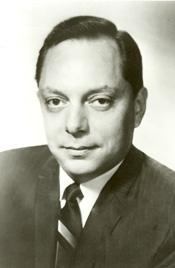
Historical · U.S. House · New York · District 11
Frank Brasco
Former U.S. Representative · New York District 11 · 1967–1975 · Democratic
Frank Brasco represented New York's District 11 in the United States House of Representatives (1967–1975) for the Democratic party. The page below collects sourced biographical facts, term history, committee roles, and provenance for Brasco.
Bioguide ID: B000771
Key facts
- Full name
- Frank Brasco
- State
- New York
- District
- District 11
- Party
- Democratic
- House service
- 1967–1975
- First House term
- 1967
- Status
- Left office
- Current term ends
- —
- Born
- 1932
- Bioguide ID
- B000771
- Committee assignments
- —
- Dataset version
- 1.20260605
Biographical narrative
836 words · sourced from the Wikipedia REST extract
Frank Brasco was an American politician who served as a Democratic member of the United States House of Representatives for New York's 11th congressional district from 1967 until 1975. His political career spanned four terms during a period marked by significant national and local developments. Born in Brooklyn, New York, Brasco's educational background and early career in law laid the foundation for his entry into politics. However, his tenure in Congress was marred by legal controversies that ultimately led to his departure from public office.
Early life and career
Frank Brasco was born on October 15, 1932, in Brooklyn, New York. He completed his secondary education and went on to earn a Bachelor of Arts degree from Brooklyn College in 1955. Following his undergraduate studies, he pursued a legal education at Brooklyn Law School, where he obtained his Bachelor of Laws (LLB) degree in 1957. Brasco's academic achievements were complemented by his service in the United States Army Reserve, reflecting a commitment to both education and civic duty.
After completing his legal education, Brasco began his professional career as an assistant district attorney for Kings County, New York. This role provided him with valuable experience in the legal system and public service, which likely influenced his decision to enter the political arena. His background in law and public prosecution positioned him as a candidate capable of addressing legal and legislative issues effectively.
Brasco's political career began in earnest when he was elected to the United States Congress in 1966. His election to represent New York's 11th congressional district marked the beginning of a significant chapter in his life, as he transitioned from legal practice to legislative service. He officially took office on January 3, 1967, and would go on to serve four consecutive terms in the House of Representatives.
House tenure
During his time in Congress, Frank Brasco was part of a tumultuous political landscape characterized by social change, civil rights movements, and significant legislative initiatives. As a member of the Democratic Party, he aligned himself with the party's progressive agenda, which sought to address various issues affecting constituents in his district and beyond. Throughout his four terms, Brasco participated in numerous legislative debates and initiatives, contributing to the broader discussions of the era.
Brasco's tenure in the House of Representatives lasted until January 3, 1975. His time in office coincided with a period of considerable political upheaval, including the Vietnam War, civil rights advancements, and the Watergate scandal. These events shaped the legislative priorities of many members of Congress, including Brasco, who navigated the complexities of representing his constituents while also addressing national issues.
Despite his initial success in securing re-election, Brasco's political career faced significant challenges due to legal troubles that emerged during his final term. These issues would ultimately overshadow his legislative accomplishments and lead to his decision not to seek re-election in 1974.
Legislative focus and committees
Throughout his congressional career, Frank Brasco was involved in various legislative matters, reflecting the interests and concerns of his constituents in New York's 11th district. His work in Congress encompassed a range of issues, including social welfare, labor rights, and urban development. As a member of the Democratic Party, he generally supported policies aimed at promoting social justice and economic equity.
However, Brasco's legislative focus was complicated by the legal issues he encountered during his time in office. In 1973, he was indicted on federal bribery and conspiracy charges related to payoffs he allegedly received from a Mafia-owned trucking company. This company was seeking contracts for mail hauling from the U.S. Post Office, and the investigation into these activities raised serious ethical concerns. The first trial resulted in a hung jury, but subsequent proceedings led to his conviction on charges of bribery.
As a consequence of his legal troubles, Brasco faced significant scrutiny and criticism. His conviction resulted in a sentence that included a fine and disbarment from practicing law. The fallout from these events impacted his ability to serve effectively in Congress, and he made the decision not to run for re-election in 1974.
Brasco's legal issues also influenced his voting behavior on critical matters. Notably, he crossed party lines to vote against allowing the House Banking Committee to subpoena members of the Nixon administration regarding suspected violations of the Federal Election Campaign Act. This decision was surprising to many, given his previously liberal stance and opposition to President Nixon. The context of his legal troubles and the pressure from external parties, including a meeting arranged by Governor Nelson Rockefeller, contributed to his controversial vote.
Despite the challenges he faced, Brasco's legislative career was marked by his engagement in the political process and his representation of his constituents. His time in office reflected the complexities of navigating public service amid personal and legal controversies.
Frank Brasco passed away on October 19, 1998, at the age of 66. His life and career serve as a reminder of the intricate relationship between politics, law, and personal conduct in the realm of public service.
Notable legislation
Sponsored and co-sponsored legislation for Frank Brasco is pending operator curation. The biographical narrative above carries the same provenance trail until per-bill rows are written.
Sources
- [1]https://en.wikipedia.org/wiki/Frank_J._BrascoWikipedia · retrieved 2026-06-05
Notable quotes
Sourced quotes for Frank Brasco are pending operator curation. Narrative-scope provenance remains attached below.
Sources
- [1]https://en.wikipedia.org/wiki/Frank_J._BrascoWikipedia · retrieved 2026-06-05
Key positions
Curated policy positions for Frank Brasco are pending operator review. The biographical narrative above carries the same provenance trail until per-topic positions are written.
Sources
- [1]https://en.wikipedia.org/wiki/Frank_J._BrascoWikipedia · retrieved 2026-06-05
Terms served
- 1967–1969U.S. House · Term 1 · Democratic
- 1969–1971U.S. House · Term 2 · Democratic
- 1971–1973U.S. House · Term 3 · Democratic
- 1973–1975U.S. House · Term 4 · Democratic
Sources & provenance
Every attributable claim above carries a per-section [N] marker that resolves to the corresponding URL below. Each entry records the upstream provider, the canonical URL, and the timestamp at which the source was retrieved by the ingest pipeline.
Key facts
- https://bioguide.congress.gov/search/bio/B000771bioguide · retrieved 2026-06-05
- https://www.govtrack.us/congress/members/401730govtrack · retrieved 2026-06-05
Biographical narrative
- https://en.wikipedia.org/wiki/Frank_J._Brascowikipedia · retrieved 2026-06-05
Find your representative
Every U.S. state elects representatives by district. Browse New York’s delegation, the full former-representative roster, or explore the role and term length.
Related on The Candidate
- Preceded by Eugene KeoghEarlier holder of the New York District 11 House seat · Democratic.Open
- Succeeded by Major OwensLater holder of the New York District 11 House seat · Democratic.Open
- Abel HuntingtonFormer U.S. Representative · New York District 1 · JacksonOpen
- Alfred ChapinFormer U.S. Representative · New York District 1 · DemocraticOpen
- Cadwallader ColdenFormer U.S. Representative · New York District 1 · FederalistOpen
- Charles FloydFormer U.S. Representative · New York District 1 · DemocraticOpen