
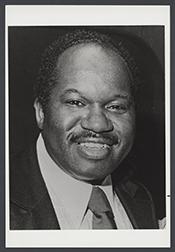
Historical · U.S. House · New York · District 11
Major Owens
Former U.S. Representative · New York District 11 · 1983–2007 · Democratic
Major Owens represented New York's District 11 in the United States House of Representatives (1983–2007) for the Democratic party. The page below collects sourced biographical facts, term history, committee roles, and provenance for Owens.
Bioguide ID: O000159
Key facts
- Full name
- Major Owens
- State
- New York
- District
- District 11
- Party
- Democratic
- House service
- 1983–2007
- First House term
- 1983
- Status
- Left office
- Current term ends
- —
- Born
- 1936
- Bioguide ID
- O000159
- Committee assignments
- —
- Dataset version
- 1.20260605
Biographical narrative
1,017 words · sourced from the Wikipedia REST extract
Major R. Owens was a prominent American politician and librarian who served as a U.S. Representative for New York's 11th and later 12th congressional district from 1983 until 2007. A member of the Democratic Party, Owens is recognized for his advocacy in education, library funding, and disability rights, notably his role in the passage of the Americans with Disabilities Act of 1990. His career spanned over two decades in Congress, during which he represented a diverse constituency in Brooklyn, New York.
Early life and career
Major R. Owens was born on June 28, 1936, in Collierville, Tennessee, to Ezekiel and Edna Owens. He spent his formative years in Memphis, Tennessee, where his father worked as a laborer in a furniture factory. Owens pursued higher education at Morehouse College, where he earned a bachelor's degree in 1956. He furthered his studies at Atlanta University, now known as Clark Atlanta University, obtaining a master's degree in library science in 1957.
Following his graduation, Owens relocated to Brooklyn, New York, where he began his professional career as a librarian at the Brooklyn Public Library. His tenure there lasted from 1958 through the late 1960s. During this period, he became actively involved in community organizations, including the Congress of Racial Equality, advocating for civil rights and social justice. As a community information librarian, Owens was innovative in promoting library resources by placing collections in public spaces such as laundromats and stores, making literature more accessible to the community.
In 1969, Owens collaborated with fellow librarians to establish the New York Social Responsibilities Round Table, an organization aimed at enhancing the role of libraries in promoting civil rights and social justice. This initiative became part of the New York Library Association. Owens's contributions to the field of librarianship were recognized when he was awarded honorary membership by the American Library Association in 1987, a prestigious accolade that underscores his influence and commitment to library services.
Owens's political career began in 1968 when he was appointed by New York City Mayor John Lindsay as the commissioner of the Community Development Agency. He served in this role for approximately five years before successfully running for a seat in the New York State Senate, where he represented the 21st district from 1975 to 1982. His legislative experience at the state level laid the groundwork for his subsequent election to the U.S. House of Representatives.
House tenure
In 1982, Owens was elected to the U.S. House of Representatives, succeeding the retiring Shirley Chisholm. He began his first term in Congress in 1983 and continued to serve until his retirement in January 2007, completing a total of 12 terms in office. Throughout his congressional career, Owens earned the nickname "The Librarian in Congress," reflecting his background and ongoing advocacy for library funding and education issues.
Owens represented a diverse constituency in Brooklyn, which included significant populations of African Americans, Hispanic Americans, and Jewish Americans, as well as a large Hasidic Jewish community. His district encompassed various neighborhoods, including Brownsville, Crown Heights, Flatbush, East Flatbush, and Park Slope, each with its unique demographic and socioeconomic characteristics.
During his time in Congress, Owens was known for his commitment to education and public libraries. He worked closely with disability rights activists, particularly Justin Whitlock Dart, to advance legislation that would benefit individuals with disabilities. Owens played a crucial role as the floor manager for the Americans with Disabilities Act (ADA) of 1990, which aimed to eliminate discrimination against individuals with disabilities and ensure their access to public services and facilities.
In the 2004 Democratic primary, Owens secured his position with a plurality of the vote, winning approximately 45.44%. He was subsequently re-elected in the general election with a significant majority, receiving 94% of the vote. However, in 2006, he announced his decision not to seek re-election, marking the end of his congressional career. His successor, Yvette Clarke, had previously challenged him in the 2004 primary and won the election following Owens's retirement.
Owens was also known for his political stances, including his decision to vote against counting the electoral votes from Ohio during the 2004 presidential election, a move that reflected his concerns about the electoral process. He was a member of the Congressional Progressive Caucus and received recognition for his positions on middle-class issues, as evidenced by his high rating on the Drum Major Institute's 2005 Congressional Scorecard.
Legislative focus and committees
Throughout his tenure in the House of Representatives, Major R. Owens focused on a range of legislative issues, with a particular emphasis on education, library funding, and disability rights. His background as a librarian informed his advocacy for public libraries and educational resources, and he consistently sought to enhance funding for these institutions.
Owens's work on the Americans with Disabilities Act exemplified his commitment to civil rights and social justice. He collaborated with various stakeholders, including disability advocates, to ensure that the legislation addressed the needs of individuals with disabilities. His efforts in this area were instrumental in shaping the discourse around disability rights in the United States.
In addition to his work on the ADA, Owens served on various committees during his time in Congress, where he contributed to discussions on education and social issues. His legislative initiatives often reflected the diverse needs of his constituents, and he was known for his ability to navigate complex political landscapes to achieve his goals.
After retiring from Congress, Owens transitioned to a distinguished visiting scholar position at the John W. Kluge Center, where he focused on researching the Congressional Black Caucus and its impact on national politics. He authored a book titled "The Peacock Elite: A Subjective Case Study of the Congressional Black Caucus and Its Impact on National Politics," published in 2011, which explored the role of the caucus in shaping policy and representation.
Owens's legacy is marked by his dedication to public service, advocacy for marginalized communities, and commitment to education and library access. His contributions to the U.S. House of Representatives and his influence on civil rights and social justice continue to be recognized in discussions about legislative history and community advocacy.
Notable legislation
Sponsored and co-sponsored legislation for Major Owens is pending operator curation. The biographical narrative above carries the same provenance trail until per-bill rows are written.
Sources
- [1]https://en.wikipedia.org/wiki/Major_OwensWikipedia · retrieved 2026-06-05
Notable quotes
Sourced quotes for Major Owens are pending operator curation. Narrative-scope provenance remains attached below.
Sources
- [1]https://en.wikipedia.org/wiki/Major_OwensWikipedia · retrieved 2026-06-05
Key positions
Curated policy positions for Major Owens are pending operator review. The biographical narrative above carries the same provenance trail until per-topic positions are written.
Sources
- [1]https://en.wikipedia.org/wiki/Major_OwensWikipedia · retrieved 2026-06-05
Terms served
- 1983–1985U.S. House · Term 1 · Democratic
- 1985–1987U.S. House · Term 2 · Democratic
- 1987–1989U.S. House · Term 3 · Democratic
- 1989–1991U.S. House · Term 4 · Democratic
- 1991–1993U.S. House · Term 5 · Democratic
- 1993–1995U.S. House · Term 6 · Democratic
- 1995–1997U.S. House · Term 7 · Democratic
- 1997–1999U.S. House · Term 8 · Democratic
- 1999–2001U.S. House · Term 9 · Democratic
- 2001–2003U.S. House · Term 10 · Democratic
- 2003–2005U.S. House · Term 11 · Democratic
- 2005–2007U.S. House · Term 12 · Democratic
Sources & provenance
Every attributable claim above carries a per-section [N] marker that resolves to the corresponding URL below. Each entry records the upstream provider, the canonical URL, and the timestamp at which the source was retrieved by the ingest pipeline.
Key facts
- https://bioguide.congress.gov/search/bio/O000159bioguide · retrieved 2026-06-05
- http://www.house.gov/owenshouse.gov · retrieved 2026-06-05
Biographical narrative
- https://en.wikipedia.org/wiki/Major_Owenswikipedia · retrieved 2026-06-05
Find your representative
Every U.S. state elects representatives by district. Browse New York’s delegation, the full former-representative roster, or explore the role and term length.
Related on The Candidate
- Preceded by Frank BrascoEarlier holder of the New York District 11 House seat · Democratic.Open
- Succeeded by Michael GrimmLater holder of the New York District 11 House seat · Republican.Open
- Abel HuntingtonFormer U.S. Representative · New York District 1 · JacksonOpen
- Alfred ChapinFormer U.S. Representative · New York District 1 · DemocraticOpen
- Cadwallader ColdenFormer U.S. Representative · New York District 1 · FederalistOpen
- Charles FloydFormer U.S. Representative · New York District 1 · DemocraticOpen