
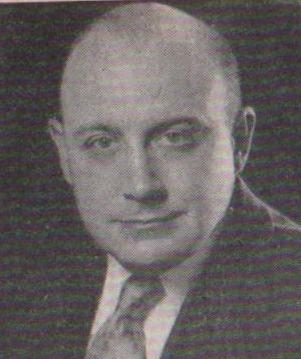
Historical · U.S. House · New York · District 12
Francis Dorn
Former U.S. Representative · New York District 12 · 1953–1961 · Republican
Francis Dorn represented New York's District 12 in the United States House of Representatives (1953–1961) for the Republican party. The page below collects sourced biographical facts, term history, committee roles, and provenance for Dorn.
Bioguide ID: D000433
Key facts
- Full name
- Francis Dorn
- State
- New York
- District
- District 12
- Party
- Republican
- House service
- 1953–1961
- First House term
- 1953
- Status
- Left office
- Current term ends
- —
- Born
- 1911
- Bioguide ID
- D000433
- Committee assignments
- —
- Dataset version
- 1.20260605
Biographical narrative
966 words · sourced from the Wikipedia REST extract
Francis Edwin Dorn was a prominent American politician who served as a U.S. Representative for New York's 12th congressional district from 1953 to 1961. A member of the Republican Party, Dorn was notable for being the last Republican to represent this district, a position he held during a transformative period in American politics. His legislative career was marked by his involvement in significant civil rights legislation and his advocacy for the inclusion of religious language in national symbols.
Early life and career
Francis Dorn was born on April 18, 1911, in Brooklyn, New York. He grew up in a vibrant urban environment that would later influence his political career. Dorn attended St. Augustine High School and Bishop Loughlin Memorial High School, where he likely developed a foundation for his future pursuits in law and public service. Following his secondary education, he enrolled at Fordham University, where he earned his undergraduate degree in 1932. Dorn continued his education at Fordham University School of Law, graduating in 1935. His academic journey also included studies at the NYU Wagner School of Public Service in 1936, which further equipped him with the knowledge and skills necessary for a career in public service and law.
After being admitted to the bar in 1935, Dorn began practicing law in Brooklyn. His legal career was briefly interrupted when he entered politics, serving as a member of the New York State Assembly representing Kings County's 10th District in 1941 and 1942. His tenure in the Assembly was short-lived, as he resigned on April 1, 1942, to enlist in the United States Navy. During World War II, Dorn served overseas for four years, ultimately achieving the rank of lieutenant commander in the Naval Reserve before his discharge in 1946. He was later promoted to the rank of commander, reflecting his dedication and service during a critical period in American history.
House tenure
Dorn's political career took a significant turn when he was elected to the 83rd United States Congress as a Republican representative for New York's 12th congressional district. His first term began on January 3, 1953, and he served a total of four terms in the House of Representatives until January 3, 1961. During his time in Congress, Dorn became known for his active participation in legislative matters and his alignment with key issues of the era.
His tenure in the House coincided with a period of significant social change in the United States, particularly regarding civil rights. Dorn was a supporter of civil rights legislation, voting in favor of the Civil Rights Acts of 1957 and 1960. These acts aimed to address racial discrimination and ensure voting rights for African Americans, reflecting the growing national movement for civil rights during the 1950s and 1960s. Dorn's support for these measures positioned him as a participant in the broader struggle for equality and justice in America.
In addition to his civil rights advocacy, Dorn was involved in other notable legislative initiatives. One of his more controversial positions was his support for the inclusion of the phrase "under God" in the Pledge of Allegiance, which was a topic of considerable debate during the 1950s. This advocacy reflected the era's intertwining of religion and politics, as well as the desire among some lawmakers to reaffirm the nation's religious heritage in public life.
Despite his legislative efforts, Dorn faced challenges in maintaining his congressional seat. In 1960, he was defeated in his bid for re-election by Hugh Carey, a neighboring candidate who would later become the Governor of New York. This loss marked the end of Dorn's congressional career, concluding a significant chapter in his life as a public servant.
Legislative focus and committees
Throughout his time in the U.S. House of Representatives, Dorn's legislative focus was shaped by the pressing issues of his time. His support for civil rights legislation was a defining aspect of his congressional career, aligning him with the national movement advocating for racial equality. The Civil Rights Acts of 1957 and 1960 were landmark pieces of legislation aimed at dismantling systemic racism and ensuring that all citizens had equal access to the democratic process. Dorn's votes in favor of these acts underscored his commitment to addressing the injustices faced by African Americans and other marginalized groups.
In addition to civil rights, Dorn's advocacy for the Pledge of Allegiance's religious language highlighted his interest in the intersection of faith and governance. The inclusion of "under God" in the Pledge was part of a broader cultural movement during the 1950s that sought to reinforce the United States' identity as a nation founded on religious principles. This initiative was emblematic of the era's political climate, where issues of faith, patriotism, and national identity were often intertwined.
Dorn's legislative activities were not limited to civil rights and religious issues; he also participated in various committees that addressed a range of topics pertinent to his constituents and the nation. His involvement in these committees allowed him to influence policy decisions and advocate for the interests of New Yorkers, particularly those in his district.
After leaving Congress, Dorn transitioned back into the private sector, where he continued his professional career as the owner of F.E.D. Concrete Company. This shift marked a return to the business world, where he applied the skills and knowledge he had gained during his time in public service.
Francis Dorn passed away on September 17, 1987, in New York City. His contributions to American politics, particularly in the realm of civil rights and public service, remain a part of his legacy. He was laid to rest at Green-Wood Cemetery, a historic cemetery in Brooklyn, New York. Dorn's life and career reflect the complexities of mid-20th century American politics, as well as the ongoing struggles for equality and representation in the United States.
Notable legislation
Sponsored and co-sponsored legislation for Francis Dorn is pending operator curation. The biographical narrative above carries the same provenance trail until per-bill rows are written.
Sources
- [1]https://en.wikipedia.org/wiki/Francis_E._DornWikipedia · retrieved 2026-06-05
Notable quotes
Sourced quotes for Francis Dorn are pending operator curation. Narrative-scope provenance remains attached below.
Sources
- [1]https://en.wikipedia.org/wiki/Francis_E._DornWikipedia · retrieved 2026-06-05
Key positions
Curated policy positions for Francis Dorn are pending operator review. The biographical narrative above carries the same provenance trail until per-topic positions are written.
Sources
- [1]https://en.wikipedia.org/wiki/Francis_E._DornWikipedia · retrieved 2026-06-05
Terms served
- 1953–1955U.S. House · Term 1 · Republican
- 1955–1957U.S. House · Term 2 · Republican
- 1957–1959U.S. House · Term 3 · Republican
- 1959–1961U.S. House · Term 4 · Republican
Sources & provenance
Every attributable claim above carries a per-section [N] marker that resolves to the corresponding URL below. Each entry records the upstream provider, the canonical URL, and the timestamp at which the source was retrieved by the ingest pipeline.
Key facts
- https://bioguide.congress.gov/search/bio/D000433bioguide · retrieved 2026-06-05
- https://www.govtrack.us/congress/members/403543govtrack · retrieved 2026-06-05
Biographical narrative
- https://en.wikipedia.org/wiki/Francis_E._Dornwikipedia · retrieved 2026-06-05
Find your representative
Every U.S. state elects representatives by district. Browse New York’s delegation, the full former-representative roster, or explore the role and term length.
Related on The Candidate
- Preceded by Meyer LondonEarlier holder of the New York District 12 House seat · Socialist.Open
- Succeeded by Shirley ChisholmLater holder of the New York District 12 House seat · Democratic.Open
- Abel HuntingtonFormer U.S. Representative · New York District 1 · JacksonOpen
- Alfred ChapinFormer U.S. Representative · New York District 1 · DemocraticOpen
- Cadwallader ColdenFormer U.S. Representative · New York District 1 · FederalistOpen
- Charles FloydFormer U.S. Representative · New York District 1 · DemocraticOpen