
Historical · U.S. House · New York · District 14
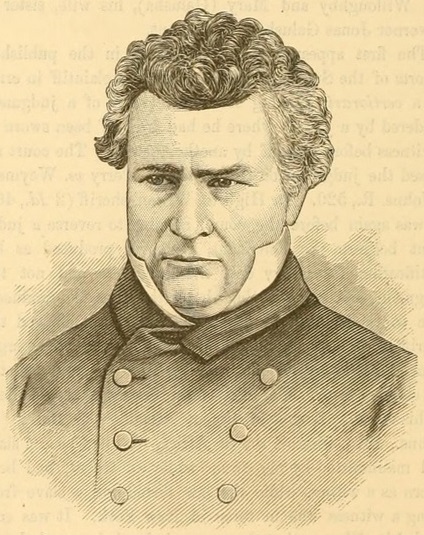
Charles Rogers
Former U.S. Representative · New York District 14 · 1843–1845 · Whig
Charles Rogers represented New York's District 14 in the United States House of Representatives (1843–1845) for the Whig party. The page below collects sourced biographical facts, term history, committee roles, and provenance for Rogers.
Bioguide ID: R000390
Key facts
- Full name
- Charles Rogers
- State
- New York
- District
- District 14
- Party
- Whig
- House service
- 1843–1845
- First House term
- 1843
- Status
- Left office
- Current term ends
- —
- Born
- 1800
- Bioguide ID
- R000390
- Committee assignments
- —
- Dataset version
- 1.20260606
Biographical narrative
846 words · sourced from the Wikipedia REST extract
Charles Rogers was a U.S. Representative from New York, serving as a member of the Whig Party during the 28th Congress from 1843 to 1845. Born on April 30, 1800, in Northumberland, New York, Rogers had a diverse career that included law, farming, and political activism. He was known for his advocacy against slavery in the District of Columbia and played a role in various political movements throughout his life. After his term in Congress, he continued to engage in political discourse and support for the Republican Party until his death on January 13, 1874.
Early life and career
Charles Rogers was born into a family with a background in commerce and industry. His father, a successful lumberman and merchant, passed away when Rogers was just ten years old. Following his father's death, Rogers's mother remarried, and he was primarily raised by an uncle in Lake George, New York. This early experience shaped his character and future pursuits.
Rogers received his education at Granville Academy before enrolling at Union College, where he graduated in 1818. His time at Union College was notable for his association with several prominent figures, including William Henry Seward, who later became a significant political leader. After completing his studies, Rogers pursued a career in law, studying under his stepfather, Judge Esek Cowen. He successfully gained admission to the bar, which allowed him to practice law.
In addition to his legal career, Rogers was financially stable enough to engage in farming. He settled in Sandy Hill, where he became known as a gentleman farmer. His interests extended beyond agriculture; he conducted research in botany and wrote on various subjects, including politics. His political involvement began in the 1820s when he supported DeWitt Clinton, a prominent figure in New York politics. In the 1830s, Rogers aligned himself with the Whig Party and served in the New York State Assembly in 1833 and 1837. He also ran unsuccessfully as a Temperance candidate for the New York State Senate in the late 1830s.
House tenure
Rogers's political career reached a significant milestone in 1842 when he was elected to the United States House of Representatives as a member of the Whig Party. His term began on March 4, 1843, and he served until March 3, 1845, during the 28th Congress. Within the House, Rogers held the position of chairman of the Committee on Expenditures in the Department of State, where he was responsible for overseeing the financial aspects of the department's operations.
Rogers was an advocate for the abolition of slavery in the District of Columbia, reflecting the growing tensions surrounding the issue during this period. His stance on slavery was part of a broader national debate that would eventually culminate in the Civil War. Despite his active participation in Congress, Rogers chose not to seek reelection in 1844, concluding his single term in the House.
After his congressional service, Rogers transitioned into the emerging Republican Party, which formed in the mid-1850s as a response to the issues surrounding slavery and other national concerns. He became a popular orator and frequently campaigned for Republican candidates, contributing to the party's growth and influence in New York and beyond.
Legislative focus and committees
During his time in Congress, Charles Rogers's legislative focus was primarily on issues related to government expenditure and the moral implications of slavery. As chairman of the Committee on Expenditures in the Department of State, he was involved in scrutinizing government spending and advocating for responsible fiscal policies. His commitment to addressing the issue of slavery, particularly in the District of Columbia, marked him as a progressive voice in a time of significant national division.
Following his congressional tenure, Rogers continued to engage in political activities, particularly during the American Civil War. He supported the Union cause and worked to recruit soldiers for New York's volunteer regiments, demonstrating his commitment to the preservation of the nation. After the war, Rogers advocated for a policy of moderation towards the former Confederacy, participating in the 1866 National Union Convention, which aimed to foster reconciliation between the North and South.
In the early 1870s, Rogers expressed his support for Horace Greeley, a prominent newspaper editor and politician, during the presidential election. Although he did not actively campaign for Greeley, his endorsement reflected his ongoing involvement in political matters.
Charles Rogers passed away on January 13, 1874, in Sandy Hill, now known as Hudson Falls, New York. He was buried at Union Cemetery near Sandy Hill. Throughout his life, Rogers was a family man; he married Susan A. Clark in 1827, and together they had six children, all of whom reached adulthood. Two of his sons served in the Union Army during the Civil War, with one achieving the rank of brigadier general by the end of the conflict.
Rogers's life and career illustrate the complexities of American politics in the 19th century, particularly concerning issues of governance, social justice, and national unity. His contributions to the political landscape of New York and his advocacy for significant social issues remain a part of his legacy.
Notable legislation
Sponsored and co-sponsored legislation for Charles Rogers is pending operator curation. The biographical narrative above carries the same provenance trail until per-bill rows are written.
Sources
- [1]https://en.wikipedia.org/wiki/Charles_Rogers_(New_York_politician)Wikipedia · retrieved 2026-06-06
Notable quotes
Sourced quotes for Charles Rogers are pending operator curation. Narrative-scope provenance remains attached below.
Sources
- [1]https://en.wikipedia.org/wiki/Charles_Rogers_(New_York_politician)Wikipedia · retrieved 2026-06-06
Key positions
Curated policy positions for Charles Rogers are pending operator review. The biographical narrative above carries the same provenance trail until per-topic positions are written.
Sources
- [1]https://en.wikipedia.org/wiki/Charles_Rogers_(New_York_politician)Wikipedia · retrieved 2026-06-06
Terms served
- 1843–1845U.S. House · Term 1 · Whig
Sources & provenance
Every attributable claim above carries a per-section [N] marker that resolves to the corresponding URL below. Each entry records the upstream provider, the canonical URL, and the timestamp at which the source was retrieved by the ingest pipeline.
Key facts
- https://bioguide.congress.gov/search/bio/R000390bioguide · retrieved 2026-06-06
- https://www.govtrack.us/congress/members/409358govtrack · retrieved 2026-06-06
Biographical narrative
- https://en.wikipedia.org/wiki/Charles_Rogers_(New_York_politician)wikipedia · retrieved 2026-06-06
Find your representative
Every U.S. state elects representatives by district. Browse New York’s delegation, the full former-representative roster, or explore the role and term length.
Related on The Candidate
- Preceded by Henry Van RensselaerEarlier holder of the New York District 14 House seat · Whig.Open
- Succeeded by Charles GoodyearLater holder of the New York District 14 House seat · Democratic.Open
- Abel HuntingtonFormer U.S. Representative · New York District 1 · JacksonOpen
- Alfred ChapinFormer U.S. Representative · New York District 1 · DemocraticOpen
- Cadwallader ColdenFormer U.S. Representative · New York District 1 · FederalistOpen
- Charles FloydFormer U.S. Representative · New York District 1 · DemocraticOpen