
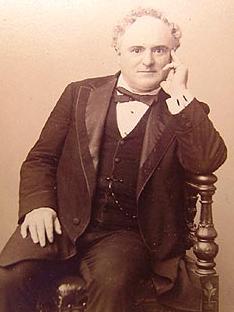
Historical · U.S. House · New York · District 14
John Fellows
Former U.S. Representative · New York District 14 · 1891–1895 · Democratic
John Fellows represented New York's District 14 in the United States House of Representatives (1891–1895) for the Democratic party. The page below collects sourced biographical facts, term history, committee roles, and provenance for Fellows.
Bioguide ID: F000067
Key facts
- Full name
- John Fellows
- State
- New York
- District
- District 14
- Party
- Democratic
- House service
- 1891–1895
- First House term
- 1891
- Status
- Left office
- Current term ends
- —
- Born
- 1832
- Bioguide ID
- F000067
- Committee assignments
- —
- Dataset version
- 1.20260606
Biographical narrative
962 words · sourced from the Wikipedia REST extract
John Fellows was a prominent American lawyer and politician who served as a U.S. Representative for New York's 14th congressional district during the early 1890s. A member of the Democratic Party, Fellows had a multifaceted career that spanned law, politics, and military service. His life journey took him from rural New York to the political arenas of Arkansas and New York City, where he became a notable figure in the Democratic Party and served as the New York County District Attorney on multiple occasions.
Early life and career
John Fellows was born on July 29, 1832, in New York. He was the son of Tisdale Eddy Fellows, a farmer who later became the Superintendent of the Halfmoon Cemetery, and Eliza Harris Fellows. The family initially lived in a rural setting before relocating to a farm in Stillwater, which is now part of Mechanicville, New York. In this environment, Fellows received his early education in local country schools. His childhood included interactions with notable figures, such as Elmer E. Ellsworth, suggesting that he was engaged in a community that valued education and civic involvement.
In 1850, seeking broader opportunities, Fellows moved to Camden, Arkansas, to live with his uncle. It was in Arkansas that he began his legal studies and was admitted to the bar in 1855. During this period, he practiced law in partnership with Walter L. Bragg, which helped him establish a foothold in the legal community. His political ambitions began to take shape when he ran for presidential elector on the Constitutional Union ticket in 1860, although the election did not favor his party. His involvement in politics deepened when he became a delegate to the State secession convention in 1861, reflecting the turbulent political climate of the time.
Fellows' military service began when he enlisted in the 1st Arkansas Infantry Regiment of the Confederate States Army during the American Civil War. His military career progressed rapidly; after the Battle of Shiloh, he was promoted to colonel and took on significant staff duties, including serving as assistant adjutant to General William Beall. His service included a role as inspector general at Port Hudson, Louisiana, where he was ultimately captured on July 9, 1863. He remained a prisoner of war until the conclusion of the Civil War, being released on June 10, 1865. Following the war, Fellows returned to Camden to resume his legal practice and also served in the Arkansas Senate from 1866 to 1867. His personal life saw him marry Lizzie Reynolds on July 4, 1867, with whom he had six children.
House tenure
Fellows' political career took a significant turn when he moved to New York City, where he became involved with the Tammany Hall political organization. He first gained recognition as a delegate to the 1868 Democratic National Convention, where he was noted for his eloquence as a campaign speaker. His association with Tammany Hall, particularly with its influential leader William M. Tweed, facilitated his rise in the political landscape of New York. Tweed's support led to Fellows' appointment as Assistant Corporation Counsel in 1868 and later as an Assistant District Attorney for New York County in 1869.
Fellows' tenure as an Assistant District Attorney was marked by a series of political shifts. After the fall of Tweed, he distanced himself from Tammany Hall and aligned with the Anti-Tammany Democrats, also known as the "Young Democracy" or "County Democracy." He returned to the role of Assistant District Attorney in 1882 under various district attorneys, including John McKeon and Randolph B. Martine. His political career reached a new height when he was elected District Attorney in November 1887, defeating a fellow Assistant District Attorney who ran on the Republican ticket. His election campaign was contentious, particularly due to the publication of letters he had written to Tweed, which raised questions about his integrity and motives.
Fellows served as District Attorney from 1888 to 1890 but chose not to seek re-election in 1890. Instead, he decided to pursue a seat in Congress, which he successfully achieved. He was elected as a Democrat to the 52nd and 53rd United States Congresses, serving from March 4, 1891, until he resigned on December 31, 1893. His congressional tenure was characterized by his alignment with the Democratic Party and his involvement in legislative matters pertinent to his constituents.
Legislative focus and committees
During his time in Congress, John Fellows was involved in various legislative activities that reflected the interests and needs of his district. While specific details about his legislative initiatives and committee assignments are not provided, it is known that he served during a period of significant political and social change in the United States. The early 1890s were marked by economic challenges, labor unrest, and debates over monetary policy, which likely influenced the legislative priorities of many representatives, including Fellows.
Following his congressional service, Fellows returned to his role as District Attorney for New York County, taking office again on January 1, 1894. His continued involvement in the Democratic Party included participation as a delegate in subsequent national conventions, where he maintained a presence in the evolving political landscape. Notably, he attended the 1896 Democratic National Convention but diverged from the party's direction by rejecting the nomination of William Jennings Bryan, who was associated with a Free Silver platform. Instead, he aligned himself with the "Gold Democrats," indicating a shift in his political stance.
Fellows' later years were marked by his continued engagement in legal and political matters until his death on December 7, 1896, from stomach cancer. He passed away at his residence in New York City and was interred at Trinity Church Cemetery. His life and career reflect the complexities of American politics during a transformative era, characterized by both personal ambition and broader societal changes.
Notable legislation
Sponsored and co-sponsored legislation for John Fellows is pending operator curation. The biographical narrative above carries the same provenance trail until per-bill rows are written.
Sources
- [1]https://en.wikipedia.org/wiki/John_R._FellowsWikipedia · retrieved 2026-06-06
Notable quotes
Sourced quotes for John Fellows are pending operator curation. Narrative-scope provenance remains attached below.
Sources
- [1]https://en.wikipedia.org/wiki/John_R._FellowsWikipedia · retrieved 2026-06-06
Key positions
Curated policy positions for John Fellows are pending operator review. The biographical narrative above carries the same provenance trail until per-topic positions are written.
Sources
- [1]https://en.wikipedia.org/wiki/John_R._FellowsWikipedia · retrieved 2026-06-06
Terms served
- 1891–1893U.S. House · Term 1 · Democratic
- 1893–1895U.S. House · Term 2 · Democratic
Sources & provenance
Every attributable claim above carries a per-section [N] marker that resolves to the corresponding URL below. Each entry records the upstream provider, the canonical URL, and the timestamp at which the source was retrieved by the ingest pipeline.
Key facts
- https://bioguide.congress.gov/search/bio/F000067bioguide · retrieved 2026-06-06
- https://www.govtrack.us/congress/members/404025govtrack · retrieved 2026-06-06
Biographical narrative
- https://en.wikipedia.org/wiki/John_R._Fellowswikipedia · retrieved 2026-06-06
Find your representative
Every U.S. state elects representatives by district. Browse New York’s delegation, the full former-representative roster, or explore the role and term length.
Related on The Candidate
- Preceded by John FerdonEarlier holder of the New York District 14 House seat · Republican.Open
- Succeeded by Jefferson LevyLater holder of the New York District 14 House seat · Democratic.Open
- Abel HuntingtonFormer U.S. Representative · New York District 1 · JacksonOpen
- Alfred ChapinFormer U.S. Representative · New York District 1 · DemocraticOpen
- Cadwallader ColdenFormer U.S. Representative · New York District 1 · FederalistOpen
- Charles FloydFormer U.S. Representative · New York District 1 · DemocraticOpen