
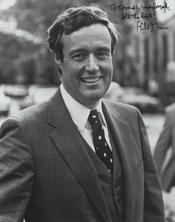
Historical · U.S. House · New York · District 15
Bill Green
Former U.S. Representative · New York District 15 · 1977–1993 · Republican
Bill Green represented New York's District 15 in the United States House of Representatives (1977–1993) for the Republican party. The page below collects sourced biographical facts, term history, committee roles, and provenance for Green.
Bioguide ID: G000417
Key facts
- Full name
- Bill Green
- State
- New York
- District
- District 15
- Party
- Republican
- House service
- 1977–1993
- First House term
- 1977
- Status
- Left office
- Current term ends
- —
- Born
- 1929
- Bioguide ID
- G000417
- Committee assignments
- —
- Dataset version
- 1.20260605
Biographical narrative
938 words · sourced from the Wikipedia REST extract
S. William Green was a prominent Republican politician who served as a member of the United States House of Representatives for New York's 15th congressional district from 1978 until 1993. Representing a district that encompassed much of Manhattan's East Side, Green was notable for being the last Republican to hold a congressional seat in Manhattan. His political career spanned eight terms in the House, during which he was recognized for his moderate Republican stance in a predominantly Democratic city.
Early life and career
S. William Green was born on October 16, 1929, in New York City, into a family with a strong financial background. His father, Louis A. Green, was a successful investor and one of the principal shareholders in the Grand Union supermarket chain. Growing up in Manhattan, Green received a quality education, graduating from The Horace Mann School in 1946. He continued his studies at Harvard University, where he earned his undergraduate degree in 1950, followed by a law degree from Harvard Law School in 1953.
Following his graduation from law school, Green served in the United States Army from 1953 to 1955. After completing his military service, he began his legal career as a legal secretary for Judge George T. Washington of the U.S. Court of Appeals for the District of Columbia. This position provided him with valuable experience in the legal field before he transitioned into private practice.
Green's involvement in public service began in earnest when he became the chief counsel to the New York Joint Legislative Committee on Housing and Urban Development from 1961 to 1964. This role allowed him to engage with critical issues related to housing and urban policy in New York. Subsequently, he was elected to the New York State Assembly, where he served from 1965 to 1968, participating in the 175th, 176th, and 177th New York State Legislatures.
In 1968, Green sought to expand his political career by running for Congress. However, he lost the Republican primary to Whitney North Seymour Jr., who ultimately lost the general election to Democrat Ed Koch. Following this setback, Green took on a significant role as the New York City director of the United States Department of Housing and Urban Development, further solidifying his expertise in housing issues.
House tenure
Green's congressional career began when he was elected to the 95th United States Congress in a special election to fill the vacancy left by Ed Koch's resignation. He took office on February 14, 1978, and was subsequently re-elected for seven additional terms, serving until January 3, 1993. Throughout his tenure, Green was known for his moderate Republican views, which were somewhat atypical for a member of his party, especially in a city like New York, which has historically leaned Democratic.
During his time in Congress, Green represented a district that was characterized by a diverse and urban population. His ability to maintain a Republican presence in a predominantly Democratic area was indicative of his political acumen and the moderate stance he adopted on various issues. Green's electoral success was a reflection of his ability to connect with constituents and address their concerns while navigating the complexities of a changing political landscape.
Despite his electoral successes, the political environment began to shift during the early 1990s. The East Side district, once a stronghold for moderate Republicans, started to trend Democratic as voter demographics changed. Redistricting in 1992 further complicated Green's position, as his district absorbed more heavily Democratic areas of Queens and Brooklyn. This shift ultimately contributed to his narrow defeat in the 1992 election to Democratic challenger Carolyn Maloney, marking the end of his congressional career.
In 1994, Green attempted to pivot his political ambitions by seeking the Republican nomination for Governor of New York. However, he faced defeat in the primary against State Senator George Pataki, who would go on to win the governorship. Green's political career, while marked by significant achievements, concluded with these electoral challenges.
Legislative focus and committees
Throughout his congressional tenure, S. William Green was involved in various legislative initiatives and served on multiple committees that aligned with his interests and expertise. His background in law and housing policy informed his legislative focus, particularly on issues related to urban development, housing, and community welfare. As a member of Congress, he was known for advocating policies that aimed to improve the quality of life for residents in his district and beyond.
Green's moderate Republican stance allowed him to work across party lines on certain issues, which was essential in a Congress often characterized by partisan divisions. His ability to engage with both Republican and Democratic colleagues contributed to his effectiveness as a legislator. He participated in discussions and debates on a range of topics, including economic development, housing policy, and social services, reflecting the diverse needs of his constituents.
Despite the challenges he faced in a changing political landscape, Green's contributions to the House of Representatives were significant during a time of transition in American politics. His tenure is remembered for the unique position he held as a Republican in a predominantly Democratic urban environment, and he remains a notable figure in the history of New York's congressional representation.
After leaving office, Green's legacy continued to resonate, particularly as he became the last Republican to represent any part of Manhattan in Congress. His political career serves as a historical reference point for the evolving dynamics of party representation in urban areas. Green passed away on October 14, 2002, just two days before his 73rd birthday, leaving behind a legacy that reflects both the challenges and achievements of a moderate Republican in a changing political landscape.
Notable legislation
Sponsored and co-sponsored legislation for Bill Green is pending operator curation. The biographical narrative above carries the same provenance trail until per-bill rows are written.
Sources
- [1]https://en.wikipedia.org/wiki/Bill_Green_(New_York_politician)Wikipedia · retrieved 2026-06-05
Notable quotes
Sourced quotes for Bill Green are pending operator curation. Narrative-scope provenance remains attached below.
Sources
- [1]https://en.wikipedia.org/wiki/Bill_Green_(New_York_politician)Wikipedia · retrieved 2026-06-05
Key positions
Curated policy positions for Bill Green are pending operator review. The biographical narrative above carries the same provenance trail until per-topic positions are written.
Sources
- [1]https://en.wikipedia.org/wiki/Bill_Green_(New_York_politician)Wikipedia · retrieved 2026-06-05
Terms served
- 1977–1979U.S. House · Term 1 · Republican
- 1979–1981U.S. House · Term 2 · Republican
- 1981–1983U.S. House · Term 3 · Republican
- 1983–1985U.S. House · Term 4 · Republican
- 1985–1987U.S. House · Term 5 · Republican
- 1987–1989U.S. House · Term 6 · Republican
- 1989–1991U.S. House · Term 7 · Republican
- 1991–1993U.S. House · Term 8 · Republican
Sources & provenance
Every attributable claim above carries a per-section [N] marker that resolves to the corresponding URL below. Each entry records the upstream provider, the canonical URL, and the timestamp at which the source was retrieved by the ingest pipeline.
Key facts
- https://bioguide.congress.gov/search/bio/G000417bioguide · retrieved 2026-06-05
- https://www.govtrack.us/congress/members/404765govtrack · retrieved 2026-06-05
Biographical narrative
- https://en.wikipedia.org/wiki/Bill_Green_(New_York_politician)wikipedia · retrieved 2026-06-05
Find your representative
Every U.S. state elects representatives by district. Browse New York’s delegation, the full former-representative roster, or explore the role and term length.
Related on The Candidate
- Preceded by Hugh CareyEarlier holder of the New York District 15 House seat · Democratic.Open
- Abel HuntingtonFormer U.S. Representative · New York District 1 · JacksonOpen
- Alfred ChapinFormer U.S. Representative · New York District 1 · DemocraticOpen
- Cadwallader ColdenFormer U.S. Representative · New York District 1 · FederalistOpen
- Charles FloydFormer U.S. Representative · New York District 1 · DemocraticOpen
- Republican PartyFederal candidates and office holders on the Republican line.Open