
Historical · U.S. House · New York · District 15
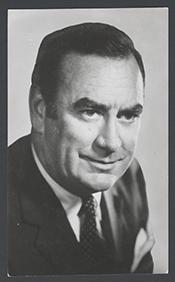
Hugh Carey
Former U.S. Representative · New York District 15 · 1961–1975 · Democratic
Hugh Carey represented New York's District 15 in the United States House of Representatives (1961–1975) for the Democratic party. The page below collects sourced biographical facts, term history, committee roles, and provenance for Carey.
Bioguide ID: C000143
Key facts
- Full name
- Hugh Carey
- State
- New York
- District
- District 15
- Party
- Democratic
- House service
- 1961–1975
- First House term
- 1961
- Status
- Left office
- Current term ends
- —
- Born
- 1919
- Bioguide ID
- C000143
- Committee assignments
- —
- Dataset version
- 1.20260605
Biographical narrative
1,071 words · sourced from the Wikipedia REST extract
Hugh L. Carey was an American politician and attorney who served as a Democratic member of the U.S. House of Representatives from New York's 15th congressional district from 1961 until 1975. His tenure in Congress was marked by significant legislative contributions, particularly in the areas of education for children with disabilities. Following his time in the House, Carey went on to serve as the 51st governor of New York from 1975 to 1982. His political career was characterized by a commitment to social issues and community development, reflecting the changing demographics and needs of his constituents.
Early life and career
Hugh Leo Carey was born on April 11, 1919, in New York City to Margaret and Dennis Joseph Carey. He grew up in a family that included several notable siblings, such as Edward M. Carey, who became the president of Carey Energy Corporation, and Martin T. Carey, an entrepreneur with ownership of several properties in New York and Rhode Island. Carey's early life in New York City provided a backdrop for his later political career, as he became deeply connected to the community and its evolving needs.
Carey’s education began at St. John's University, where he earned a Bachelor of Arts degree in 1942. His academic pursuits were interrupted by World War II, during which he enlisted in the New York National Guard. He served as a private in the 101st Cavalry before being promoted to major in the 104th Infantry Division, known as the "Timberwolves." Throughout his military service, Carey participated in significant campaigns across Europe, including operations in Northern France, Holland, and Germany. He was recognized for his service with multiple awards, including the Bronze Star and the Croix de Guerre.
After the war, Carey returned to St. John's University to pursue a legal education, earning his Juris Doctor degree in 1951. He was admitted to the New York state bar the same year and began his legal career as a partner in the law firm Finley, Kumble, Wagner, Underberg, Manley, Myerson & Casey. His involvement in politics began shortly after the war, as he co-chaired a youth division of the New York State Democratic Committee aimed at engaging younger voters in the political process.
House tenure
Carey's political career in the U.S. House of Representatives began in 1961 when he was elected as a Democrat to represent New York's 15th congressional district. This district encompassed neighborhoods such as Park Slope, Sunset Park, and Bay Ridge in Brooklyn. His election came at a time of considerable demographic shifts in the area, including deindustrialization and the emergence of new communities, particularly a growing Puerto Rican population.
During his seven terms in Congress, Carey was involved in various legislative initiatives and was known for his advocacy on issues affecting his constituents. He was appointed Chairman of the Ad hoc Subcommittee on the Handicapped in 1966, a role that allowed him to focus on education and support for individuals with disabilities. Under his leadership, the subcommittee held hearings in both Washington and New York City, leading to the introduction of significant legislation aimed at improving educational opportunities for children with disabilities.
One of Carey's notable legislative achievements was the introduction of the "Carey Bill," which established a program of grants to states for the education of children with disabilities. This bill represented a significant step forward in federal support for special education and was later incorporated into the Elementary and Secondary Education Act. Carey's efforts in this area laid the groundwork for future legislation that would further enhance educational resources for disabled children.
In addition to his work on disability rights, Carey served on the House Ways and Means Committee, where he contributed to the development of the first Federal Aid to Education program. His legislative focus reflected a broader commitment to social issues and community development, aligning with the needs of his constituents during a time of change.
Carey's congressional career was not without its challenges. He faced the complexities of representing a district undergoing significant transformation, including the impact of gentrification and shifts in the local economy. Despite these challenges, he remained a prominent figure in Brooklyn politics and was recognized for his efforts to address the evolving needs of his constituents.
In 1974, Carey made the decision to run for governor of New York, resigning from his congressional seat at the end of that year. His departure from the House marked the conclusion of a significant chapter in his political career, during which he had established himself as a dedicated advocate for social issues and community development.
Legislative focus and committees
Throughout his tenure in the U.S. House of Representatives, Hugh Carey was known for his legislative focus on education, particularly in relation to individuals with disabilities. His leadership of the Ad hoc Subcommittee on the Handicapped allowed him to champion important initiatives that aimed to improve educational access and resources for children with disabilities. The "Carey Bill," which he introduced, was a landmark piece of legislation that provided federal grants to states for the development and enhancement of educational programs for disabled children. This initiative marked a significant advancement in federal support for special education and laid the groundwork for future legislation in this area.
Carey's work on the House Ways and Means Committee further exemplified his commitment to educational issues. He played a key role in the passage of the first Federal Aid to Education program, which aimed to provide financial assistance to schools and educational institutions across the country. His contributions to education policy reflected a broader understanding of the importance of equitable access to quality education for all children, regardless of their circumstances.
In addition to his focus on education, Carey's legislative efforts were shaped by the changing demographics of his district. He navigated the complexities of representing a diverse constituency that included long-standing residents and newer immigrant communities. His ability to address the needs of these various groups demonstrated his commitment to inclusive governance and community engagement.
Carey's legislative legacy is marked by his advocacy for social issues and his efforts to create a more equitable society. His work in Congress laid the foundation for subsequent advancements in education and disability rights, influencing policies that continue to impact communities today. Following his departure from the House, Carey transitioned to the role of governor of New York, where he continued to influence state policy and governance until his retirement from public office.
Notable legislation
Sponsored and co-sponsored legislation for Hugh Carey is pending operator curation. The biographical narrative above carries the same provenance trail until per-bill rows are written.
Sources
- [1]https://en.wikipedia.org/wiki/Hugh_CareyWikipedia · retrieved 2026-06-05
Notable quotes
Sourced quotes for Hugh Carey are pending operator curation. Narrative-scope provenance remains attached below.
Sources
- [1]https://en.wikipedia.org/wiki/Hugh_CareyWikipedia · retrieved 2026-06-05
Key positions
Curated policy positions for Hugh Carey are pending operator review. The biographical narrative above carries the same provenance trail until per-topic positions are written.
Sources
- [1]https://en.wikipedia.org/wiki/Hugh_CareyWikipedia · retrieved 2026-06-05
Terms served
- 1961–1963U.S. House · Term 1 · Democratic
- 1963–1965U.S. House · Term 2 · Democratic
- 1965–1967U.S. House · Term 3 · Democratic
- 1967–1969U.S. House · Term 4 · Democratic
- 1969–1971U.S. House · Term 5 · Democratic
- 1971–1973U.S. House · Term 6 · Democratic
- 1973–1975U.S. House · Term 7 · Democratic
Sources & provenance
Every attributable claim above carries a per-section [N] marker that resolves to the corresponding URL below. Each entry records the upstream provider, the canonical URL, and the timestamp at which the source was retrieved by the ingest pipeline.
Key facts
- https://bioguide.congress.gov/search/bio/C000143bioguide · retrieved 2026-06-05
- https://www.govtrack.us/congress/members/402292govtrack · retrieved 2026-06-05
Biographical narrative
- https://en.wikipedia.org/wiki/Hugh_Careywikipedia · retrieved 2026-06-05
Find your representative
Every U.S. state elects representatives by district. Browse New York’s delegation, the full former-representative roster, or explore the role and term length.
Related on The Candidate
- Preceded by Thomas BurchillEarlier holder of the New York District 15 House seat · Democratic.Open
- Succeeded by Leo ZeferettiLater holder of the New York District 15 House seat · Democratic.Open
- Abel HuntingtonFormer U.S. Representative · New York District 1 · JacksonOpen
- Alfred ChapinFormer U.S. Representative · New York District 1 · DemocraticOpen
- Cadwallader ColdenFormer U.S. Representative · New York District 1 · FederalistOpen
- Charles FloydFormer U.S. Representative · New York District 1 · DemocraticOpen