
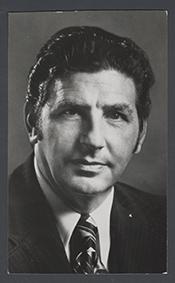
Historical · U.S. House · New York · District 15
Leo Zeferetti
Former U.S. Representative · New York District 15 · 1975–1983 · Democratic
Leo Zeferetti represented New York's District 15 in the United States House of Representatives (1975–1983) for the Democratic party. The page below collects sourced biographical facts, term history, committee roles, and provenance for Zeferetti.
Bioguide ID: Z000002
Key facts
- Full name
- Leo Zeferetti
- State
- New York
- District
- District 15
- Party
- Democratic
- House service
- 1975–1983
- First House term
- 1975
- Status
- Left office
- Current term ends
- —
- Born
- 1927
- Bioguide ID
- Z000002
- Committee assignments
- —
- Dataset version
- 1.20260605
Biographical narrative
944 words · sourced from the Wikipedia REST extract
Leo C. Zeferetti was a Democratic politician who served as a U.S. Representative for New York's 15th congressional district from 1975 until 1983. His tenure in the House of Representatives was marked by his background in public service and law enforcement, as well as his commitment to addressing issues relevant to his constituents in Brooklyn. Born in 1927, Zeferetti's life and career reflect a deep engagement with both local and national issues, particularly those related to corrections and public safety.
Early life and career
Leo C. Zeferetti was born on July 15, 1927, in Brooklyn, New York. He grew up in a working-class neighborhood and attended public schools in the borough. His early life was shaped by the experiences of growing up in a diverse urban environment, which later influenced his political perspectives and priorities. In 1944, during the final years of World War II, Zeferetti enlisted in the United States Navy, where he served until 1946. He achieved the rank of petty officer second class, working as a yeoman, a role that involved administrative duties and support for naval operations.
Following his military service, Zeferetti transitioned into a career in law enforcement. From 1957 to 1974, he worked for the New York City Department of Correction, where he gained valuable insights into the criminal justice system and the challenges faced by correctional facilities. His dedication to the field was evident during his tenure, and he rose to prominence within the correctional community. Zeferetti served as the president of the Correction Officers' Benevolent Association from 1968 to 1974, advocating for the rights and welfare of correction officers and their families.
In addition to his professional commitments, Zeferetti pursued higher education. He enrolled at New York University in 1963 and later attended Baruch College from 1964 to 1966. Although he did not complete a degree, his academic pursuits during this time reflect his desire to enhance his understanding of public policy and governance. Zeferetti's involvement in public service extended beyond his professional roles; he was appointed to the New York State Crime Control Planning Board from 1972 to 1974 and represented the city at the President's Conference on Correction in 1971. These experiences laid the groundwork for his eventual entry into politics.
House tenure
In 1974, Leo C. Zeferetti entered the political arena by running for the U.S. House of Representatives. He was elected to represent New York's 15th congressional district, succeeding Hugh Carey, who had moved on to become the governor of New York. Zeferetti's election was significant, as it marked the beginning of his four terms in Congress, during which he focused on various issues pertinent to his constituents in Brooklyn.
During his time in the House, Zeferetti was involved in a range of legislative activities and initiatives. He served on committees that addressed issues relevant to his district, including those related to public safety, urban development, and social services. His background in corrections and public service informed his approach to legislation, as he sought to advocate for policies that would benefit the residents of his district and improve the overall quality of life in Brooklyn.
Zeferetti's congressional career spanned nearly a decade, during which he worked to represent the interests of his constituents. His district included neighborhoods such as Park Slope, Sunset Park, Bay Ridge, Dyker Heights, Bensonhurst, and Bath Beach, all of which had diverse populations and unique needs. Throughout his tenure, he engaged with local leaders, community organizations, and constituents to address their concerns and priorities.
In 1982, Zeferetti faced significant challenges due to redistricting, which resulted in the elimination of his congressional district. The territory he had represented was merged with a district based in Staten Island, leading to a competitive election against Republican incumbent Guy Molinari. This transition marked the end of Zeferetti's time in the House, as he was defeated in the general election held that year.
Legislative focus and committees
Throughout his tenure in the U.S. House of Representatives, Leo C. Zeferetti focused on a variety of legislative issues that were critical to his constituents and reflective of his professional background. His experiences in law enforcement and corrections informed his approach to public policy, particularly in areas related to criminal justice, public safety, and community welfare.
Zeferetti's work on committees allowed him to engage deeply with legislative matters that impacted his district. He was involved in discussions and initiatives aimed at improving the criminal justice system, addressing the needs of correctional facilities, and advocating for the rights of correction officers. His leadership in the Correction Officers' Benevolent Association prior to his congressional career provided him with a unique perspective on the challenges faced by those in the corrections profession, and he sought to bring attention to these issues at the national level.
In addition to his focus on criminal justice, Zeferetti also addressed broader social issues affecting urban communities. He worked on legislation related to housing, education, and social services, recognizing the interconnectedness of these areas in improving the quality of life for his constituents. His commitment to public service was evident in his efforts to secure funding and resources for community programs and initiatives that aimed to uplift the residents of Brooklyn.
Zeferetti's legislative focus was characterized by a dedication to addressing the needs of his constituents and advocating for policies that would foster positive change in their lives. His ability to navigate complex legislative processes and engage with diverse stakeholders contributed to his effectiveness as a representative. Although his congressional career came to an end in 1983, his contributions to public service and the issues he championed during his time in office left a lasting impact on the communities he served.
Notable legislation
Sponsored and co-sponsored legislation for Leo Zeferetti is pending operator curation. The biographical narrative above carries the same provenance trail until per-bill rows are written.
Sources
- [1]https://en.wikipedia.org/wiki/Leo_C._ZeferettiWikipedia · retrieved 2026-06-05
Notable quotes
Sourced quotes for Leo Zeferetti are pending operator curation. Narrative-scope provenance remains attached below.
Sources
- [1]https://en.wikipedia.org/wiki/Leo_C._ZeferettiWikipedia · retrieved 2026-06-05
Key positions
Curated policy positions for Leo Zeferetti are pending operator review. The biographical narrative above carries the same provenance trail until per-topic positions are written.
Sources
- [1]https://en.wikipedia.org/wiki/Leo_C._ZeferettiWikipedia · retrieved 2026-06-05
Terms served
- 1975–1977U.S. House · Term 1 · Democratic
- 1977–1979U.S. House · Term 2 · Democratic
- 1979–1981U.S. House · Term 3 · Democratic
- 1981–1983U.S. House · Term 4 · Democratic
Sources & provenance
Every attributable claim above carries a per-section [N] marker that resolves to the corresponding URL below. Each entry records the upstream provider, the canonical URL, and the timestamp at which the source was retrieved by the ingest pipeline.
Key facts
- https://bioguide.congress.gov/search/bio/Z000002bioguide · retrieved 2026-06-05
- https://www.govtrack.us/congress/members/411995govtrack · retrieved 2026-06-05
Biographical narrative
- https://en.wikipedia.org/wiki/Leo_C._Zeferettiwikipedia · retrieved 2026-06-05
Find your representative
Every U.S. state elects representatives by district. Browse New York’s delegation, the full former-representative roster, or explore the role and term length.
Related on The Candidate
- Preceded by Hugh CareyEarlier holder of the New York District 15 House seat · Democratic.Open
- Succeeded by José SerranoLater holder of the New York District 15 House seat · Democratic.Open
- Abel HuntingtonFormer U.S. Representative · New York District 1 · JacksonOpen
- Alfred ChapinFormer U.S. Representative · New York District 1 · DemocraticOpen
- Cadwallader ColdenFormer U.S. Representative · New York District 1 · FederalistOpen
- Charles FloydFormer U.S. Representative · New York District 1 · DemocraticOpen