
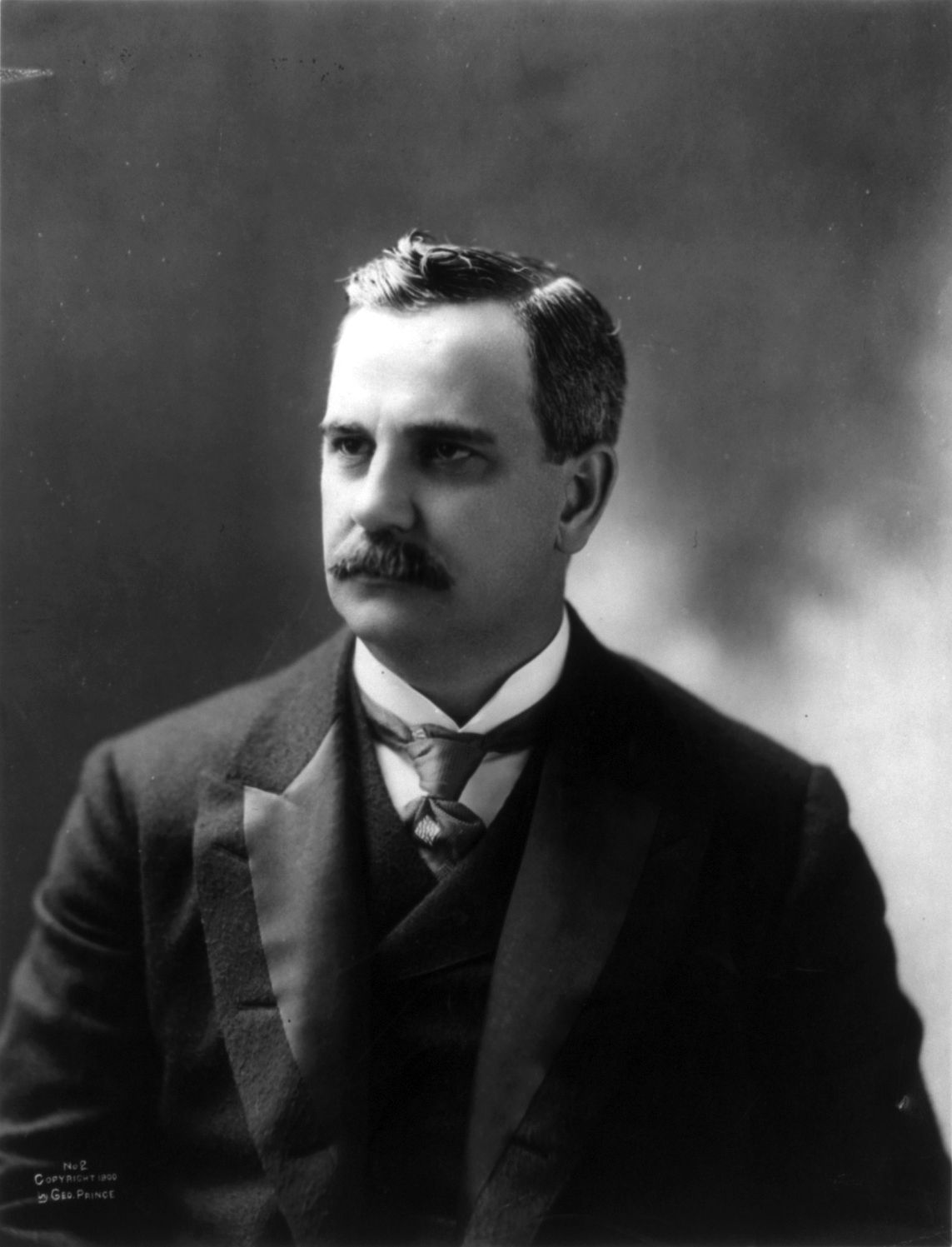
Historical · U.S. House · New York · District 17
Benjamin Odell Jr.
Former U.S. Representative · New York District 17 · 1895–1899 · Republican
Benjamin Odell Jr. represented New York's District 17 in the United States House of Representatives (1895–1899) for the Republican party. The page below collects sourced biographical facts, term history, committee roles, and provenance for Jr..
Bioguide ID: O000036
Key facts
- Full name
- Benjamin Odell Jr.
- State
- New York
- District
- District 17
- Party
- Republican
- House service
- 1895–1899
- First House term
- 1895
- Status
- Left office
- Current term ends
- —
- Born
- 1854
- Bioguide ID
- O000036
- Committee assignments
- —
- Dataset version
- 1.20260606
Biographical narrative
927 words · sourced from the Wikipedia REST extract
Benjamin Odell Jr. was an American businessman and politician who served as a U.S. Representative for New York's 17th congressional district from 1895 to 1899. A member of the Republican Party, Odell was also known for his later role as the 34th governor of New York from 1901 to 1904. His political career was marked by his involvement in local and state politics, where he became a significant figure in the Republican Party, particularly in New York. His contributions to governance and his influence within the party were notable during a transformative period in American politics.
Early life and career
Benjamin Odell Jr. was born on January 14, 1854, in Newburgh, New York. He was the son of Benjamin B. Odell Sr., who was a prominent businessman and served as the mayor of Newburgh for twelve years. This familial background provided Odell with early exposure to both business and politics. He pursued his education at Bethany College in West Virginia and later at Columbia College, part of Columbia University. Although he was on track to graduate in 1877, Odell left college during his junior year to return to Newburgh and assist in his father's business.
Odell began his career in the family business, which focused on ice production and distribution. He started as a driver for an ice delivery truck, earning a modest wage of $2 per day. Through hard work and dedication, he eventually rose to lead his father's ice business. This experience not only familiarized him with the local community but also laid the groundwork for his future political involvement. He became actively engaged in local political affairs, helping to shift the political landscape of Newburgh from a Democratic stronghold to a Republican one.
In addition to his business endeavors, Odell's early political career included unsuccessful bids for local office. He ran for the position of town supervisor in New Windsor and sought the Republican nomination for the New York State Senate in a district that was predominantly Democratic. Despite these setbacks, he continued to build his political network and influence.
House tenure
Odell's political career took a significant turn in 1894 when he was elected as a Republican to the 54th United States Congress, representing New York's 17th congressional district, which then included parts of Orange, Rockland, and Sullivan Counties. He served in the House of Representatives from 1895 until 1899, completing two full terms. During his time in Congress, Odell was recognized as a powerful figure within the New York Republican Party. His influence extended beyond his congressional duties, as he also served as chairman of the Republican State Executive Committee for a decade, both before and after his congressional terms.
In 1896, Odell sought re-election and successfully won a second term in the House. However, he chose not to run for a third term in 1898. His decision to step back from Congress was influenced by his growing role in state politics and his aspirations for higher office. Notably, in 1896, he narrowly lost the Republican nomination for governor at the state convention, where he received an 11–5 vote in favor of his candidacy. Despite this setback, he remained a key player in the party's strategy and direction.
Odell's political acumen was further demonstrated in 1898 when he was instrumental in recommending Theodore Roosevelt as the Republican candidate for governor. At the time, Thomas C. Platt, a prominent Republican leader, was hesitant about Roosevelt's candidacy due to concerns about his potential impact on state politics. However, Odell successfully argued that Roosevelt could win the election, especially following his return as a war hero from the Spanish-American War. Under Odell's management, Roosevelt's campaign proved successful, and he was elected governor.
Legislative focus and committees
During his tenure in the House of Representatives, Odell's legislative focus aligned with the broader goals of the Republican Party at the time, which included economic development, infrastructure improvement, and governance reform. Although specific details about his committee assignments and legislative initiatives are not provided, it can be inferred that his business background and local political experience likely influenced his approach to policy-making.
Following his congressional service, Odell's political career continued to flourish. He became a prominent figure in New York state politics, eventually leading to his nomination for governor in 1900. His election as governor marked a significant milestone, as he became the first New York governor of the twentieth century. During his governorship, Odell implemented various reforms, including tax reductions and the restructuring of state governance related to mental health institutions. He also took a stand against special legislation that favored individual interests, thereby reinforcing his commitment to broader public welfare.
Odell's governorship was characterized by a break from the traditional control of party bosses, particularly Thomas C. Platt, signaling a shift in the political landscape of New York. His independent decision-making and focus on governance reform contributed to his legacy as a significant political figure in the early 1900s.
After his time as governor, Odell remained active in politics, serving as a presidential elector in the 1920 election for candidates Warren G. Harding and Calvin Coolidge. His contributions to the Republican Party and his influence in New York politics continued to be recognized by his peers.
Benjamin Odell Jr. passed away on May 9, 1926, in his hometown of Newburgh, after a prolonged illness. His death was noted by various political figures who acknowledged his impact on New York politics and governance. His legacy includes his roles as a businessman, congressman, and governor, reflecting a life dedicated to public service and political engagement.
Notable legislation
Sponsored and co-sponsored legislation for Benjamin Odell Jr. is pending operator curation. The biographical narrative above carries the same provenance trail until per-bill rows are written.
Sources
- [1]https://en.wikipedia.org/wiki/Benjamin_Odell_(politician)Wikipedia · retrieved 2026-06-06
Notable quotes
Sourced quotes for Benjamin Odell Jr. are pending operator curation. Narrative-scope provenance remains attached below.
Sources
- [1]https://en.wikipedia.org/wiki/Benjamin_Odell_(politician)Wikipedia · retrieved 2026-06-06
Key positions
Curated policy positions for Benjamin Odell Jr. are pending operator review. The biographical narrative above carries the same provenance trail until per-topic positions are written.
Sources
- [1]https://en.wikipedia.org/wiki/Benjamin_Odell_(politician)Wikipedia · retrieved 2026-06-06
Terms served
- 1895–1897U.S. House · Term 1 · Republican
- 1897–1899U.S. House · Term 2 · Republican
Sources & provenance
Every attributable claim above carries a per-section [N] marker that resolves to the corresponding URL below. Each entry records the upstream provider, the canonical URL, and the timestamp at which the source was retrieved by the ingest pipeline.
Key facts
- https://bioguide.congress.gov/search/bio/O000036bioguide · retrieved 2026-06-06
- https://www.govtrack.us/congress/members/408321govtrack · retrieved 2026-06-06
Biographical narrative
- https://en.wikipedia.org/wiki/Benjamin_Odell_(politician)wikipedia · retrieved 2026-06-06
Find your representative
Every U.S. state elects representatives by district. Browse New York’s delegation, the full former-representative roster, or explore the role and term length.
Related on The Candidate
- Preceded by Francis MarvinEarlier holder of the New York District 17 House seat · Republican.Open
- Succeeded by Arthur TompkinsLater holder of the New York District 17 House seat · Republican.Open
- Abel HuntingtonFormer U.S. Representative · New York District 1 · JacksonOpen
- Alfred ChapinFormer U.S. Representative · New York District 1 · DemocraticOpen
- Cadwallader ColdenFormer U.S. Representative · New York District 1 · FederalistOpen
- Charles FloydFormer U.S. Representative · New York District 1 · DemocraticOpen