
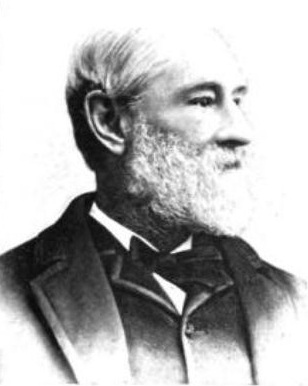
Historical · U.S. House · New York · District 17
Francis Marvin
Former U.S. Representative · New York District 17 · 1893–1895 · Republican
Francis Marvin represented New York's District 17 in the United States House of Representatives (1893–1895) for the Republican party. The page below collects sourced biographical facts, term history, committee roles, and provenance for Marvin.
Bioguide ID: M000209
Key facts
- Full name
- Francis Marvin
- State
- New York
- District
- District 17
- Party
- Republican
- House service
- 1893–1895
- First House term
- 1893
- Status
- Left office
- Current term ends
- —
- Born
- 1828
- Bioguide ID
- M000209
- Committee assignments
- —
- Dataset version
- 1.20260606
Biographical narrative
931 words · sourced from the Wikipedia REST extract
Francis Marvin was a notable figure in American politics during the late 19th century, serving as a U.S. Representative for New York's 17th congressional district. A member of the Republican Party, Marvin's tenure in the House of Representatives spanned from 1893 to 1895. His career was marked by a diverse background in commercial enterprises and local governance, reflecting the multifaceted nature of public service during that era. Born in 1828, Marvin's life journey took him from the bustling streets of New York City to the political landscape of Washington, D.C., where he contributed to the legislative process before returning to his business interests.
Early life and career
Francis Marvin was born on March 8, 1828, in New York City. His early education took place in the public schools of Port Jervis, a community located in Orange County, New York. This foundational education likely provided him with the skills and knowledge necessary for his future endeavors in both business and politics. Following his schooling, Marvin embarked on a commercial career that would see him engage in various industries, including the promotion and construction of railroads, the operation of water-supply companies, and the manufacture of illuminating gas. His involvement in these sectors indicates a keen interest in infrastructure and public utilities, which were vital to the economic development of the region during the 19th century.
In addition to his business pursuits, Marvin held several local government positions that showcased his commitment to public service. In 1851, he served as the postmaster of Port Jervis, a role that would have placed him at the center of communication and information exchange in the community. His responsibilities as postmaster would have included overseeing mail delivery and managing postal operations, which were essential services at the time. The following year, in 1852, he was appointed as a Justice of the Peace in the town of Deerpark, further solidifying his role in local governance and community affairs.
Marvin's career continued to evolve as he took on various roles in the financial sector. In 1856, he worked as a bookkeeper in a bank, a position that would have provided him with valuable experience in financial management and accounting. His involvement in banking, coupled with his earlier business ventures, positioned him as a knowledgeable figure in economic matters, which would later influence his political career.
Despite his active engagement in local politics and business, Marvin faced challenges in his electoral pursuits. He ran as a Republican candidate for the New York State Assembly in 1864 but was unsuccessful in his bid. He also sought a position in the State Senate in 1881, but this attempt did not yield the desired outcome either. These early electoral challenges did not deter him from public service; instead, they likely contributed to his understanding of the political landscape and the needs of his constituents.
In 1865, Marvin was elected president of the village of Port Jervis, a position that allowed him to further influence local governance and community development. His leadership in this role demonstrated his commitment to the welfare of his community and his ability to navigate the complexities of local politics.
House tenure
Francis Marvin's political career reached a significant milestone when he was elected to the U.S. House of Representatives as a Republican for the Fifty-third Congress, serving from March 4, 1893, to March 3, 1895. His election to Congress marked a culmination of his previous experiences in local governance and business, allowing him to represent the interests of his constituents at the national level. During his time in the House, Marvin participated in the legislative process, contributing to discussions and decisions that would impact the lives of many Americans.
Marvin's tenure in Congress was relatively brief, lasting only one term. He chose not to seek renomination in 1894, opting instead to focus on managing his various business enterprises. This decision reflects a common practice among politicians of the time, who often balanced their public service with private business interests. His departure from Congress did not diminish his influence in the community, as he continued to be involved in local affairs and business management after leaving office.
Legislative focus and committees
While specific details regarding the legislation Marvin supported or the committees he served on during his congressional term are not extensively documented, his background in commerce and local governance likely informed his legislative priorities. Representatives during this period often focused on issues pertinent to their constituents, such as infrastructure development, economic growth, and public utilities. Given Marvin's extensive experience in promoting and constructing railroads and managing water-supply companies, it is reasonable to infer that he may have had an interest in legislation that supported transportation and public works initiatives.
Marvin's involvement in local government and his understanding of community needs would have also influenced his approach to policymaking. He likely advocated for measures that would benefit his district, which included addressing the needs of constituents in areas such as commerce, industry, and public services. His experiences as postmaster and Justice of the Peace would have provided him with insights into the everyday challenges faced by residents, shaping his perspective on legislative matters.
After concluding his term in Congress, Marvin returned to his business interests, where he continued to apply the skills and knowledge he had gained throughout his career. He passed away on August 14, 1905, in Port Jervis, New York, where he was interred in Laurel Grove Cemetery. His life and career reflect the interconnectedness of business and politics during a transformative period in American history, illustrating the role of local leaders in shaping national policy.
Notable legislation
Sponsored and co-sponsored legislation for Francis Marvin is pending operator curation. The biographical narrative above carries the same provenance trail until per-bill rows are written.
Sources
- [1]https://en.wikipedia.org/wiki/Francis_MarvinWikipedia · retrieved 2026-06-06
Notable quotes
Sourced quotes for Francis Marvin are pending operator curation. Narrative-scope provenance remains attached below.
Sources
- [1]https://en.wikipedia.org/wiki/Francis_MarvinWikipedia · retrieved 2026-06-06
Key positions
Curated policy positions for Francis Marvin are pending operator review. The biographical narrative above carries the same provenance trail until per-topic positions are written.
Sources
- [1]https://en.wikipedia.org/wiki/Francis_MarvinWikipedia · retrieved 2026-06-06
Terms served
- 1893–1895U.S. House · Term 1 · Republican
Sources & provenance
Every attributable claim above carries a per-section [N] marker that resolves to the corresponding URL below. Each entry records the upstream provider, the canonical URL, and the timestamp at which the source was retrieved by the ingest pipeline.
Key facts
- https://bioguide.congress.gov/search/bio/M000209bioguide · retrieved 2026-06-06
- https://www.govtrack.us/congress/members/407228govtrack · retrieved 2026-06-06
Biographical narrative
- https://en.wikipedia.org/wiki/Francis_Marvinwikipedia · retrieved 2026-06-06
Find your representative
Every U.S. state elects representatives by district. Browse New York’s delegation, the full former-representative roster, or explore the role and term length.
Related on The Candidate
- Preceded by Isaac CoxEarlier holder of the New York District 17 House seat · Democratic.Open
- Succeeded by Benjamin Odell Jr.Later holder of the New York District 17 House seat · Republican.Open
- Abel HuntingtonFormer U.S. Representative · New York District 1 · JacksonOpen
- Alfred ChapinFormer U.S. Representative · New York District 1 · DemocraticOpen
- Cadwallader ColdenFormer U.S. Representative · New York District 1 · FederalistOpen
- Charles FloydFormer U.S. Representative · New York District 1 · DemocraticOpen