
Historical · U.S. House · New York · District 17
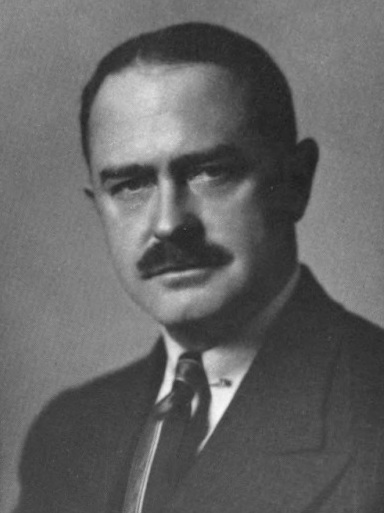
Kenneth Simpson
Former U.S. Representative · New York District 17 · 1941–1943 · Republican
Kenneth Simpson represented New York's District 17 in the United States House of Representatives (1941–1943) for the Republican party. The page below collects sourced biographical facts, term history, committee roles, and provenance for Simpson.
Bioguide ID: S000433
Key facts
- Full name
- Kenneth Simpson
- State
- New York
- District
- District 17
- Party
- Republican
- House service
- 1941–1943
- First House term
- 1941
- Status
- Left office
- Current term ends
- —
- Born
- 1895
- Bioguide ID
- S000433
- Committee assignments
- —
- Dataset version
- 1.20260605
Biographical narrative
925 words · sourced from the Wikipedia REST extract
Kenneth Simpson was a Republican politician who served as a U.S. Representative for New York's 17th congressional district. His tenure in the House of Representatives was brief, lasting only a few weeks in early 1941 before his untimely death. Despite his short time in office, Simpson's background encompassed a diverse range of experiences, including military service, law, and involvement in the arts, which shaped his perspectives and political engagements.
Early life and career
Kenneth Farrand Simpson was born on May 4, 1895, in New York City. He was the son of William Kelly Simpson, a prominent ear, nose, and throat specialist who also served as a professor at Columbia University. Growing up in an intellectually stimulating environment, Simpson pursued his education with vigor. He attended The Hill School, where he distinguished himself by successfully persuading former President Theodore Roosevelt to speak at the institution during his senior year. This early experience reflected his emerging interest in public service and leadership.
After graduating from The Hill School, Simpson enrolled at Yale University, where he earned his degree in 1917. His academic achievements were notable; he became a member of the Phi Beta Kappa honor society and was initiated into the prestigious Skull and Bones society, recognized as the "last man tapped" during his initiation. Following his graduation from Yale, Simpson served in World War I, enlisting in the 302nd Field Artillery Regiment, part of the 76th Division. He attained the rank of captain and later served as the Commandant of the American School Detachment at the University of Aix-Marseilles, further demonstrating his leadership capabilities during a tumultuous period.
Simpson's post-war career took a turn towards law and the arts. He graduated from Harvard Law School in 1922 and subsequently became an attorney. His legal career was marked by a significant engagement with the art world in post-war France, where he worked alongside the French government to recover art stolen by the Germans during the conflict. His connections in the art community allowed him to represent several notable figures, including artists and writers such as Pablo Picasso, Gertrude Stein, and Edmund Wilson. His involvement in the arts was not merely professional; it also reflected his personal interests and relationships, as evidenced by his congressional campaign materials that depicted him in a setting filled with artistic references.
In addition to his legal practice, Simpson served as an Assistant United States Attorney for the Southern District of New York from 1925 to 1927. His legal expertise and connections within the arts and political spheres would later influence his political career.
House tenure
Kenneth Simpson's political career began to take shape in the 1930s when he became actively involved in the Republican Party. He served as the chair of the New York County Republican Committee from 1935 to 1940, a role that positioned him as a significant figure within local party politics. His leadership in this capacity allowed him to build relationships with influential political figures, including Fiorello H. La Guardia, the mayor of New York City, and other liberal Republicans. Simpson was known for his support of the Fusion Republicans, a faction that sought to challenge conservative elements within the party.
Simpson's political ambitions culminated in his election to the U.S. House of Representatives in November 1940. He was sworn into office on January 3, 1941, representing New York's 17th congressional district. His time in Congress was marked by a commitment to internationalism and a critical stance towards Adolf Hitler and the business interests in the United States that were perceived as sympathetic to the Nazi regime. This perspective was indicative of his broader political ideology, which emphasized cooperation and engagement on the global stage.
Tragically, Kenneth Simpson's congressional career was cut short when he passed away from a heart attack on January 25, 1941, just 22 days after taking office. His sudden death shocked his constituents and colleagues, as he had shown promise in his brief tenure. Following his death, he was laid to rest at Hudson City Cemetery in Hudson, New York.
Legislative focus and committees
During his short time in the House of Representatives, Kenneth Simpson's legislative focus reflected his background and interests. He was an advocate for international cooperation and was known for his critical views on fascism and totalitarian regimes. His experiences in World War I and his legal career likely informed his perspectives on foreign policy and national security issues.
Although specific details regarding the committees he served on during his brief tenure are not available, it is reasonable to infer that his legal expertise and political background would have positioned him to contribute meaningfully to discussions on legislation related to foreign affairs, civil rights, and the arts. His connections with influential figures in both the political and artistic realms may have also influenced his legislative priorities.
Simpson's commitment to the Republican Party and his involvement in the political landscape of New York were evident throughout his career. His participation as a delegate to the Republican National Conventions in 1936 and 1940 further demonstrated his active engagement in shaping the party's direction during a critical period in American history.
In summary, Kenneth Simpson's life was characterized by a blend of legal acumen, military service, and artistic engagement, culminating in a brief but impactful political career. His contributions to the U.S. House of Representatives, although limited in duration, were shaped by a commitment to internationalism and a critical stance towards the threats posed by totalitarian regimes. His legacy, though short-lived, reflects the complexities of American politics during the early 20th century.
Notable legislation
Sponsored and co-sponsored legislation for Kenneth Simpson is pending operator curation. The biographical narrative above carries the same provenance trail until per-bill rows are written.
Sources
- [1]https://en.wikipedia.org/wiki/Kenneth_F._SimpsonWikipedia · retrieved 2026-06-05
Notable quotes
Sourced quotes for Kenneth Simpson are pending operator curation. Narrative-scope provenance remains attached below.
Sources
- [1]https://en.wikipedia.org/wiki/Kenneth_F._SimpsonWikipedia · retrieved 2026-06-05
Key positions
Curated policy positions for Kenneth Simpson are pending operator review. The biographical narrative above carries the same provenance trail until per-topic positions are written.
Sources
- [1]https://en.wikipedia.org/wiki/Kenneth_F._SimpsonWikipedia · retrieved 2026-06-05
Terms served
- 1941–1943U.S. House · Term 1 · Republican
Sources & provenance
Every attributable claim above carries a per-section [N] marker that resolves to the corresponding URL below. Each entry records the upstream provider, the canonical URL, and the timestamp at which the source was retrieved by the ingest pipeline.
Key facts
- https://bioguide.congress.gov/search/bio/S000433bioguide · retrieved 2026-06-05
- https://www.govtrack.us/congress/members/409927govtrack · retrieved 2026-06-05
Biographical narrative
- https://en.wikipedia.org/wiki/Kenneth_F._Simpsonwikipedia · retrieved 2026-06-05
Find your representative
Every U.S. state elects representatives by district. Browse New York’s delegation, the full former-representative roster, or explore the role and term length.
Related on The Candidate
- Preceded by Bruce BartonEarlier holder of the New York District 17 House seat · Republican.Open
- Succeeded by Frederic Coudert Jr.Later holder of the New York District 17 House seat · Republican.Open
- Abel HuntingtonFormer U.S. Representative · New York District 1 · JacksonOpen
- Alfred ChapinFormer U.S. Representative · New York District 1 · DemocraticOpen
- Cadwallader ColdenFormer U.S. Representative · New York District 1 · FederalistOpen
- Charles FloydFormer U.S. Representative · New York District 1 · DemocraticOpen