
Historical · U.S. House · New York · District 18
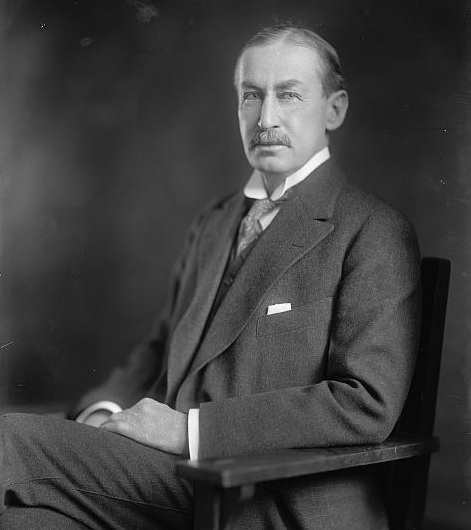
Thomas Patten
Former U.S. Representative · New York District 18 · 1911–1917 · Democratic
Thomas Patten represented New York's District 18 in the United States House of Representatives (1911–1917) for the Democratic party. The page below collects sourced biographical facts, term history, committee roles, and provenance for Patten.
Bioguide ID: P000109
Key facts
- Full name
- Thomas Patten
- State
- New York
- District
- District 18
- Party
- Democratic
- House service
- 1911–1917
- First House term
- 1911
- Status
- Left office
- Current term ends
- —
- Born
- 1861
- Bioguide ID
- P000109
- Committee assignments
- —
- Dataset version
- 1.20260606
Biographical narrative
953 words · sourced from the Wikipedia REST extract
Thomas Patten was an American lawyer and politician who served as a U.S. Representative for New York's 18th congressional district from 1911 to 1917. A member of the Democratic Party, Patten's political career spanned three terms in the House of Representatives, during which he engaged in various legislative activities. Following his time in Congress, he held the position of Postmaster of New York City and later transitioned to a career in the motion picture industry in California.
Early life and career
Thomas Patten was born on September 12, 1861, in New York City. His early education took place at Mount Pleasant Academy, located in Ossining, New York. This institution provided him with a foundational education that would later support his pursuits in higher education. Patten continued his studies at Columbia College in New York City from 1877 to 1879, where he likely developed a strong academic background that would serve him well in his future endeavors. Following his time at Columbia College, he attended Columbia Law School from 1880 to 1882, where he honed his legal skills and prepared for a career in law and public service.
After completing his education, Patten entered the shipping industry, where he engaged in business activities that included operating a fleet of tugboats in New York Harbor. This experience in the maritime sector provided him with insights into the economic and logistical challenges of shipping and transportation, which would later inform his legislative priorities. He also served as the president of the New York & Long Branch Steamboat Company, further solidifying his involvement in the shipping business. This role likely enhanced his understanding of corporate governance and the regulatory environment affecting transportation industries.
Patten's background in law and business positioned him well for a career in politics, as he possessed a comprehensive understanding of both the legal framework and the economic factors that influenced public policy. His transition into public service was marked by a commitment to representing the interests of his constituents and addressing the needs of his community.
House tenure
Patten's political career took a significant turn when he was elected to the U.S. House of Representatives as a Democrat. He began his first term on March 4, 1911, representing New York's 18th congressional district. His election to the Sixty-second Congress marked the beginning of a three-term tenure in the House, during which he served until March 3, 1917. Throughout his time in Congress, Patten participated in various legislative discussions and contributed to the development of policies that affected his constituents and the nation as a whole.
During his tenure, Patten was part of a Congress that addressed a range of pressing issues, including economic reforms, labor rights, and social welfare. His background in business and law likely informed his approach to these matters, as he sought to balance the interests of various stakeholders while advocating for the needs of his district. Patten's legislative work would have involved collaboration with other members of Congress, as well as engagement with constituents who sought to influence policy decisions.
Despite his efforts and contributions, Patten faced challenges in his political career. In 1916, he ran for reelection to the Sixty-fifth Congress but was unsuccessful in his bid to continue serving in the House. This defeat marked the end of his congressional career, but it did not signify the conclusion of his public service. Following his time in Congress, Patten was appointed as the Postmaster of New York City, a position he held from 1917 to 1921. This role allowed him to remain engaged in public service and continue contributing to the community in a different capacity.
Legislative focus and committees
During his time in the House of Representatives, Thomas Patten's legislative focus encompassed a variety of issues pertinent to his constituents and the broader national landscape. While specific details regarding the bills he supported or the committees on which he served are not provided, it can be inferred that his background in law and business likely influenced his legislative priorities. As a representative from New York, a state with significant economic activity and diverse interests, Patten would have been involved in discussions related to economic development, transportation, and labor issues.
Given the historical context of his tenure, which coincided with the Progressive Era, Patten may have engaged in efforts to address social reforms and improve labor conditions. The Progressive Era was characterized by a push for reforms aimed at curbing corporate power, enhancing workers' rights, and expanding social welfare programs. Patten's experience in the shipping industry could have provided him with a unique perspective on labor relations and the challenges faced by workers in various sectors.
In addition to his legislative work, Patten's role as Postmaster of New York City further exemplified his commitment to public service. As Postmaster, he would have overseen the operations of one of the largest postal systems in the country, managing logistics, staffing, and service delivery to millions of residents. This position required strong organizational and managerial skills, as well as an understanding of the needs of the community.
After leaving his role as Postmaster, Patten relocated to Hollywood, California, in 1922. He transitioned into the motion picture industry, serving on the staff of the Motion Picture Producers and Distributors of America, Inc. until 1924. This shift in career highlights Patten's adaptability and willingness to embrace new opportunities outside of traditional political roles.
Thomas Patten passed away on February 23, 1939, in Hollywood, California. He was interred at Forest Lawn Memorial Park in Los Angeles, California. His life and career reflect the journey of a public servant who navigated various sectors, contributing to both his local community and the nation at large through his work in law, shipping, and politics.
Notable legislation
Sponsored and co-sponsored legislation for Thomas Patten is pending operator curation. The biographical narrative above carries the same provenance trail until per-bill rows are written.
Sources
- [1]https://en.wikipedia.org/wiki/Thomas_G._PattenWikipedia · retrieved 2026-06-06
Notable quotes
Sourced quotes for Thomas Patten are pending operator curation. Narrative-scope provenance remains attached below.
Sources
- [1]https://en.wikipedia.org/wiki/Thomas_G._PattenWikipedia · retrieved 2026-06-06
Key positions
Curated policy positions for Thomas Patten are pending operator review. The biographical narrative above carries the same provenance trail until per-topic positions are written.
Sources
- [1]https://en.wikipedia.org/wiki/Thomas_G._PattenWikipedia · retrieved 2026-06-06
Terms served
- 1911–1913U.S. House · Term 1 · Democratic
- 1913–1915U.S. House · Term 2 · Democratic
- 1915–1917U.S. House · Term 3 · Democratic
Sources & provenance
Every attributable claim above carries a per-section [N] marker that resolves to the corresponding URL below. Each entry records the upstream provider, the canonical URL, and the timestamp at which the source was retrieved by the ingest pipeline.
Key facts
- https://bioguide.congress.gov/search/bio/P000109bioguide · retrieved 2026-06-06
- https://www.govtrack.us/congress/members/408517govtrack · retrieved 2026-06-06
Biographical narrative
- https://en.wikipedia.org/wiki/Thomas_G._Pattenwikipedia · retrieved 2026-06-06
Find your representative
Every U.S. state elects representatives by district. Browse New York’s delegation, the full former-representative roster, or explore the role and term length.
Related on The Candidate
- Preceded by Jacob Le FeverEarlier holder of the New York District 18 House seat · Republican.Open
- Succeeded by George FrancisLater holder of the New York District 18 House seat · Republican.Open
- Abel HuntingtonFormer U.S. Representative · New York District 1 · JacksonOpen
- Alfred ChapinFormer U.S. Representative · New York District 1 · DemocraticOpen
- Cadwallader ColdenFormer U.S. Representative · New York District 1 · FederalistOpen
- Charles FloydFormer U.S. Representative · New York District 1 · DemocraticOpen