
Historical · U.S. House · New York · District 19
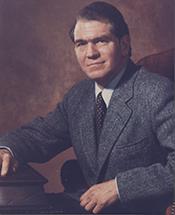
Hamilton Fish Jr.
Former U.S. Representative · New York District 19 · 1969–1995 · Republican
Hamilton Fish Jr. represented New York's District 19 in the United States House of Representatives (1969–1995) for the Republican party. The page below collects sourced biographical facts, term history, committee roles, and provenance for Jr..
Bioguide ID: F000141
Key facts
- Full name
- Hamilton Fish Jr.
- State
- New York
- District
- District 19
- Party
- Republican
- House service
- 1969–1995
- First House term
- 1969
- Status
- Left office
- Current term ends
- —
- Born
- 1926
- Bioguide ID
- F000141
- Committee assignments
- —
- Dataset version
- 1.20260605
Biographical narrative
978 words · sourced from the Wikipedia REST extract
Hamilton Fish Jr. was a prominent American politician who served as a Republican U.S. Representative for New York's 19th congressional district from 1969 until 1995. He was a member of the distinguished Fish political family, which has a long history of public service in the region. Fish's tenure in Congress spanned over two decades, during which he was involved in significant legislative activities and played a role in notable political events, including impeachment proceedings against federal judges and a president.
Early life and career
Hamilton Fish Jr. was born on June 3, 1926, in Washington, D.C. He was the son of Hamilton Fish III and Grace Chapin, both of whom had notable backgrounds in law and politics. Fish's lineage includes several influential figures; he was the great-grandson of Hamilton Fish (1808–1893), a respected politician and diplomat, and a descendant of prominent historical figures such as Lewis Morris and John Kean. This rich family heritage likely influenced his eventual career in public service.
Fish attended Kent School, graduating in 1944, and subsequently enrolled at Harvard College, where he completed his undergraduate education in 1949. His academic pursuits continued at the New York University School of Law, where he earned an LL.B. in 1957. Additionally, he attended the Harvard Kennedy School, further enhancing his understanding of governance and public policy. During his time in college, Fish served in the United States Naval Reserve from 1944 to 1946, contributing to his country during the final years of World War II.
Following his education, Fish began his professional career in the United States Foreign Service, where he served as vice consul in Ireland from 1951 to 1953. This experience provided him with valuable insights into international relations and diplomacy. After returning to the United States, he practiced law privately and took on a role as a lawyer for the New York State Assembly's Judiciary Committee in 1961. This position allowed him to gain firsthand experience in legislative processes and the workings of state government, setting the stage for his future political career.
House tenure
Fish's political career in the U.S. House of Representatives began when he successfully won the Republican primary for the 90th Congress in 1966. Although he was defeated in the general election by Democrat Joseph Y. Resnick, Fish persisted and returned to the political arena. In 1968, he again ran for Congress, this time defeating G. Gordon Liddy in the Republican primary and subsequently winning the general election. His first term in the House commenced on January 3, 1969.
Over the course of his lengthy congressional career, Fish was re-elected to twelve additional terms, serving a total of thirteen terms in the House. His tenure lasted until January 3, 1995, marking a significant period in which he represented the interests of his constituents in New York's Hudson Valley region. Throughout his time in office, Fish was known for his active participation in legislative debates and committee work, particularly on issues related to law and justice.
In 1974, Fish served on the U.S. House Committee on the Judiciary, where he played a pivotal role during the impeachment proceedings against President Richard Nixon. He voted in favor of two of the three articles of impeachment, which charged Nixon with obstruction of justice and abuse of power. This involvement in a historic political event underscored Fish's commitment to upholding the rule of law and accountability in government.
Fish's influence extended beyond his voting record. He was appointed as a House impeachment manager on two occasions, where he was responsible for prosecuting cases against federal judges Harry E. Claiborne and Alcee Hastings during their respective impeachment trials. These roles highlighted his legal expertise and dedication to maintaining ethical standards within the judiciary.
Legislative focus and committees
Throughout his congressional career, Hamilton Fish Jr. was involved in a variety of legislative initiatives and served on several important committees. His legal background and experience in the Judiciary Committee shaped his focus on issues related to law enforcement, judicial integrity, and civil rights. Fish's commitment to these areas was evident in his legislative priorities and the bills he supported during his time in office.
As a member of the Republican Party, Fish often aligned with the party's platform, advocating for conservative policies and fiscal responsibility. His legislative agenda included a focus on economic issues, national security, and the promotion of individual liberties. Fish's constituents in New York's 19th district benefited from his efforts to address local concerns, including infrastructure development and community services.
Fish's long tenure in Congress allowed him to build a network of relationships with fellow lawmakers, which he leveraged to advance his legislative goals. His ability to navigate the complexities of Congress and work across party lines contributed to his effectiveness as a legislator. He was known for his willingness to engage in dialogue with colleagues from both sides of the aisle, fostering a collaborative approach to governance.
In addition to his legislative work, Fish was active in various caucuses and organizations within Congress, further enhancing his influence on policy matters. His participation in these groups allowed him to advocate for specific issues and connect with like-minded legislators who shared his interests.
Fish's career in the House of Representatives concluded in 1995, after he chose not to seek re-election. His decision to retire came after a distinguished career marked by significant contributions to American politics and public service. Following his retirement, Fish faced health challenges, including a diagnosis of lung cancer and prostate cancer, which ultimately led to his passing on July 23, 1996, at the age of 70.
Hamilton Fish Jr.'s legacy is intertwined with his family's long-standing tradition of public service and his own commitment to the principles of democracy and justice. His contributions to the U.S. Congress and the state of New York continue to be recognized as part of the rich tapestry of American political history.
Notable legislation
Sponsored and co-sponsored legislation for Hamilton Fish Jr. is pending operator curation. The biographical narrative above carries the same provenance trail until per-bill rows are written.
Sources
- [1]https://en.wikipedia.org/wiki/Hamilton_Fish_IVWikipedia · retrieved 2026-06-05
Notable quotes
Sourced quotes for Hamilton Fish Jr. are pending operator curation. Narrative-scope provenance remains attached below.
Sources
- [1]https://en.wikipedia.org/wiki/Hamilton_Fish_IVWikipedia · retrieved 2026-06-05
Key positions
Curated policy positions for Hamilton Fish Jr. are pending operator review. The biographical narrative above carries the same provenance trail until per-topic positions are written.
Sources
- [1]https://en.wikipedia.org/wiki/Hamilton_Fish_IVWikipedia · retrieved 2026-06-05
Terms served
- 1969–1971U.S. House · Term 1 · Republican
- 1971–1973U.S. House · Term 2 · Republican
- 1973–1975U.S. House · Term 3 · Republican
- 1975–1977U.S. House · Term 4 · Republican
- 1977–1979U.S. House · Term 5 · Republican
- 1979–1981U.S. House · Term 6 · Republican
- 1981–1983U.S. House · Term 7 · Republican
- 1983–1985U.S. House · Term 8 · Republican
- 1985–1987U.S. House · Term 9 · Republican
- 1987–1989U.S. House · Term 10 · Republican
- 1989–1991U.S. House · Term 11 · Republican
- 1991–1993U.S. House · Term 12 · Republican
- 1993–1995U.S. House · Term 13 · Republican
Sources & provenance
Every attributable claim above carries a per-section [N] marker that resolves to the corresponding URL below. Each entry records the upstream provider, the canonical URL, and the timestamp at which the source was retrieved by the ingest pipeline.
Key facts
- https://bioguide.congress.gov/search/bio/F000141bioguide · retrieved 2026-06-05
- https://www.govtrack.us/congress/members/404097govtrack · retrieved 2026-06-05
Biographical narrative
- https://en.wikipedia.org/wiki/Hamilton_Fish_IVwikipedia · retrieved 2026-06-05
Find your representative
Every U.S. state elects representatives by district. Browse New York’s delegation, the full former-representative roster, or explore the role and term length.
Related on The Candidate
- Preceded by Arthur KleinEarlier holder of the New York District 19 House seat · Democratic.Open
- Succeeded by Sue KellyLater holder of the New York District 19 House seat · Republican.Open
- Abel HuntingtonFormer U.S. Representative · New York District 1 · JacksonOpen
- Alfred ChapinFormer U.S. Representative · New York District 1 · DemocraticOpen
- Cadwallader ColdenFormer U.S. Representative · New York District 1 · FederalistOpen
- Charles FloydFormer U.S. Representative · New York District 1 · DemocraticOpen