
Historical · U.S. House · New York · District 19
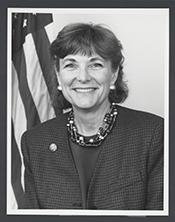
Sue Kelly
Former U.S. Representative · New York District 19 · 1995–2007 · Republican
Sue Kelly represented New York's District 19 in the United States House of Representatives (1995–2007) for the Republican party. The page below collects sourced biographical facts, term history, committee roles, and provenance for Kelly.
Bioguide ID: K000078
Key facts
- Full name
- Sue Kelly
- State
- New York
- District
- District 19
- Party
- Republican
- House service
- 1995–2007
- First House term
- 1995
- Status
- Left office
- Current term ends
- —
- Born
- 1936
- Bioguide ID
- K000078
- Committee assignments
- —
- Dataset version
- 1.20260605
Biographical narrative
989 words · sourced from the Wikipedia REST extract
Sue W. Kelly is a former American politician and businesswoman who served as a Republican member of the United States House of Representatives from 1995 until 2007, representing New York's 19th Congressional District. Kelly entered Congress following the decision of incumbent Hamilton Fish IV not to seek re-election, subsequently defeating his son in a competitive election. Over her six terms in office, she was recognized for her moderate social positions and fiscal conservatism, and she played a notable role in various legislative matters. Her tenure concluded when she was defeated in the 2006 election by Democratic challenger John Hall.
Early life and career
Sue Kelly was born on September 26, 1936, in Lima, Ohio. Raised in a Presbyterian household, she developed a strong educational foundation, graduating from Denison University in 1958. Following her undergraduate studies, she pursued further education and earned a Master's degree from Sarah Lawrence College.
Before entering politics, Kelly engaged in a variety of professional roles that shaped her perspective and skills. She worked as a small business owner, which provided her with firsthand experience in the challenges and opportunities faced by entrepreneurs. Additionally, she served as a patient advocate and a rape counselor, roles that likely informed her understanding of social issues and the importance of community support systems. Her experience as an educator also contributed to her ability to communicate effectively and engage with constituents.
Kelly's political career began in earnest when she became involved in the campaign of Hamilton Fish IV, a Republican representative from New York's Hudson Valley. As an advisor and campaign manager for Fish, she gained valuable insights into the political process and the workings of Congress. This experience laid the groundwork for her own political aspirations.
House tenure
Kelly's entry into the U.S. House of Representatives came during the 1994 election cycle when Hamilton Fish IV announced he would not seek re-election due to health issues. Kelly decided to run for the open seat, positioning herself as a candidate who could continue the legacy of her predecessor. In a competitive race, she faced off against Hamilton Fish V, the son of her predecessor, who ran as a Democrat. Additionally, she contended with candidates from the Conservative Party, Right to Life Party, and an independent candidate. Ultimately, Kelly emerged victorious, marking the beginning of her six terms in Congress.
During her time in office, Kelly established herself as a prominent figure within the Republican Party. In the 2004 election, she secured re-election with a substantial majority, receiving approximately 67% of the vote in her district. Her success in this election was indicative of her strong support among constituents, and The New York Times noted that her previous opponents had often been described as "token opposition," suggesting that she faced limited challenges in her re-election efforts.
However, her political career faced significant challenges in the 2006 election. Kelly was defeated by Democratic candidate John Hall, who initially appeared to be a long-shot contender. The dynamics of the race shifted as Hall gained momentum, particularly after Kelly faced scrutiny related to the Mark Foley scandal. This controversy drew public attention, and Kelly's decision to avoid engaging with local media and her absence from a televised debate contributed to her declining support. The debate, which featured an empty chair representing Kelly, became a symbol of her disengagement during a critical moment in the campaign.
Despite the challenges she faced in her final election, Kelly's tenure in Congress was marked by her active participation in legislative matters and her engagement with various issues affecting her constituents.
Legislative focus and committees
Throughout her time in the House, Kelly was recognized for her socially moderate and fiscally conservative voting record. This balance allowed her to appeal to a broad range of constituents within her district, which included both liberal and conservative voters. Her legislative priorities reflected a commitment to addressing the needs of her constituents while aligning with the broader goals of the Republican Party.
In 1999, Kelly was appointed Chair of the House Page Board, a position she held until 2001. This role placed her in a position of responsibility during a tumultuous period in Congress, particularly as the board came under scrutiny during the Mark Foley scandal. While this controversy was a significant challenge for her, it also highlighted her leadership role within the House.
Kelly's effectiveness as a legislator was recognized by various organizations. A 2006 survey conducted by the nonpartisan company Knowlegis identified her as one of the 100 most powerful lawmakers in the House of Representatives. Furthermore, she was noted as the second most powerful member of the New York delegation, following Thomas M. Reynolds, who held a leadership position within the National Republican Congressional Committee. This recognition underscored her influence and ability to navigate the complexities of congressional politics.
In terms of her legislative focus, Kelly was endorsed by the League of Conservation Voters, an environmental advocacy group, reflecting her commitment to environmental issues. She achieved a high score from the organization, indicating her alignment with their priorities, particularly in her final year in office. However, her voting record also demonstrated a consistent alignment with the Republican leadership, as evidenced by her support for the party in a significant majority of close votes during her last congressional session.
Kelly's political career concluded in January 2007 when she left office after being defeated in the 2006 election. Her legacy includes her contributions to the legislative process, her role in representing the interests of her constituents, and her engagement in various social issues throughout her time in Congress.
In her personal life, Kelly is married to Edward Kelly, and they reside in Katonah, New York. As of 2020, the couple has four children and eight grandchildren, reflecting a family-oriented lifestyle alongside her political endeavors. Kelly's diverse background and experiences have shaped her approach to public service, leaving a mark on the political landscape of New York's 19th Congressional District.
Notable legislation
Sponsored and co-sponsored legislation for Sue Kelly is pending operator curation. The biographical narrative above carries the same provenance trail until per-bill rows are written.
Sources
- [1]https://en.wikipedia.org/wiki/Sue_KellyWikipedia · retrieved 2026-06-05
Notable quotes
Sourced quotes for Sue Kelly are pending operator curation. Narrative-scope provenance remains attached below.
Sources
- [1]https://en.wikipedia.org/wiki/Sue_KellyWikipedia · retrieved 2026-06-05
Key positions
Curated policy positions for Sue Kelly are pending operator review. The biographical narrative above carries the same provenance trail until per-topic positions are written.
Sources
- [1]https://en.wikipedia.org/wiki/Sue_KellyWikipedia · retrieved 2026-06-05
Terms served
- 1995–1997U.S. House · Term 1 · Republican
- 1997–1999U.S. House · Term 2 · Republican
- 1999–2001U.S. House · Term 3 · Republican
- 2001–2003U.S. House · Term 4 · Republican
- 2003–2005U.S. House · Term 5 · Republican
- 2005–2007U.S. House · Term 6 · Republican
Sources & provenance
Every attributable claim above carries a per-section [N] marker that resolves to the corresponding URL below. Each entry records the upstream provider, the canonical URL, and the timestamp at which the source was retrieved by the ingest pipeline.
Key facts
- https://bioguide.congress.gov/search/bio/K000078bioguide · retrieved 2026-06-05
- http://www.house.gov/suekellyhouse.gov · retrieved 2026-06-05
Biographical narrative
- https://en.wikipedia.org/wiki/Sue_Kellywikipedia · retrieved 2026-06-05
Find your representative
Every U.S. state elects representatives by district. Browse New York’s delegation, the full former-representative roster, or explore the role and term length.
Related on The Candidate
- Preceded by Hamilton Fish Jr.Earlier holder of the New York District 19 House seat · Republican.Open
- Succeeded by John HallLater holder of the New York District 19 House seat · Democratic.Open
- Abel HuntingtonFormer U.S. Representative · New York District 1 · JacksonOpen
- Alfred ChapinFormer U.S. Representative · New York District 1 · DemocraticOpen
- Cadwallader ColdenFormer U.S. Representative · New York District 1 · FederalistOpen
- Charles FloydFormer U.S. Representative · New York District 1 · DemocraticOpen