
Historical · U.S. House · New York · District 19
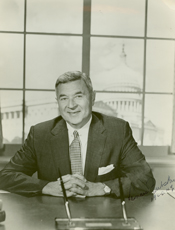
Leonard Farbstein
Former U.S. Representative · New York District 19 · 1957–1971 · Democratic
Leonard Farbstein represented New York's District 19 in the United States House of Representatives (1957–1971) for the Democratic party. The page below collects sourced biographical facts, term history, committee roles, and provenance for Farbstein.
Bioguide ID: F000015
Key facts
- Full name
- Leonard Farbstein
- State
- New York
- District
- District 19
- Party
- Democratic
- House service
- 1957–1971
- First House term
- 1957
- Status
- Left office
- Current term ends
- —
- Born
- 1902
- Bioguide ID
- F000015
- Committee assignments
- —
- Dataset version
- 1.20260605
Biographical narrative
912 words · sourced from the Wikipedia REST extract
Leonard Farbstein was an American lawyer and politician who served as a U.S. Representative for New York's 19th congressional district from 1957 until 1971. A member of the Democratic Party, Farbstein was known for his involvement in various legislative matters and his role on the House Foreign Affairs Committee during a significant period in American history, including the Vietnam War era. His career in public service spanned several decades, beginning with his election to the New York State Assembly in the early 1930s and culminating in his tenure in the U.S. House of Representatives.
Early life and career
Leonard Farbstein was born on October 12, 1902, in New York City to Louis and Yetta Farbstein. His father, Louis, was a Jewish immigrant from the region that is now Poland and worked as a tailor. Growing up in a working-class environment, Farbstein contributed to his family's income by selling newspapers and handkerchiefs after school. This early exposure to the challenges of economic life may have influenced his later political career.
During his teenage years, Farbstein served in the United States Coast Guard Reserve during World War I. Following the war, he completed his education at the High School of Commerce in New York City. He worked for the Audubon Society during this time, which likely fostered his interest in environmental issues and public service. Farbstein pursued higher education at City College of New York and Hebrew Union Teachers College, reflecting his commitment to both academic and community engagement.
Farbstein earned his Bachelor of Laws (LL.B.) degree from the New York University School of Law in 1924. After completing his legal education, he began practicing law in New York City, which laid the foundation for his future political endeavors. His legal background provided him with the skills necessary for navigating the complexities of legislative processes and advocating for his constituents.
House tenure
Farbstein's political career began in earnest when he was elected to the New York State Assembly in 1932. He served in this capacity from 1933 until 1956, during which time he developed a reputation as a dedicated public servant. His long tenure in the state legislature allowed him to build a network of connections and gain valuable experience in governance.
In 1956, Farbstein transitioned to national politics when he was elected as a Democrat to the 85th United States Congress. He served in this role for seven consecutive terms, from January 3, 1957, to January 3, 1971. Throughout his time in Congress, he was involved in various legislative initiatives and contributed to discussions on key national issues. His election to the House of Representatives marked a significant step in his political career, allowing him to influence federal policy and represent the interests of his constituents at a national level.
Farbstein's tenure in Congress coincided with a period of considerable change in American society, including the civil rights movement and the Vietnam War. He was a senior member of the House Foreign Affairs Committee by 1966, where he played a role in shaping U.S. foreign policy. His support for President Lyndon B. Johnson's policies regarding the Vietnam War positioned him as a prominent figure in the ongoing debates surrounding U.S. involvement in Southeast Asia.
Despite his long service and contributions to Congress, Farbstein faced challenges in his later political career. In 1970, he was defeated in his bid for re-nomination by Bella Abzug, a fellow Democrat who would go on to serve in Congress. This defeat marked the end of his congressional career, concluding a significant chapter in his life dedicated to public service.
Legislative focus and committees
During his time in the U.S. House of Representatives, Leonard Farbstein was involved in a variety of legislative matters, reflecting the diverse interests and concerns of his constituents. His role as a member of the House Foreign Affairs Committee allowed him to engage with important international issues, particularly during a time when U.S. foreign policy was under intense scrutiny.
Farbstein's support for the Vietnam War, aligned with President Johnson's administration, indicated his commitment to the prevailing foreign policy of the time. This stance, however, was met with mixed reactions from the public and his constituents, as the war became increasingly controversial. His participation in discussions and decisions related to foreign affairs showcased his dedication to addressing complex global issues, even as they sparked significant debate within the country.
In addition to his work on foreign affairs, Farbstein's legislative focus likely included a range of domestic issues pertinent to his district and the broader New York community. His long tenure in the New York State Assembly prior to his congressional service provided him with insights into local concerns, which he carried into his work at the federal level.
Farbstein's legislative legacy is characterized by his commitment to public service and his engagement with the pressing issues of his time. His ability to navigate the complexities of both state and national politics allowed him to advocate for the needs of his constituents effectively. After leaving Congress, he continued to be remembered for his contributions to American politics and the impact he had on the legislative process during a transformative era in U.S. history.
Leonard Farbstein passed away on November 9, 1993, at the age of 91 in New York City. He was interred in Cedar Park Cemetery in Paramus, New Jersey. His life and career remain a testament to the role of dedicated public servants in shaping the political landscape of the United States.
Notable legislation
Sponsored and co-sponsored legislation for Leonard Farbstein is pending operator curation. The biographical narrative above carries the same provenance trail until per-bill rows are written.
Sources
- [1]https://en.wikipedia.org/wiki/Leonard_FarbsteinWikipedia · retrieved 2026-06-05
Notable quotes
Sourced quotes for Leonard Farbstein are pending operator curation. Narrative-scope provenance remains attached below.
Sources
- [1]https://en.wikipedia.org/wiki/Leonard_FarbsteinWikipedia · retrieved 2026-06-05
Key positions
Curated policy positions for Leonard Farbstein are pending operator review. The biographical narrative above carries the same provenance trail until per-topic positions are written.
Sources
- [1]https://en.wikipedia.org/wiki/Leonard_FarbsteinWikipedia · retrieved 2026-06-05
Terms served
- 1957–1959U.S. House · Term 1 · Democratic
- 1959–1961U.S. House · Term 2 · Democratic
- 1961–1963U.S. House · Term 3 · Democratic
- 1963–1965U.S. House · Term 4 · Democratic
- 1965–1967U.S. House · Term 5 · Democratic
- 1967–1969U.S. House · Term 6 · Democratic
- 1969–1971U.S. House · Term 7 · Democratic
Sources & provenance
Every attributable claim above carries a per-section [N] marker that resolves to the corresponding URL below. Each entry records the upstream provider, the canonical URL, and the timestamp at which the source was retrieved by the ingest pipeline.
Key facts
- https://bioguide.congress.gov/search/bio/F000015bioguide · retrieved 2026-06-05
- https://www.govtrack.us/congress/members/403977govtrack · retrieved 2026-06-05
Biographical narrative
- https://en.wikipedia.org/wiki/Leonard_Farbsteinwikipedia · retrieved 2026-06-05
Find your representative
Every U.S. state elects representatives by district. Browse New York’s delegation, the full former-representative roster, or explore the role and term length.
Related on The Candidate
- Preceded by Arthur KleinEarlier holder of the New York District 19 House seat · Democratic.Open
- Succeeded by Sue KellyLater holder of the New York District 19 House seat · Republican.Open
- Abel HuntingtonFormer U.S. Representative · New York District 1 · JacksonOpen
- Alfred ChapinFormer U.S. Representative · New York District 1 · DemocraticOpen
- Cadwallader ColdenFormer U.S. Representative · New York District 1 · FederalistOpen
- Charles FloydFormer U.S. Representative · New York District 1 · DemocraticOpen