
Historical · U.S. House · New York · District 19
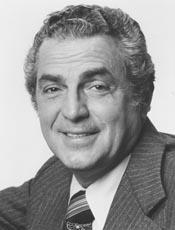
Mario Biaggi
Former U.S. Representative · New York District 19 · 1969–1989 · Democratic
Mario Biaggi represented New York's District 19 in the United States House of Representatives (1969–1989) for the Democratic party. The page below collects sourced biographical facts, term history, committee roles, and provenance for Biaggi.
Bioguide ID: B000432
Key facts
- Full name
- Mario Biaggi
- State
- New York
- District
- District 19
- Party
- Democratic
- House service
- 1969–1989
- First House term
- 1969
- Status
- Left office
- Current term ends
- —
- Born
- 1917
- Bioguide ID
- B000432
- Committee assignments
- —
- Dataset version
- 1.20260605
Biographical narrative
844 words · sourced from the Wikipedia REST extract
Mario Biaggi was a prominent American politician and attorney who served as a U.S. Representative for New York's 19th congressional district from 1969 until 1989. A member of the Democratic Party, Biaggi's political career was marked by his strong advocacy for law enforcement, labor rights, and social issues. Before entering politics, he had a distinguished career as a police officer with the New York City Police Department (NYPD), where he became one of the most decorated officers in the department's history. His tenure in the House of Representatives included ten consecutive terms, during which he garnered significant support from his constituents, though his career ended amid legal controversies.
Early life and career
Mario Biaggi was born on October 26, 1917, in a tenement on East 106th Street in East Harlem, New York City. He was the son of Italian immigrants from Piacenza, Northern Italy. His father, Salvatore Biaggi, worked as a marble setter, while his mother, Mary Campari, was employed as a charwoman. Biaggi grew up in a modest household with two younger brothers and attended local schools, graduating from P.S. 171 and later from Haaren High School in 1934, during the Great Depression.
Biaggi's early work experience included various jobs, starting as a shoeshine boy and later working in a factory. At the age of 18, he became a substitute letter carrier for the United States Postal Service, earning 65 cents per hour. He eventually became a regular letter carrier, serving for nearly six years and becoming active in the National Association of Letter Carriers.
In 1942, Biaggi joined the NYPD at the age of 25, motivated by a desire to serve his community and influenced by the fact that his brothers were serving in the military. His police career lasted for 23 years, during which he was wounded 11 times and received numerous awards for valor, including the NYPD's Medal of Honor and the National Police Officers Association of America’s Medal of Valor. His notable incidents included a dramatic rescue of a girl from a runaway horse and confrontations that resulted in the use of deadly force. Biaggi retired from the NYPD in 1965 with the rank of Detective Lieutenant.
After retiring from the police force, Biaggi pursued a legal career. At the age of 45, he enrolled in law school, receiving a special dispensation from the American Bar Association due to his distinguished service as a police officer. He graduated from New York Law School in 1965 and was admitted to the New York State Bar in 1966. He co-founded a law firm in the Bronx, where he represented various clients, including a notable case involving a woman denied the right to be an umpire in minor league baseball.
House tenure
Biaggi entered politics in 1968 when he ran for the U.S. House of Representatives in New York's 24th congressional district, which became vacant following the resignation of Republican incumbent Paul A. Fino. Biaggi, running as a Democrat with the endorsement of the Conservative Party, won the election with a significant majority of the vote. His victory was notable as he succeeded in a district that had traditionally favored Republican candidates.
Throughout his ten terms in Congress, Biaggi was re-elected multiple times, often with overwhelming support from voters. His electoral success included victories in 1970, 1972, 1974, 1976, 1978, 1980, 1982, 1984, and 1986, often receiving more than 90% of the vote. His political base expanded as he garnered nominations from multiple parties, including the Republican and Conservative parties.
Biaggi's congressional district underwent several changes due to redistricting, particularly after the 1970 and 1980 censuses. These changes included the renumbering of his district from the 24th to the 10th and eventually to the 19th, which incorporated parts of Queens and suburban Westchester County.
Legislative focus and committees
During his time in the House, Biaggi was known for his law-and-order stance, aligning himself as a socially conservative yet economically progressive Democrat. He was particularly vocal about issues concerning law enforcement, advocating for measures such as a federal ban on armor-piercing bullets, which he termed "cop killer" bullets, reflecting his commitment to police safety.
Biaggi's legislative focus extended beyond law enforcement; he was an advocate for various social causes, including support for the elderly, labor unions, and the mentally disabled. He also demonstrated a commitment to international issues, particularly regarding Israel and Soviet Jewry, and expressed concerns about antisemitism and military conduct.
Despite his popularity and legislative achievements, Biaggi's career faced challenges in the late 1980s. He was convicted in two separate trials for receipt of unlawful gratuities in 1987 and 1988. Facing the possibility of expulsion from Congress due to these convictions, Biaggi resigned from his position in August 1988, concluding a lengthy and impactful tenure in the House.
Mario Biaggi passed away on June 24, 2015, leaving behind a complex legacy shaped by his extensive career in law enforcement and politics. His contributions to public service and the various issues he championed during his time in Congress continue to be recognized in discussions of New York's political history.
Notable legislation
Sponsored and co-sponsored legislation for Mario Biaggi is pending operator curation. The biographical narrative above carries the same provenance trail until per-bill rows are written.
Sources
- [1]https://en.wikipedia.org/wiki/Mario_BiaggiWikipedia · retrieved 2026-06-05
Notable quotes
Sourced quotes for Mario Biaggi are pending operator curation. Narrative-scope provenance remains attached below.
Sources
- [1]https://en.wikipedia.org/wiki/Mario_BiaggiWikipedia · retrieved 2026-06-05
Key positions
Curated policy positions for Mario Biaggi are pending operator review. The biographical narrative above carries the same provenance trail until per-topic positions are written.
Sources
- [1]https://en.wikipedia.org/wiki/Mario_BiaggiWikipedia · retrieved 2026-06-05
Terms served
- 1969–1971U.S. House · Term 1 · Democratic
- 1971–1973U.S. House · Term 2 · Democratic
- 1973–1975U.S. House · Term 3 · Democratic
- 1975–1977U.S. House · Term 4 · Democratic
- 1977–1979U.S. House · Term 5 · Democratic
- 1979–1981U.S. House · Term 6 · Democratic
- 1981–1983U.S. House · Term 7 · Democratic
- 1983–1985U.S. House · Term 8 · Democratic
- 1985–1987U.S. House · Term 9 · Democratic
- 1987–1989U.S. House · Term 10 · Democratic
Sources & provenance
Every attributable claim above carries a per-section [N] marker that resolves to the corresponding URL below. Each entry records the upstream provider, the canonical URL, and the timestamp at which the source was retrieved by the ingest pipeline.
Key facts
- https://bioguide.congress.gov/search/bio/B000432bioguide · retrieved 2026-06-05
- https://www.govtrack.us/congress/members/401418govtrack · retrieved 2026-06-05
Biographical narrative
- https://en.wikipedia.org/wiki/Mario_Biaggiwikipedia · retrieved 2026-06-05
Find your representative
Every U.S. state elects representatives by district. Browse New York’s delegation, the full former-representative roster, or explore the role and term length.
Related on The Candidate
- Preceded by Arthur KleinEarlier holder of the New York District 19 House seat · Democratic.Open
- Succeeded by Sue KellyLater holder of the New York District 19 House seat · Republican.Open
- Abel HuntingtonFormer U.S. Representative · New York District 1 · JacksonOpen
- Alfred ChapinFormer U.S. Representative · New York District 1 · DemocraticOpen
- Cadwallader ColdenFormer U.S. Representative · New York District 1 · FederalistOpen
- Charles FloydFormer U.S. Representative · New York District 1 · DemocraticOpen