
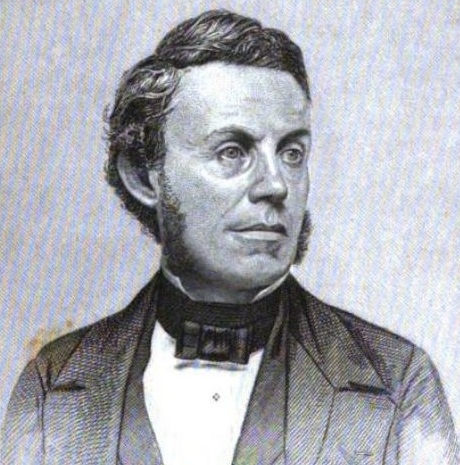
Historical · U.S. House · New York · District 2
David Bokee
Former U.S. Representative · New York District 2 · 1849–1851 · Whig
David Bokee represented New York's District 2 in the United States House of Representatives (1849–1851) for the Whig party. The page below collects sourced biographical facts, term history, committee roles, and provenance for Bokee.
Bioguide ID: B000599
Key facts
- Full name
- David Bokee
- State
- New York
- District
- District 2
- Party
- Whig
- House service
- 1849–1851
- First House term
- 1849
- Status
- Left office
- Current term ends
- —
- Born
- 1805
- Bioguide ID
- B000599
- Committee assignments
- —
- Dataset version
- 1.20260606
Biographical narrative
844 words · sourced from the Wikipedia REST extract
David Bokee was an American lawyer, merchant, and politician who served as a U.S. Representative for New York's 2nd congressional district from 1849 to 1851. A member of the Whig Party, Bokee's political career included various local and state positions prior to his election to Congress. He was also involved in the shipping industry and held significant roles in municipal governance. His contributions to public service extended beyond his congressional tenure, as he was appointed to a federal position by President Millard Fillmore.
Early life and career
David Bokee was born on October 6, 1805, in New York City to Frederick and Rachel McKenzie Bokee. His early education took place in public schools, where he laid the foundation for his future endeavors. Following his schooling, Bokee engaged in mercantile activities while simultaneously pursuing a legal education. His dedication to his studies paid off when he was admitted to the bar, allowing him to practice law professionally.
In addition to his legal career, Bokee became involved in the shipping industry, which complemented his mercantile background. His work as a shipping merchant provided him with insights into trade and commerce, which would later inform his political activities. Bokee married Sarah Ann Dowdny, and together they had six children: Helena, Frederick, Margaret, Joseph, David, and William. His family life was an important aspect of his identity, and he balanced his professional responsibilities with his role as a father.
Bokee's political career began at the local level, where he served as President of the Brooklyn Board of Aldermen. His first term in this role lasted from 1840 to 1843, and he returned to the position for a second term from 1845 to 1848. During his time as President of the Board of Aldermen, he was involved in various municipal matters, contributing to the governance of Brooklyn. His leadership in local government helped establish his reputation as a dedicated public servant.
In addition to his role in local government, Bokee was elected to the New York State Senate, representing the 2nd District in 1848 and 1849. His experience in the state legislature further enhanced his political profile and prepared him for a future role in the U.S. Congress. Bokee's involvement in state politics demonstrated his commitment to public service and his desire to effect change at multiple levels of government.
House tenure
David Bokee was elected to the 31st United States Congress as a member of the Whig Party, beginning his term on March 4, 1849. His election to the House of Representatives marked a significant step in his political career, allowing him to represent the interests of his constituents at the national level. During his time in Congress, Bokee participated in various legislative discussions and contributed to the shaping of federal policies.
Bokee's congressional tenure lasted until March 3, 1851, when he completed his term. Although he served only one term in the House, his time in Congress was characterized by his engagement in the legislative process and his commitment to the Whig Party's principles. The Whig Party, which was active during this period, focused on issues such as economic modernization, infrastructure development, and opposition to the expansion of slavery.
Following his departure from Congress, Bokee continued to be active in public service. He was appointed by President Millard Fillmore as the Naval Officer of the Port of New York, a position he held from 1851 to 1853. This appointment reflected his ongoing involvement in governmental affairs and his expertise in matters related to trade and shipping.
Legislative focus and committees
During his time in the U.S. House of Representatives, David Bokee's specific legislative focus and committee assignments are not detailed in the available records. However, as a member of the Whig Party, it can be inferred that he was likely involved in discussions surrounding economic issues, infrastructure development, and the political climate of the time, which included debates over slavery and its expansion into new territories.
The Whig Party was known for advocating for a strong national economy and infrastructure improvements, which may have aligned with Bokee's background as a merchant and shipping professional. His experiences in the local and state government likely informed his perspectives on federal policies, particularly those affecting commerce and trade.
After leaving Congress, Bokee's appointment as Naval Officer of the Port of New York indicates that he remained engaged in issues related to trade and shipping, which were critical to the economy of New York and the nation as a whole. His role in this position would have involved overseeing the operations of the port and ensuring compliance with federal regulations, further emphasizing his commitment to public service.
David Bokee passed away on March 15, 1860, in Washington, D.C. His contributions to public service, both in local governance and at the federal level, left a mark on the political landscape of his time. He was buried at Green-Wood Cemetery in Brooklyn, where he is remembered as a figure who played a role in the governance of New York and the United States during a transformative period in American history.
Notable legislation
Sponsored and co-sponsored legislation for David Bokee is pending operator curation. The biographical narrative above carries the same provenance trail until per-bill rows are written.
Sources
- [1]https://en.wikipedia.org/wiki/David_A._BokeeWikipedia · retrieved 2026-06-06
Notable quotes
Sourced quotes for David Bokee are pending operator curation. Narrative-scope provenance remains attached below.
Sources
- [1]https://en.wikipedia.org/wiki/David_A._BokeeWikipedia · retrieved 2026-06-06
Key positions
Curated policy positions for David Bokee are pending operator review. The biographical narrative above carries the same provenance trail until per-topic positions are written.
Sources
- [1]https://en.wikipedia.org/wiki/David_A._BokeeWikipedia · retrieved 2026-06-06
Terms served
- 1849–1851U.S. House · Term 1 · Whig
Sources & provenance
Every attributable claim above carries a per-section [N] marker that resolves to the corresponding URL below. Each entry records the upstream provider, the canonical URL, and the timestamp at which the source was retrieved by the ingest pipeline.
Key facts
- https://bioguide.congress.gov/search/bio/B000599bioguide · retrieved 2026-06-06
- https://www.govtrack.us/congress/members/401567govtrack · retrieved 2026-06-06
Biographical narrative
- https://en.wikipedia.org/wiki/David_A._Bokeewikipedia · retrieved 2026-06-06
Find your representative
Every U.S. state elects representatives by district. Browse New York’s delegation, the full former-representative roster, or explore the role and term length.
Related on The Candidate
- Preceded by Henry MurphyEarlier holder of the New York District 2 House seat · Democratic.Open
- Succeeded by Obadiah BowneLater holder of the New York District 2 House seat · Whig.Open
- Abel HuntingtonFormer U.S. Representative · New York District 1 · JacksonOpen
- Alfred ChapinFormer U.S. Representative · New York District 1 · DemocraticOpen
- Cadwallader ColdenFormer U.S. Representative · New York District 1 · FederalistOpen
- Charles FloydFormer U.S. Representative · New York District 1 · DemocraticOpen