
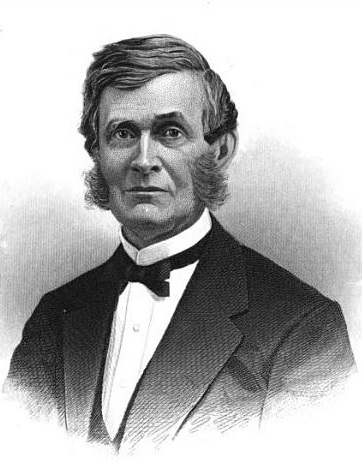
Historical · U.S. House · New York · District 2
Henry Murphy
Former U.S. Representative · New York District 2 · 1843–1849 · Democratic
Henry Murphy represented New York's District 2 in the United States House of Representatives (1843–1849) for the Democratic party. The page below collects sourced biographical facts, term history, committee roles, and provenance for Murphy.
Bioguide ID: M001093
Key facts
- Full name
- Henry Murphy
- State
- New York
- District
- District 2
- Party
- Democratic
- House service
- 1843–1849
- First House term
- 1843
- Status
- Left office
- Current term ends
- —
- Born
- 1810
- Bioguide ID
- M001093
- Committee assignments
- —
- Dataset version
- 1.20260606
Biographical narrative
920 words · sourced from the Wikipedia REST extract
Henry Murphy was a prominent American lawyer, politician, and historian who served as a U.S. Representative for New York's 2nd congressional district during the mid-19th century. A member of the Democratic Party, Murphy's political career included significant roles such as Mayor of Brooklyn, U.S. Minister to the Netherlands, and a member of the New York State Senate. In addition to his political endeavors, he was a noted author and newspaper editor, contributing to the historical understanding of early colonial New York. His multifaceted career also encompassed various business ventures, including involvement in the construction of the Brooklyn Bridge.
Early life and career
Henry Cruse Murphy was born on July 5, 1810, in Brooklyn, New York. He was the eldest son of John Garrison Murphy and Clarissa Runyon, who had settled in Brooklyn after their marriage. John Murphy was a notable businessman, recognized for his invention of a horse-powered wheel that improved ferry operations on the East River. This innovation allowed ferries to change direction without needing to turn around, enhancing transportation efficiency. Henry Murphy's paternal grandfather, Timothy Murphy, was an Irish immigrant who became a doctor and a veteran of the American Revolution, further highlighting the family's contributions to American society.
Murphy pursued his education at Columbia College, graduating in 1830. Following his graduation, he studied law under Judge Peter W. Radcliffe and subsequently gained admission to the bar, establishing a legal practice in Brooklyn. His early career also included a significant role in journalism; he was the founding editor of the Brooklyn Eagle and Kings County Democrat newspaper, which began publication in 1841. This position allowed him to influence public opinion and engage with the community on various issues.
In addition to his legal and journalistic endeavors, Murphy held several important positions in local government. He served as Brooklyn's City Attorney and Corporation Counsel, and he was elected Mayor of Brooklyn in 1842 and 1843. His tenure as mayor provided him with valuable experience in public service and governance, laying the groundwork for his future political aspirations.
House tenure
Murphy's entry into national politics came in November 1842 when he was elected to the United States House of Representatives. He served his first term from March 4, 1843, to March 3, 1845, during the 28th Congress. His election occurred while he was still completing his term as mayor, reflecting his growing influence in the political landscape of New York. However, he faced challenges in his political career; he was not successful in his bid for reelection in 1844. Following this setback, he participated as a delegate in the New York State Constitutional Convention of 1846, contributing to the state's governance and legal framework.
Murphy returned to Congress in the November 1846 election, serving a second non-consecutive term from March 4, 1847, to March 3, 1849, during the 30th Congress. His time in the House was characterized by his engagement with various legislative matters, although specific details regarding his committee assignments or legislative initiatives during this period are not extensively documented.
After his congressional service, Murphy remained active in the Democratic Party and participated in the 1852 Democratic National Convention as a delegate. The convention faced challenges in selecting a presidential nominee, and Murphy was considered as a potential candidate by the Virginia delegation, which ultimately supported Franklin Pierce. This decision played a role in shaping the political landscape of the time, as Pierce went on to secure the nomination and later the presidency.
Legislative focus and committees
Throughout his political career, Murphy's legislative focus and committee involvement reflected his interests and the priorities of his constituents. While specific committee assignments during his congressional terms are not detailed, his background in law and local governance likely informed his approach to legislative issues. His experience as a mayor and city attorney would have provided him with insights into urban policy, infrastructure, and public welfare, which were critical concerns during the mid-19th century.
In addition to his congressional service, Murphy's political career included significant contributions to state governance. He served in the New York State Senate from 1862 to 1873, participating in numerous legislative sessions and contributing to the development of state policies. His involvement in the state legislature allowed him to continue advocating for the interests of his constituents and to engage with broader political issues, including those related to the Civil War.
Murphy was a staunch supporter of the Union during the Civil War and played a role in recruiting and equipping local regiments for service. His commitment to the Union cause exemplified his dedication to public service and civic responsibility. Despite his efforts, he faced challenges in securing higher political office, including unsuccessful bids for the U.S. Senate and the governorship of New York.
Beyond his political and legislative activities, Murphy was also a prolific author and historian. He contributed to the understanding of early colonial history through his writings and translations of significant historical works. His scholarship included research on figures such as Henry Hudson and the early Dutch settlements in America. Murphy's literary contributions, combined with his political career, positioned him as a notable figure in both the historical and civic life of New York.
Henry Murphy passed away on December 1, 1882, in Brooklyn, New York. His legacy includes his contributions to law, politics, and history, as well as his involvement in significant civic projects, such as the Brooklyn Bridge. He was laid to rest at Green-Wood Cemetery, leaving behind a multifaceted legacy that reflects his diverse interests and commitments throughout his life.
Notable legislation
Sponsored and co-sponsored legislation for Henry Murphy is pending operator curation. The biographical narrative above carries the same provenance trail until per-bill rows are written.
Sources
- [1]https://en.wikipedia.org/wiki/Henry_C._MurphyWikipedia · retrieved 2026-06-06
Notable quotes
Sourced quotes for Henry Murphy are pending operator curation. Narrative-scope provenance remains attached below.
Sources
- [1]https://en.wikipedia.org/wiki/Henry_C._MurphyWikipedia · retrieved 2026-06-06
Key positions
Curated policy positions for Henry Murphy are pending operator review. The biographical narrative above carries the same provenance trail until per-topic positions are written.
Sources
- [1]https://en.wikipedia.org/wiki/Henry_C._MurphyWikipedia · retrieved 2026-06-06
Terms served
- 1843–1845U.S. House · Term 1 · Democratic
- 1847–1849U.S. House · Term 2 · Democratic
Sources & provenance
Every attributable claim above carries a per-section [N] marker that resolves to the corresponding URL below. Each entry records the upstream provider, the canonical URL, and the timestamp at which the source was retrieved by the ingest pipeline.
Key facts
- https://bioguide.congress.gov/search/bio/M001093bioguide · retrieved 2026-06-06
- https://www.govtrack.us/congress/members/408057govtrack · retrieved 2026-06-06
Biographical narrative
- https://en.wikipedia.org/wiki/Henry_C._Murphywikipedia · retrieved 2026-06-06
Find your representative
Every U.S. state elects representatives by district. Browse New York’s delegation, the full former-representative roster, or explore the role and term length.
Related on The Candidate
- Preceded by Joseph EgbertEarlier holder of the New York District 2 House seat · Democratic.Open
- Succeeded by David BokeeLater holder of the New York District 2 House seat · Whig.Open
- Abel HuntingtonFormer U.S. Representative · New York District 1 · JacksonOpen
- Alfred ChapinFormer U.S. Representative · New York District 1 · DemocraticOpen
- Cadwallader ColdenFormer U.S. Representative · New York District 1 · FederalistOpen
- Charles FloydFormer U.S. Representative · New York District 1 · DemocraticOpen