
Historical · U.S. House · New York · District 2
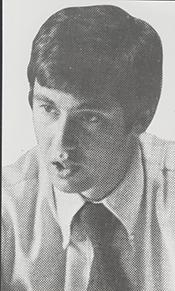
Thomas Downey
Former U.S. Representative · New York District 2 · 1975–1993 · Democratic
Thomas Downey represented New York's District 2 in the United States House of Representatives (1975–1993) for the Democratic party. The page below collects sourced biographical facts, term history, committee roles, and provenance for Downey.
Bioguide ID: D000471
Key facts
- Full name
- Thomas Downey
- State
- New York
- District
- District 2
- Party
- Democratic
- House service
- 1975–1993
- First House term
- 1975
- Status
- Left office
- Current term ends
- —
- Born
- 1949
- Bioguide ID
- D000471
- Committee assignments
- —
- Dataset version
- 1.20260605
Biographical narrative
922 words · sourced from the Wikipedia REST extract
Thomas J. Downey is a former U.S. Representative who served New York's 2nd congressional district from 1975 until 1993. A member of the Democratic Party, Downey was notable for being the youngest member of the 94th United States Congress when he was first elected at the age of 25. Throughout his nine terms in the House, he focused on various legislative issues, particularly in the areas of arms control, welfare reform, and child care. After leaving Congress, he transitioned into a career as a lobbyist and has been involved in various advocacy efforts.
Early life and career
Thomas Joseph Downey was born on January 28, 1949, in Queens, New York City. He was raised in a family that valued education and civic engagement, with his mother, Norma Morgillo, and father, Thomas A. Downey Jr., playing significant roles in his upbringing. Downey completed his secondary education at West Islip High School in West Islip, New York, graduating in 1966. He then pursued higher education, earning a Bachelor of Science degree from Cornell University in 1970.
Following his undergraduate studies, Downey attended St. John's University School of Law from 1972 to 1974. He later completed his legal education by obtaining a Juris Doctor degree from the Washington College of Law at American University in 1980. His academic background laid a foundation for his future career in law and politics.
Before entering the U.S. House of Representatives, Downey served as a legislator in Suffolk County, New York, from 1972 to 1975. His political career began to take shape during this period, and he was also a delegate to the Democratic National Convention in 1972. These early experiences in local government and party politics provided him with insights into the legislative process and the importance of constituent engagement.
House tenure
Downey's congressional career began when he was elected as a Democrat to the 94th United States Congress in 1974. His election marked a significant milestone, as he became the youngest member of Congress at that time. He took office on January 3, 1975, and was subsequently re-elected to eight additional terms, serving until January 3, 1993. His tenure in the House was characterized by active participation in various committees and a focus on key national issues.
During his time in Congress, Downey was a member of the United States House Committee on Armed Services, where he specialized in arms control. He played a role in advising negotiation teams during significant arms control discussions, including the Strategic Arms Limitation Talks and the START I talks. His involvement in these negotiations underscored his commitment to addressing national security concerns and promoting international stability.
In addition to his work on armed services, Downey served on the Budget and Ways and Means Committees. His legislative efforts in these areas included advocating for welfare reform and child care legislation, reflecting his focus on social issues and the well-being of families. Throughout his nine terms, he was involved in a range of legislative initiatives that sought to address the needs of his constituents and the broader American public.
However, Downey's congressional career came to an end after he lost his bid for re-election to the 103rd United States Congress in 1992. His defeat was linked to revelations regarding his banking practices, specifically his involvement in overdrawing his House bank account, a situation that garnered significant media attention. Additionally, his connection to a House bank auditor, who was his wife at the time, raised ethical questions that contributed to his electoral loss.
Legislative focus and committees
Throughout his time in the House of Representatives, Downey's legislative focus encompassed a variety of critical issues, particularly in the realms of national security, social welfare, and economic policy. His role on the House Committee on Armed Services allowed him to engage deeply with matters related to defense and arms control. He was particularly involved in discussions surrounding arms reduction and non-proliferation, working to shape U.S. policy in a rapidly changing global landscape.
Downey's participation in the Budget and Ways and Means Committees further highlighted his commitment to addressing economic and social issues. He advocated for reforms aimed at improving welfare programs and enhancing child care services, reflecting a broader Democratic agenda focused on supporting families and vulnerable populations. His legislative efforts in these areas were part of a larger conversation about the role of government in providing social safety nets and promoting economic opportunity.
In addition to his committee work, Downey's tenure was marked by notable moments, including a physical altercation with Republican Congressman Bob Dornan in 1985. This incident, which arose from a heated exchange regarding Downey's military service during the Vietnam War, underscored the often contentious nature of political discourse in Congress. The confrontation was addressed by then-Speaker of the House Tip O'Neill, who emphasized the importance of maintaining decorum within the legislative body.
After leaving Congress, Downey transitioned into a career as a lobbyist, founding the Downey McGrath Group, Inc. in 1993. His lobbying work included representing various clients, including foreign entities and energy companies, and he remained active in advocacy until his retirement from lobbying in 2015. Downey has also been involved in non-partisan organizations focused on nuclear disarmament and has continued to engage in public policy discussions.
In summary, Thomas J. Downey's career in the U.S. House of Representatives was marked by significant contributions to national security and social welfare legislation. His experiences in local government and Congress have shaped his subsequent work as a lobbyist and advocate, reflecting a lifelong commitment to public service and civic engagement.
Notable legislation
Sponsored and co-sponsored legislation for Thomas Downey is pending operator curation. The biographical narrative above carries the same provenance trail until per-bill rows are written.
Sources
- [1]https://en.wikipedia.org/wiki/Thomas_DowneyWikipedia · retrieved 2026-06-05
Notable quotes
Sourced quotes for Thomas Downey are pending operator curation. Narrative-scope provenance remains attached below.
Sources
- [1]https://en.wikipedia.org/wiki/Thomas_DowneyWikipedia · retrieved 2026-06-05
Key positions
Curated policy positions for Thomas Downey are pending operator review. The biographical narrative above carries the same provenance trail until per-topic positions are written.
Sources
- [1]https://en.wikipedia.org/wiki/Thomas_DowneyWikipedia · retrieved 2026-06-05
Terms served
- 1975–1977U.S. House · Term 1 · Democratic
- 1977–1979U.S. House · Term 2 · Democratic
- 1979–1981U.S. House · Term 3 · Democratic
- 1981–1983U.S. House · Term 4 · Democratic
- 1983–1985U.S. House · Term 5 · Democratic
- 1985–1987U.S. House · Term 6 · Democratic
- 1987–1989U.S. House · Term 7 · Democratic
- 1989–1991U.S. House · Term 8 · Democratic
- 1991–1993U.S. House · Term 9 · Democratic
Sources & provenance
Every attributable claim above carries a per-section [N] marker that resolves to the corresponding URL below. Each entry records the upstream provider, the canonical URL, and the timestamp at which the source was retrieved by the ingest pipeline.
Key facts
- https://bioguide.congress.gov/search/bio/D000471bioguide · retrieved 2026-06-05
- https://www.govtrack.us/congress/members/403581govtrack · retrieved 2026-06-05
Biographical narrative
- https://en.wikipedia.org/wiki/Thomas_Downeywikipedia · retrieved 2026-06-05
Find your representative
Every U.S. state elects representatives by district. Browse New York’s delegation, the full former-representative roster, or explore the role and term length.
Related on The Candidate
- Preceded by James Grover Jr.Earlier holder of the New York District 2 House seat · Republican.Open
- Succeeded by Pete KingLater holder of the New York District 2 House seat · Republican.Open
- Abel HuntingtonFormer U.S. Representative · New York District 1 · JacksonOpen
- Alfred ChapinFormer U.S. Representative · New York District 1 · DemocraticOpen
- Cadwallader ColdenFormer U.S. Representative · New York District 1 · FederalistOpen
- Charles FloydFormer U.S. Representative · New York District 1 · DemocraticOpen