
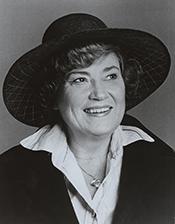
Historical · U.S. House · New York · District 20
Bella Abzug
Former U.S. Representative · New York District 20 · 1971–1977 · Democratic
Bella Abzug represented New York's District 20 in the United States House of Representatives (1971–1977) for the Democratic party. The page below collects sourced biographical facts, term history, committee roles, and provenance for Abzug.
Bioguide ID: A000018
Key facts
- Full name
- Bella Abzug
- State
- New York
- District
- District 20
- Party
- Democratic
- House service
- 1971–1977
- First House term
- 1971
- Status
- Left office
- Current term ends
- —
- Born
- 1920
- Bioguide ID
- A000018
- Committee assignments
- —
- Dataset version
- 1.20260605
Biographical narrative
993 words · sourced from the Wikipedia REST extract
Bella S. Abzug was a prominent American lawyer, politician, and social activist who served as a U.S. Representative for New York's 20th congressional district from 1971 until 1977. A member of the Democratic Party, Abzug was known for her vigorous advocacy for women's rights, civil liberties, and social justice. She played a significant role in the women's movement and was a co-founder of the National Women's Political Caucus. Her tenure in Congress was marked by her commitment to progressive causes, including the introduction of the first federal gay rights bill and her leadership in various legislative initiatives aimed at promoting equality and civil rights.
Early life and career
Bella Savitzky was born on July 24, 1920, in New York City to Jewish immigrant parents from the Russian Empire. Her mother, Esther, was a homemaker who immigrated in 1902, while her father, Emanuel Savitzky, was a butcher who arrived in the United States in 1906. Growing up in a working-class neighborhood, Abzug was instilled with a strong sense of competition and resilience from an early age. She often participated in various competitions and even managed the cash register at her father's deli as a young girl.
Abzug's upbringing in a traditional Orthodox Jewish household significantly influenced her views on gender roles and feminism. She became aware of the inequalities faced by women during her visits to the synagogue, where she noted that women were relegated to the back rows. A pivotal moment in her early life occurred when her father passed away, and she learned that women were not permitted to recite the Kaddish, a mourning prayer reserved for sons. Defying this tradition, she attended synagogue daily for a year to recite the prayer in her father's memory.
Abzug excelled academically, graduating from Walton High School in the Bronx, where she served as class president. She continued her education at Hunter College, majoring in political science while also attending the Jewish Theological Seminary of America. During her time at Hunter, she was active in student government and the American Student Union. She earned her law degree from Columbia University in 1944, becoming one of the few women to practice law at that time.
Following her admission to the New York Bar in 1945, Abzug began her legal career at the firm of Pressman, Witt & Cammer, where she focused on labor rights, tenants' rights, and civil liberties. She was involved in civil rights cases, including an appeal for Willie McGee, a black man sentenced to death in Mississippi. Abzug's legal work often aligned with her advocacy for liberal causes, including the Equal Rights Amendment and opposition to the Vietnam War. She was also an early participant in Women Strike for Peace and was known for her outspoken opposition to the House Un-American Activities Committee during the McCarthy era.
House tenure
Abzug's political career began in earnest when she ran for Congress in 1970, challenging the long-serving incumbent Leonard Farbstein in the Democratic primary. Her campaign slogan, "This woman's place is in the House—the House of Representatives," resonated with voters, leading to a significant upset victory. She subsequently won the general election against talk show host Barry Farber, marking the beginning of her congressional tenure.
During her time in Congress, Abzug faced challenges due to redistricting, which eliminated her original district. In 1972, she ran against William Fitts Ryan in the Democratic primary and was defeated. However, following Ryan's death before the general election, she successfully secured the party's nomination against his widow, Priscilla Ryan. Abzug won the general election, continuing her representation of New York's West Side and later parts of the Bronx.
Throughout her congressional career, Abzug was recognized for her assertive and outspoken style, earning her the nickname "Battling Bella." She was a trailblazer in various legislative initiatives, including her support for gay rights, where she introduced the first federal gay rights bill, known as the Equality Act of 1974. Her leadership extended to chairing hearings on government secrecy, reflecting her commitment to transparency and accountability in government.
Abzug's influence in Congress was notable; she was recognized as one of the most influential members of the House, ranking third in a survey conducted by U.S. News & World Report. Her legislative accomplishments included sponsoring the Equality Credit Opportunity Act, which prohibited discrimination in credit transactions based on various factors, including sex and marital status. She also co-sponsored legislation that established the Clara Barton National Historic Site, the first National Park dedicated to a woman’s achievements.
Legislative focus and committees
During her tenure in the House of Representatives, Abzug's legislative focus encompassed a wide range of social justice issues. She was a strong advocate for women's rights and played a key role in advancing policies that aimed to improve the status of women in society. Her work included co-founding the National Women's Political Caucus in 1971 alongside other prominent feminists, which aimed to increase women's participation in politics.
Abzug's commitment to civil rights extended beyond gender equality. She was a vocal supporter of LGBTQ+ rights, introducing significant legislation aimed at protecting the rights of gay individuals. Her advocacy for these issues was part of a broader commitment to social justice, which also included her opposition to the Vietnam War and her efforts to promote civil liberties.
In addition to her legislative initiatives, Abzug served on various committees during her time in Congress, including the Subcommittee on Government Information and Individual Rights, where she chaired hearings that addressed issues of government transparency and individual rights. Her work in this area underscored her belief in the importance of accountability in government and the protection of civil liberties.
Abzug's tenure in Congress came to an end in 1977, but her legacy as a pioneering figure in the women's movement and a staunch advocate for civil rights continues to be recognized. Her contributions to American politics and social activism have left a lasting impact, particularly in the realms of women's rights and LGBTQ+ advocacy.
Notable legislation
Sponsored and co-sponsored legislation for Bella Abzug is pending operator curation. The biographical narrative above carries the same provenance trail until per-bill rows are written.
Sources
- [1]https://en.wikipedia.org/wiki/Bella_AbzugWikipedia · retrieved 2026-06-05
Notable quotes
Sourced quotes for Bella Abzug are pending operator curation. Narrative-scope provenance remains attached below.
Sources
- [1]https://en.wikipedia.org/wiki/Bella_AbzugWikipedia · retrieved 2026-06-05
Key positions
Curated policy positions for Bella Abzug are pending operator review. The biographical narrative above carries the same provenance trail until per-topic positions are written.
Sources
- [1]https://en.wikipedia.org/wiki/Bella_AbzugWikipedia · retrieved 2026-06-05
Terms served
- 1971–1973U.S. House · Term 1 · Democratic
- 1973–1975U.S. House · Term 2 · Democratic
- 1975–1977U.S. House · Term 3 · Democratic
Sources & provenance
Every attributable claim above carries a per-section [N] marker that resolves to the corresponding URL below. Each entry records the upstream provider, the canonical URL, and the timestamp at which the source was retrieved by the ingest pipeline.
Key facts
- https://bioguide.congress.gov/search/bio/A000018bioguide · retrieved 2026-06-05
- https://www.govtrack.us/congress/members/400680govtrack · retrieved 2026-06-05
Biographical narrative
- https://en.wikipedia.org/wiki/Bella_Abzugwikipedia · retrieved 2026-06-05
Find your representative
Every U.S. state elects representatives by district. Browse New York’s delegation, the full former-representative roster, or explore the role and term length.
Related on The Candidate
- Preceded by Ludwig TellerEarlier holder of the New York District 20 House seat · Democratic.Open
- Succeeded by Joseph DioGuardiLater holder of the New York District 20 House seat · Republican.Open
- Abel HuntingtonFormer U.S. Representative · New York District 1 · JacksonOpen
- Alfred ChapinFormer U.S. Representative · New York District 1 · DemocraticOpen
- Cadwallader ColdenFormer U.S. Representative · New York District 1 · FederalistOpen
- Charles FloydFormer U.S. Representative · New York District 1 · DemocraticOpen