
Historical · U.S. House · New York · District 20
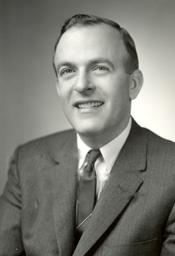
Richard Ottinger
Former U.S. Representative · New York District 20 · 1965–1985 · Democratic
Richard Ottinger represented New York's District 20 in the United States House of Representatives (1965–1985) for the Democratic party. The page below collects sourced biographical facts, term history, committee roles, and provenance for Ottinger.
Bioguide ID: O000134
Key facts
- Full name
- Richard Ottinger
- State
- New York
- District
- District 20
- Party
- Democratic
- House service
- 1965–1985
- First House term
- 1965
- Status
- Left office
- Current term ends
- —
- Born
- 1929
- Bioguide ID
- O000134
- Committee assignments
- —
- Dataset version
- 1.20260605
Biographical narrative
830 words · sourced from the Wikipedia REST extract
Richard L. Ottinger was an American attorney, politician, and law professor who served as a U.S. Representative for New York's 20th congressional district. A member of the Democratic Party, he held office in the House of Representatives for a total of eight terms from 1965 to 1971 and again from 1975 to 1985. Throughout his political career, Ottinger was known for his commitment to environmental issues and his involvement in various legislative initiatives.
Early life and career
Richard Lawrence Ottinger was born on January 27, 1929, in New York City. He was the son of Louise Loewenstein, a philanthropist known for her support of the arts and social causes, and Lawrence Ottinger, a businessman who founded U.S. Plywood. His family background included a notable political connection; he was the nephew of Albert Ottinger, who served as the Attorney General of New York from 1925 to 1928.
Ottinger's early education took place in the public schools of Scarsdale, New York, and he graduated from the Loomis School in Windsor, Connecticut, in 1946. He pursued higher education at Cornell University, where he earned a Bachelor of Arts degree in 1950. Following his undergraduate studies, he attended Harvard Law School, graduating in 1953. Additionally, he studied international law at Georgetown University, further enhancing his legal education.
After completing his studies, Ottinger served in the United States Air Force from 1955 to 1957, achieving the rank of captain before his discharge. Upon returning to civilian life, he was admitted to the New York bar and began practicing law, specializing in international and corporate law. His early career also included a significant role with the Peace Corps, where he was the second staff member and served as the director of programs for the west coast of South America from 1961 to 1964. This experience contributed to his understanding of international issues and public service.
House tenure
Ottinger's political career began in earnest when he was elected as a Democrat to the 89th United States Congress in the 1964 elections, representing New York's 25th congressional district. His initial term began in 1965, and he was re-elected twice in 1966 and 1968. During this period, he faced a challenge regarding the legitimacy of his election, as his opponent, incumbent U.S. Representative Robert Barry, alleged that Ottinger had circumvented campaign contribution limits by utilizing multiple committees to fund his campaign. Despite these challenges, Ottinger's tenure in the House was marked by active participation in legislative matters.
In 1970, Ottinger sought to elevate his political career by running for the United States Senate. He vacated his House seat to pursue this goal but was ultimately defeated in a three-way race by Conservative candidate James L. Buckley. The election was notable for the division of the liberal vote between Ottinger and the Republican incumbent Charles Goodell, who had been appointed to the Senate following the assassination of Senator Robert F. Kennedy.
After a brief hiatus from Congress, Ottinger returned to the House in 1975, this time representing New York's 24th congressional district. He was successful in his bid for re-election in 1976, 1978, 1980, and 1982, serving until 1985. His later congressional career saw him transition to represent New York's 20th congressional district from 1983 until he chose not to seek re-election in 1984. During his time in Congress, Ottinger was recognized for his leadership in environmental legislation, notably founding the bipartisan Environmental Study Conference in 1975, which quickly grew to include over 150 members.
Legislative focus and committees
Throughout his congressional career, Ottinger was particularly focused on environmental issues, reflecting a broader national concern during the 1970s regarding ecological preservation and regulation. His establishment of the Environmental Study Conference was a significant step in promoting bipartisan dialogue on environmental legislation. This initiative allowed members of Congress to collaborate on various environmental concerns, fostering a legislative environment that prioritized ecological sustainability.
In addition to his environmental advocacy, Ottinger's legislative work encompassed a range of issues pertinent to his constituents and the nation. His legal background informed his approach to policy-making, as he sought to address complex legal and regulatory challenges through informed legislation. His experience in international law also contributed to his understanding of global issues, which he often integrated into his legislative agenda.
After retiring from Congress in 1985, Ottinger transitioned to academia, becoming a professor at the Elisabeth Haub School of Law at Pace University. He founded an environmental law program at the institution and served as the law school dean from 1995 to 1999. His contributions to legal education and environmental law were recognized through his appointment as dean emeritus following his retirement.
Richard L. Ottinger passed away on February 16, 2026, at the age of 97. He was survived by his wife, June, whom he married in 1987, along with four children and ten grandchildren. His legacy includes a commitment to public service, environmental advocacy, and legal education, reflecting a career dedicated to the betterment of society through both legislative and academic pursuits.
Notable legislation
Sponsored and co-sponsored legislation for Richard Ottinger is pending operator curation. The biographical narrative above carries the same provenance trail until per-bill rows are written.
Sources
- [1]https://en.wikipedia.org/wiki/Richard_OttingerWikipedia · retrieved 2026-06-05
Notable quotes
Sourced quotes for Richard Ottinger are pending operator curation. Narrative-scope provenance remains attached below.
Sources
- [1]https://en.wikipedia.org/wiki/Richard_OttingerWikipedia · retrieved 2026-06-05
Key positions
Curated policy positions for Richard Ottinger are pending operator review. The biographical narrative above carries the same provenance trail until per-topic positions are written.
Sources
- [1]https://en.wikipedia.org/wiki/Richard_OttingerWikipedia · retrieved 2026-06-05
Terms served
- 1965–1967U.S. House · Term 1 · Democratic
- 1967–1969U.S. House · Term 2 · Democratic
- 1969–1971U.S. House · Term 3 · Democratic
- 1975–1977U.S. House · Term 4 · Democratic
- 1977–1979U.S. House · Term 5 · Democratic
- 1979–1981U.S. House · Term 6 · Democratic
- 1981–1983U.S. House · Term 7 · Democratic
- 1983–1985U.S. House · Term 8 · Democratic
Sources & provenance
Every attributable claim above carries a per-section [N] marker that resolves to the corresponding URL below. Each entry records the upstream provider, the canonical URL, and the timestamp at which the source was retrieved by the ingest pipeline.
Key facts
- https://bioguide.congress.gov/search/bio/O000134bioguide · retrieved 2026-06-05
- https://www.govtrack.us/congress/members/408386govtrack · retrieved 2026-06-05
Biographical narrative
- https://en.wikipedia.org/wiki/Richard_Ottingerwikipedia · retrieved 2026-06-05
Find your representative
Every U.S. state elects representatives by district. Browse New York’s delegation, the full former-representative roster, or explore the role and term length.
Related on The Candidate
- Preceded by Ludwig TellerEarlier holder of the New York District 20 House seat · Democratic.Open
- Succeeded by Joseph DioGuardiLater holder of the New York District 20 House seat · Republican.Open
- Abel HuntingtonFormer U.S. Representative · New York District 1 · JacksonOpen
- Alfred ChapinFormer U.S. Representative · New York District 1 · DemocraticOpen
- Cadwallader ColdenFormer U.S. Representative · New York District 1 · FederalistOpen
- Charles FloydFormer U.S. Representative · New York District 1 · DemocraticOpen