
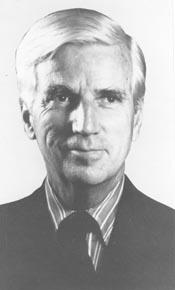
Historical · U.S. House · New York · District 22
Jonathan Bingham
Former U.S. Representative · New York District 22 · 1965–1983 · Democratic
Jonathan Bingham represented New York's District 22 in the United States House of Representatives (1965–1983) for the Democratic party. The page below collects sourced biographical facts, term history, committee roles, and provenance for Bingham.
Bioguide ID: B000472
Key facts
- Full name
- Jonathan Bingham
- State
- New York
- District
- District 22
- Party
- Democratic
- House service
- 1965–1983
- First House term
- 1965
- Status
- Left office
- Current term ends
- —
- Born
- 1914
- Bioguide ID
- B000472
- Committee assignments
- —
- Dataset version
- 1.20260605
Biographical narrative
963 words · sourced from the Wikipedia REST extract
Jonathan B. Bingham was an American politician and diplomat who served as a U.S. Representative for New York's 22nd congressional district from 1965 until 1983. A member of the Democratic Party, Bingham was known for his significant contributions to legislative efforts in areas such as nuclear non-proliferation, foreign assistance, and environmental protection. His political career was marked by a commitment to international issues, reflecting his background in diplomacy and law. Bingham's tenure in Congress spanned nine terms, during which he played a pivotal role in various legislative initiatives and served on important committees.
Early life and career
Jonathan Brewster Bingham was born on April 24, 1914, in New Haven, Connecticut. He came from a notable family; his father, Hiram Bingham III, was a U.S. Senator and an explorer, while his great-grandfather, Hiram Bingham I, was a missionary known for his work in translating the Bible into Hawaiian. Bingham's educational journey began at Hamden Hall Country Day School and continued at Groton School. He graduated from Yale University in 1936 with a Bachelor of Arts degree and subsequently earned a law degree from Yale Law School in 1939. During his time at Yale, he was a member of the prestigious Skull and Bones society.
After being admitted to the bar in 1940, Bingham began practicing law in New York City. His legal career was interrupted by World War II when he joined the Machinery Branch of the Office of Price Administration (OPA) as a legal advisor in 1941. However, his tenure there was brief, as he enlisted in the Military Intelligence Service in 1942. He later served in the United States Army, where he achieved the rank of captain before his discharge in 1945, receiving a War Department citation for his service.
Following the war, Bingham returned to the State Department, where he was appointed chief of the newly established Alien Enemy Control Section. This role was short-lived, and he resumed his legal practice in 1946. In 1951, he transitioned to a position as assistant director of the Office of International Security Affairs, later becoming deputy administrator of the Technical Cooperation Administration. During this time, he implemented the Point 4 Program, which aimed to provide technical assistance to developing countries. Bingham authored a book titled "Shirt-Sleeve Diplomacy: Point 4 in Action," published in 1953.
In 1955, he served as secretary to W. Averell Harriman, the Governor of New York. After Harriman's defeat in the 1958 election, Bingham returned to the law firm Goldwater & Flynn. His diplomatic career continued when he became a United States representative on the United Nations Trusteeship Council in 1961 and later served as a representative on the United Nations Economic and Social Council.
House tenure
Bingham's political career in the U.S. House of Representatives began in 1964 when he was elected to represent New York's 23rd District, which encompassed parts of The Bronx. His election came during a period when Democratic primaries were crucial in determining the outcome of elections in the area. Bingham successfully defeated Charles Buckley, a prominent figure in the Bronx Democratic establishment, in a rematch after initially losing to him in the 1962 Democratic primary.
Bingham served the 23rd District from January 3, 1965, until January 3, 1973. Following redistricting after the 1970 census, he was elected to represent the 22nd District of New York, a position he held until January 3, 1983. His decision not to seek re-election in 1982 was influenced by the significant changes to his district resulting from another round of redistricting.
During his time in the House, Bingham was involved in various legislative efforts and served on several key committees, including the Foreign Affairs Committee and the Interior and Insular Affairs Committee. He chaired the Subcommittee on International Economic Policy and Trade, where he focused on issues related to national security and foreign policy.
Legislative focus and committees
Bingham's legislative priorities included nuclear non-proliferation, foreign assistance, and environmental protection. He was instrumental in the passage of several significant pieces of legislation, including the War Powers Act of 1973, which aimed to clarify the balance of power between Congress and the President regarding military engagements. He also played a key role in the Trade Act of 1974, which included the Jackson-Vanik Amendment, a provision that linked trade benefits to the emigration policies of certain countries.
In addition to these acts, Bingham contributed to the Foreign Assistance Act Amendments of 1974 and 1976, the Arms Export Control Act of 1976, and the International Emergency Economic Powers Act of 1977. He was also a proponent of the Foreign Corrupt Practices Act of 1977 and the Export Administration Act of 1979.
Bingham's commitment to nuclear non-proliferation was evident in his leadership of the legislative movement to replace the Atomic Energy Commission with a Nuclear Regulatory Commission, a change that was enacted as part of the Energy Act of 1977. He was also a key figure in the formulation and passage of the Nuclear Non-Proliferation Act of 1978, which established comprehensive anti-proliferation measures in U.S. law.
In addition to his work on international issues, Bingham supported U.S. aid to Israel, particularly for the resettlement of Soviet Jewish refugees, and advocated for assistance to Romania following a devastating earthquake in 1977. He was also involved in efforts to honor civil rights leader Martin Luther King Jr. by authoring legislation to place a statue of King in the Capitol Rotunda.
Bingham's legislative career was characterized by a focus on international relations and a commitment to addressing pressing global challenges through effective policy-making. His contributions to Congress and his dedication to public service left a lasting impact on American legislative history. Bingham passed away on July 3, 1986, from complications related to pneumonia. He was survived by his wife, June Rossbach, and their four children.
Notable legislation
Sponsored and co-sponsored legislation for Jonathan Bingham is pending operator curation. The biographical narrative above carries the same provenance trail until per-bill rows are written.
Sources
- [1]https://en.wikipedia.org/wiki/Jonathan_B._BinghamWikipedia · retrieved 2026-06-05
Notable quotes
Sourced quotes for Jonathan Bingham are pending operator curation. Narrative-scope provenance remains attached below.
Sources
- [1]https://en.wikipedia.org/wiki/Jonathan_B._BinghamWikipedia · retrieved 2026-06-05
Key positions
Curated policy positions for Jonathan Bingham are pending operator review. The biographical narrative above carries the same provenance trail until per-topic positions are written.
Sources
- [1]https://en.wikipedia.org/wiki/Jonathan_B._BinghamWikipedia · retrieved 2026-06-05
Terms served
- 1965–1967U.S. House · Term 1 · Democratic
- 1967–1969U.S. House · Term 2 · Democratic
- 1969–1971U.S. House · Term 3 · Democratic
- 1971–1973U.S. House · Term 4 · Democratic
- 1973–1975U.S. House · Term 5 · Democratic
- 1975–1977U.S. House · Term 6 · Democratic
- 1977–1979U.S. House · Term 7 · Democratic
- 1979–1981U.S. House · Term 8 · Democratic
- 1981–1983U.S. House · Term 9 · Democratic
Sources & provenance
Every attributable claim above carries a per-section [N] marker that resolves to the corresponding URL below. Each entry records the upstream provider, the canonical URL, and the timestamp at which the source was retrieved by the ingest pipeline.
Key facts
- https://bioguide.congress.gov/search/bio/B000472bioguide · retrieved 2026-06-05
- https://www.govtrack.us/congress/members/401453govtrack · retrieved 2026-06-05
Biographical narrative
- https://en.wikipedia.org/wiki/Jonathan_B._Binghamwikipedia · retrieved 2026-06-05
Find your representative
Every U.S. state elects representatives by district. Browse New York’s delegation, the full former-representative roster, or explore the role and term length.
Related on The Candidate
- Preceded by Sidney FineEarlier holder of the New York District 22 House seat · Democratic.Open
- Succeeded by Maurice HincheyLater holder of the New York District 22 House seat · Democratic.Open
- Abel HuntingtonFormer U.S. Representative · New York District 1 · JacksonOpen
- Alfred ChapinFormer U.S. Representative · New York District 1 · DemocraticOpen
- Cadwallader ColdenFormer U.S. Representative · New York District 1 · FederalistOpen
- Charles FloydFormer U.S. Representative · New York District 1 · DemocraticOpen