
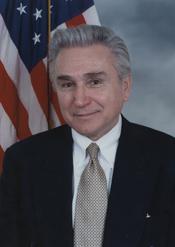
Historical · U.S. House · New York · District 22
Maurice Hinchey
Former U.S. Representative · New York District 22 · 1993–2013 · Democratic
Maurice Hinchey represented New York's District 22 in the United States House of Representatives (1993–2013) for the Democratic party. The page below collects sourced biographical facts, term history, committee roles, and provenance for Hinchey.
Bioguide ID: H000627
Key facts
- Full name
- Maurice Hinchey
- State
- New York
- District
- District 22
- Party
- Democratic
- House service
- 1993–2013
- First House term
- 1993
- Status
- Left office
- Current term ends
- —
- Born
- 1938
- Bioguide ID
- H000627
- Committee assignments
- —
- Dataset version
- 1.20260605
Biographical narrative
861 words · sourced from the Wikipedia REST extract
Maurice D. Hinchey was an American politician who served as a U.S. Representative for New York's 22nd congressional district from 1993 until 2013. A member of the Democratic Party, Hinchey was known for his progressive political stance and his commitment to environmental issues. Over his two-decade career in Congress, he played a significant role in various legislative efforts and served on multiple committees, reflecting his dedication to both his constituents and broader national concerns.
Early life and career
Maurice Dunlea Hinchey was born on October 27, 1938, in New York City, into a working-class family. His mother, Rose Bonack, was of Ukrainian descent, while his father, Maurice D. Hinchey, was the son of Irish immigrants. Hinchey spent his formative years in Saugerties, New York, where he completed his high school education. Following high school, he enlisted in the U.S. Navy, serving in the Pacific aboard the destroyer USS Marshall. After his honorable discharge, he worked for two years as a laborer in a cement plant, demonstrating a commitment to hard work and service.
While pursuing his education, Hinchey supported himself by working as a toll collector on the New York State Thruway. He attended the State University of New York at New Paltz, where he earned a Bachelor of Arts degree in 1968 and a Master of Arts degree in 1970. His academic achievements laid the groundwork for his future in public service.
Hinchey first entered the political arena in 1972 when he ran for a seat in the New York State Assembly, although he was unsuccessful in that initial attempt. However, he persevered and won a seat in the Assembly in 1974, becoming the first Democrat to represent Ulster County since 1912. His tenure in the Assembly lasted until 1992, during which he participated in the 180th through the 189th New York State Legislatures. Hinchey was particularly noted for his leadership as chair of the Environmental Conservation Committee, where he focused on critical environmental issues, including toxic waste disposal and acid rain regulation. His efforts in this role included leading investigations into the Love Canal disaster, which brought national attention to environmental hazards.
House tenure
Hinchey transitioned to the U.S. House of Representatives in 1993 after winning the Democratic nomination for New York's 26th congressional district, which had been renumbered following the 1990 census. He succeeded Congressman Matthew F. McHugh, who retired after 18 years in office. In the general election, Hinchey defeated Republican candidate Robert Moppert with a narrow margin. He faced Moppert again in 1994, during a challenging electoral environment for Democrats, but managed to secure re-election by a slim vote count.
Throughout his congressional career, Hinchey's district underwent significant changes due to redistricting, particularly after the 2000 census. The reconfiguration of his district posed challenges, including potential competition against established Republican incumbents. However, through political negotiations, Hinchey was able to maintain his seat, and his district was renumbered to the 22nd. This new district encompassed a diverse area across eight counties in southern New York, connecting politically liberal regions.
Hinchey was recognized for his progressive populism, often advocating for strong environmental protections and government integrity. He was a vocal opponent of the 2003 Iraq War and supported various measures aimed at improving government accountability. His commitment to constituent services and advocacy for federal support for local programs further solidified his reputation among voters.
In 2010, Hinchey was elected to his tenth and final term in Congress, defeating Republican challenger George Phillips with a margin of 52% to 48%. His long-standing presence in the House reflected his ability to navigate the complexities of both local and national politics.
Legislative focus and committees
During his time in the U.S. House of Representatives, Hinchey served on several important committees that shaped his legislative priorities. He was a member of the Committee on Appropriations, where he contributed to funding decisions that affected various sectors, including defense and environmental issues. Within this committee, he served on the Subcommittee on Defense and the Subcommittee on Interior, Environment, and Related Agencies, allowing him to influence policies related to national security and environmental conservation.
Hinchey was also involved in various caucuses that aligned with his legislative interests. He was a member of the Congressional Progressive Caucus, which focused on advancing progressive policies, as well as the Congressional Narcotics Abuse and Control Caucus, which aimed to address issues related to drug abuse and control. His participation in the Education Caucus and the International Conservation Caucus further demonstrated his commitment to education and global environmental issues.
Throughout his congressional career, Hinchey was known for his strong advocacy for environmental protection, particularly in relation to hydraulic fracturing and the natural gas resources of the Marcellus Shale. His efforts in this area reflected a broader concern for sustainable practices and the health of the environment.
Hinchey's legislative legacy is characterized by his progressive stance on various issues, including health care, environmental protection, and government integrity. He was known for his ability to connect with constituents and address their needs while navigating the complexities of national legislation. His tenure in the House concluded in January 2013, marking the end of a significant chapter in his political career.
Notable legislation
Sponsored and co-sponsored legislation for Maurice Hinchey is pending operator curation. The biographical narrative above carries the same provenance trail until per-bill rows are written.
Sources
- [1]https://en.wikipedia.org/wiki/Maurice_HincheyWikipedia · retrieved 2026-06-05
Notable quotes
Sourced quotes for Maurice Hinchey are pending operator curation. Narrative-scope provenance remains attached below.
Sources
- [1]https://en.wikipedia.org/wiki/Maurice_HincheyWikipedia · retrieved 2026-06-05
Key positions
Curated policy positions for Maurice Hinchey are pending operator review. The biographical narrative above carries the same provenance trail until per-topic positions are written.
Sources
- [1]https://en.wikipedia.org/wiki/Maurice_HincheyWikipedia · retrieved 2026-06-05
Terms served
- 1993–1995U.S. House · Term 1 · Democratic
- 1995–1997U.S. House · Term 2 · Democratic
- 1997–1999U.S. House · Term 3 · Democratic
- 1999–2001U.S. House · Term 4 · Democratic
- 2001–2003U.S. House · Term 5 · Democratic
- 2003–2005U.S. House · Term 6 · Democratic
- 2005–2007U.S. House · Term 7 · Democratic
- 2007–2009U.S. House · Term 8 · Democratic
- 2009–2011U.S. House · Term 9 · Democratic
- 2011–2013U.S. House · Term 10 · Democratic
Sources & provenance
Every attributable claim above carries a per-section [N] marker that resolves to the corresponding URL below. Each entry records the upstream provider, the canonical URL, and the timestamp at which the source was retrieved by the ingest pipeline.
Key facts
- https://bioguide.congress.gov/search/bio/H000627bioguide · retrieved 2026-06-05
- http://www.house.gov/hincheyhouse.gov · retrieved 2026-06-05
Biographical narrative
- https://en.wikipedia.org/wiki/Maurice_Hincheywikipedia · retrieved 2026-06-05
Find your representative
Every U.S. state elects representatives by district. Browse New York’s delegation, the full former-representative roster, or explore the role and term length.
Related on The Candidate
- Preceded by Jonathan BinghamEarlier holder of the New York District 22 House seat · Democratic.Open
- Succeeded by Anthony BrindisiLater holder of the New York District 22 House seat · Democratic.Open
- Abel HuntingtonFormer U.S. Representative · New York District 1 · JacksonOpen
- Alfred ChapinFormer U.S. Representative · New York District 1 · DemocraticOpen
- Cadwallader ColdenFormer U.S. Representative · New York District 1 · FederalistOpen
- Charles FloydFormer U.S. Representative · New York District 1 · DemocraticOpen