
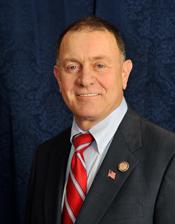
Historical · U.S. House · New York · District 22
Richard Hanna
Former U.S. Representative · New York District 22 · 2011–2017 · Republican
Richard Hanna represented New York's District 22 in the United States House of Representatives (2011–2017) for the Republican party. The page below collects sourced biographical facts, term history, committee roles, and provenance for Hanna.
Bioguide ID: H001051
Key facts
- Full name
- Richard Hanna
- State
- New York
- District
- District 22
- Party
- Republican
- House service
- 2011–2017
- First House term
- 2011
- Status
- Left office
- Current term ends
- —
- Born
- 1951
- Bioguide ID
- H001051
- Committee assignments
- —
- Dataset version
- 1.20260605
Biographical narrative
854 words · sourced from the Wikipedia REST extract
Richard L. Hanna was an American politician who served as a U.S. Representative for New York's 22nd congressional district from 2011 until 2017. A member of the Republican Party, Hanna's political career was marked by his moderate stances on various issues, which often set him apart from more conservative factions within his party. Throughout his tenure in Congress, he focused on a range of legislative matters, including economic policies, social issues, and bipartisan cooperation.
Early life and career
Richard Louis Hanna was born on January 25, 1951, in Utica, New York. He was raised in Marcy, a nearby community, where he grew up in a family with a strong connection to agriculture; his grandparents owned a dairy farm in Herkimer County. Hanna completed his secondary education at Whitesboro High School before pursuing higher education at Reed College in Portland, Oregon. There, he earned a bachelor's degree in Economics and Political Science, which laid the foundation for his future career in business and politics.
After completing his education, Hanna returned to New York and established his own construction company, Hanna Construction. His entrepreneurial background provided him with practical experience in managing a business and navigating economic challenges. Hanna's Lebanese heritage influenced his perspective and approach to various issues, particularly those related to community and economic development.
House tenure
Hanna's political career in the U.S. House of Representatives began when he was elected in 2010, following a narrow defeat in the 2008 election against incumbent Democrat Mike Arcuri. In the 2010 rematch, Hanna successfully won the seat, marking the start of his congressional service. During his first term, his district was designated as the 24th congressional district, but due to redistricting, it was renamed the 22nd district for the subsequent terms.
In 2012, Hanna faced a competitive re-election campaign against Democrat Dan Lamb. Notably, he declined to participate in a televised debate, which led to controversy regarding his engagement with local media. Despite this, Hanna secured re-election in November 2014, defeating a primary challenge from State Assemblywoman Claudia Tenney, who criticized him for straying from conservative principles. Hanna's victory in the primary was significant, as it demonstrated his ability to appeal to a broader voter base, and he subsequently won re-election without a Democratic challenger.
Throughout his three terms in Congress, Hanna was known for his involvement in various caucuses and committees. He was a member of both the conservative Republican Study Committee and the centrist Republican Main Street Partnership, reflecting his moderate stance within the Republican Party. Additionally, he was a member of the LGBT Equality Caucus, which highlighted his support for LGBTQ rights, a position that distinguished him from many of his Republican colleagues.
Legislative focus and committees
Hanna's legislative focus encompassed a variety of issues, including healthcare, economic policy, and social justice. He was an outspoken opponent of the Patient Protection and Affordable Care Act, commonly known as Obamacare, and was one of the few House Republicans who did not sign the "Taxpayer Protection Pledge," which commits signatories to oppose tax increases. Instead, Hanna emphasized his commitment to the Constitution and the needs of his constituents in upstate New York.
During his time in Congress, Hanna's voting record demonstrated a willingness to cross party lines. He was recognized as one of the most bipartisan members of the House, ranking second in the Bipartisan Index during the 114th Congress. His approach to governance often involved collaboration with members from both parties, which he believed was essential for effective policymaking.
Hanna's first co-sponsored bill was H.R. 4, which aimed to repeal a specific tax reporting provision of the Affordable Care Act. This bill was signed into law in April 2011. Additionally, he voted to repeal healthcare reform and supported legislation that prevented the Environmental Protection Agency from regulating greenhouse gases. He also voted against budget cuts to organizations such as NPR and Planned Parenthood, indicating a nuanced approach to fiscal policy.
In 2012, Hanna publicly supported the reauthorization of the Violence Against Women Act, demonstrating his commitment to addressing issues of domestic violence and women's rights. He also endorsed same-sex marriage in 2013, becoming one of the first Republican members of Congress to do so. His vote against a proposed 20-week abortion ban further illustrated his moderate stance on reproductive rights, as he expressed concerns about the lack of exceptions for the health of the mother.
Hanna's political career was characterized by a focus on inclusivity and bipartisanship. He often advocated for thoughtful discourse and collaboration across party lines, believing that such an approach was vital for addressing the complex challenges facing the nation. His legacy in Congress reflects a commitment to representing the interests of his constituents while navigating the often polarized political landscape of Washington, D.C.
Richard L. Hanna concluded his tenure in the House of Representatives on January 3, 2017. Following his departure from Congress, he remained active in various civic and community initiatives until his passing on March 15, 2020. His contributions to public service and his unique position within the Republican Party continue to be recognized in discussions about bipartisanship and moderate governance in contemporary American politics.
Notable legislation
Sponsored and co-sponsored legislation for Richard Hanna is pending operator curation. The biographical narrative above carries the same provenance trail until per-bill rows are written.
Sources
- [1]https://en.wikipedia.org/wiki/Richard_Hanna_(New_York_politician)Wikipedia · retrieved 2026-06-05
Notable quotes
Sourced quotes for Richard Hanna are pending operator curation. Narrative-scope provenance remains attached below.
Sources
- [1]https://en.wikipedia.org/wiki/Richard_Hanna_(New_York_politician)Wikipedia · retrieved 2026-06-05
Key positions
Curated policy positions for Richard Hanna are pending operator review. The biographical narrative above carries the same provenance trail until per-topic positions are written.
Sources
- [1]https://en.wikipedia.org/wiki/Richard_Hanna_(New_York_politician)Wikipedia · retrieved 2026-06-05
Terms served
- 2011–2013U.S. House · Term 1 · Republican
- 2013–2015U.S. House · Term 2 · Republican
- 2015–2017U.S. House · Term 3 · Republican
Sources & provenance
Every attributable claim above carries a per-section [N] marker that resolves to the corresponding URL below. Each entry records the upstream provider, the canonical URL, and the timestamp at which the source was retrieved by the ingest pipeline.
Key facts
- https://bioguide.congress.gov/search/bio/H001051bioguide · retrieved 2026-06-05
- http://hanna.house.govhouse.gov · retrieved 2026-06-05
Biographical narrative
- https://en.wikipedia.org/wiki/Richard_Hanna_(New_York_politician)wikipedia · retrieved 2026-06-05
Find your representative
Every U.S. state elects representatives by district. Browse New York’s delegation, the full former-representative roster, or explore the role and term length.
Related on The Candidate
- Preceded by Gerald SolomonEarlier holder of the New York District 22 House seat · Republican.Open
- Succeeded by Anthony BrindisiLater holder of the New York District 22 House seat · Democratic.Open
- Abel HuntingtonFormer U.S. Representative · New York District 1 · JacksonOpen
- Alfred ChapinFormer U.S. Representative · New York District 1 · DemocraticOpen
- Cadwallader ColdenFormer U.S. Representative · New York District 1 · FederalistOpen
- Charles FloydFormer U.S. Representative · New York District 1 · DemocraticOpen