
Historical · U.S. House · New York · District 23
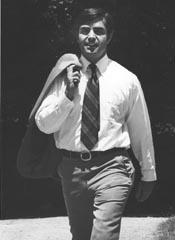
Bruce Caputo
Former U.S. Representative · New York District 23 · 1977–1979 · Republican
Bruce Caputo represented New York's District 23 in the United States House of Representatives (1977–1979) for the Republican party. The page below collects sourced biographical facts, term history, committee roles, and provenance for Caputo.
Bioguide ID: C000137
Key facts
- Full name
- Bruce Caputo
- State
- New York
- District
- District 23
- Party
- Republican
- House service
- 1977–1979
- First House term
- 1977
- Status
- Left office
- Current term ends
- —
- Born
- 1943
- Bioguide ID
- C000137
- Committee assignments
- —
- Dataset version
- 1.20260605
Biographical narrative
893 words · sourced from the Wikipedia REST extract
Bruce F. Caputo is a former American politician and lawyer who served as a U.S. Representative for New York's 23rd congressional district from 1977 to 1979. A member of the Republican Party, Caputo's political career included notable positions in both the New York State Assembly and the U.S. House of Representatives. His professional background also encompasses significant experience in management consulting and law, as well as involvement in various political campaigns.
Early life and career
Bruce Faulkner Caputo was born on August 7, 1943, in New York City. He is the son of Doris Burke Caputo and Anthony Caputo, an attorney. Caputo's educational journey began at Deerfield Academy, where he graduated in 1961. He then attended Harvard University, earning a Bachelor of Arts degree in 1965. Following his undergraduate studies, he pursued a Master of Business Administration at Harvard Business School, which he completed in 1967.
Caputo's professional career commenced in the Office of the Secretary of Defense, where he worked under Secretary Robert McNamara. In this capacity, he was part of the Systems Analysis Unit, which recruited recent business school graduates to address policy issues. While engaged in this role, Caputo attended law school at night, ultimately earning his Juris Doctor degree from Georgetown University Law Center in 1971.
In 1969, Caputo co-founded ICF, a management consulting firm, where he served as a board member and principal stockholder. The company initially specialized in energy and healthcare consulting but later diversified into environmental services and engineering. Under Caputo's leadership, ICF grew significantly and became known for its engineering capabilities. In 1988, ICF acquired Kaiser Engineers, a firm that had roots in Henry J. Kaiser's industrial empire, further expanding its reach. The combined entity, known as ICF Kaiser, went public in 1989 and was listed on the New York Stock Exchange. In 1999, ICF Consulting separated from Kaiser Engineers through a leveraged buyout, eventually rebranding as ICF International and completing an Initial Public Offering in 2006.
House tenure
Caputo's political career began in earnest when he was elected to the New York State Assembly in 1972, representing a district in Yonkers. He was re-elected in 1974 and served during the 180th and 181st New York State Legislatures. During his time in the Assembly, he was a member of the Ways and Means Committee as well as the Housing and Insurance Committee, where he contributed to legislative discussions and decisions impacting the state.
In 1976, Caputo transitioned to national politics by running for the U.S. House of Representatives after Congressman Peter A. Peyser vacated his seat to pursue a Senate nomination. Caputo successfully won the election, defeating Democratic Assemblyman J. Edward Meyer. His congressional district encompassed Yonkers and several neighborhoods in the Bronx, including Woodlawn, Wakefield, Williamsbridge, Edenwald, Eastchester, and Baychester.
During his term in the House, which began in January 1977, Caputo served on the Banking, Finance and Urban Affairs Committee and the Ethics Committee. His tenure in Congress was marked by his involvement in various legislative matters, although specific details regarding his voting record or the bills he sponsored are not available.
In 1978, Caputo was selected as the running mate for Perry Duryea, the Republican leader of the New York State Assembly, in a bid for the lieutenant governorship. The Duryea-Caputo ticket was nominated at the Republican state convention but ultimately lost to the incumbent Democratic Governor Hugh L. Carey and his running mate Mario Cuomo in the general election.
Following the conclusion of his congressional term on January 3, 1979, Caputo joined Booz Allen Hamilton, where he worked in the mergers and acquisitions and banking departments. His political ambitions did not end there; in 1980, he entered the Republican primary for the U.S. Senate seat held by Jacob Javits. However, he withdrew from the race after Alfonse D'Amato secured the Conservative Party's nomination, which ultimately led to D'Amato defeating Javits in the primary.
Legislative focus and committees
During his time in the U.S. House of Representatives, Bruce Caputo was involved in various legislative initiatives and discussions, particularly through his roles on the Banking, Finance and Urban Affairs Committee and the Ethics Committee. These committees are critical to the functioning of Congress, with the Banking Committee overseeing financial institutions and urban affairs, while the Ethics Committee is responsible for maintaining the integrity of the House by addressing issues related to member conduct.
Caputo's legislative focus, while not extensively documented, would have included matters pertinent to his constituents in New York's 23rd district, which included urban areas with diverse economic needs. His background in management consulting and law likely informed his approach to policy-making and legislative priorities during his time in office.
After leaving Congress, Caputo continued to engage in professional endeavors outside of politics, working as a lawyer and private investor in real estate and early-stage companies. His career trajectory reflects a blend of public service and private sector experience, underscoring a commitment to both his constituents and the broader economic landscape.
In his personal life, Caputo is married to Bonnie Tiburzi Caputo, who holds the distinction of being the first female pilot for a major airline. The couple has two children and resides in Manhattan, New York. Caputo's life and career illustrate a multifaceted individual who has navigated various roles in both the public and private sectors, contributing to his community and the political landscape of New York.
Notable legislation
Sponsored and co-sponsored legislation for Bruce Caputo is pending operator curation. The biographical narrative above carries the same provenance trail until per-bill rows are written.
Sources
- [1]https://en.wikipedia.org/wiki/Bruce_F._CaputoWikipedia · retrieved 2026-06-05
Notable quotes
Sourced quotes for Bruce Caputo are pending operator curation. Narrative-scope provenance remains attached below.
Sources
- [1]https://en.wikipedia.org/wiki/Bruce_F._CaputoWikipedia · retrieved 2026-06-05
Key positions
Curated policy positions for Bruce Caputo are pending operator review. The biographical narrative above carries the same provenance trail until per-topic positions are written.
Sources
- [1]https://en.wikipedia.org/wiki/Bruce_F._CaputoWikipedia · retrieved 2026-06-05
Terms served
- 1977–1979U.S. House · Term 1 · Republican
Sources & provenance
Every attributable claim above carries a per-section [N] marker that resolves to the corresponding URL below. Each entry records the upstream provider, the canonical URL, and the timestamp at which the source was retrieved by the ingest pipeline.
Key facts
- https://bioguide.congress.gov/search/bio/C000137bioguide · retrieved 2026-06-05
- https://www.govtrack.us/congress/members/402287govtrack · retrieved 2026-06-05
Biographical narrative
- https://en.wikipedia.org/wiki/Bruce_F._Caputowikipedia · retrieved 2026-06-05
Find your representative
Every U.S. state elects representatives by district. Browse New York’s delegation, the full former-representative roster, or explore the role and term length.
Related on The Candidate
- Preceded by Charles BuckleyEarlier holder of the New York District 23 House seat · Democratic.Open
- Succeeded by John McHughLater holder of the New York District 23 House seat · Republican.Open
- Abel HuntingtonFormer U.S. Representative · New York District 1 · JacksonOpen
- Alfred ChapinFormer U.S. Representative · New York District 1 · DemocraticOpen
- Cadwallader ColdenFormer U.S. Representative · New York District 1 · FederalistOpen
- Charles FloydFormer U.S. Representative · New York District 1 · DemocraticOpen