
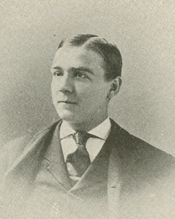
Historical · U.S. House · New York · District 23
George Southwick
Former U.S. Representative · New York District 23 · 1895–1911 · Republican
George Southwick represented New York's District 23 in the United States House of Representatives (1895–1911) for the Republican party. The page below collects sourced biographical facts, term history, committee roles, and provenance for Southwick.
Bioguide ID: S000691
Key facts
- Full name
- George Southwick
- State
- New York
- District
- District 23
- Party
- Republican
- House service
- 1895–1911
- First House term
- 1895
- Status
- Left office
- Current term ends
- —
- Born
- 1863
- Bioguide ID
- S000691
- Committee assignments
- —
- Dataset version
- 1.20260606
Biographical narrative
944 words · sourced from the Wikipedia REST extract
George Southwick was a prominent American journalist and politician who served as a U.S. Representative for New York's 23rd congressional district from 1895 to 1911. A member of the Republican Party, he was known for his extensive involvement in both journalism and politics, which paved the way for his long tenure in Congress. His career was marked by a commitment to the Republican ideals of his time and a focus on education and legislative matters.
Early life and career
George Newell Southwick was born on March 7, 1863, in Albany, New York. He was the son of Henry Collins Southwick and Margaret Julia Fraser Southwick. His family had a longstanding legacy in the field of newspaper publishing, with notable figures such as Solomon Southwick contributing to the industry over generations. This familial background likely influenced Southwick's early interest in journalism and public affairs.
Southwick received his early education at Albany's School Number 6 and attended several private schools in the area. He graduated from Albany High School in 1879, demonstrating a strong academic foundation. Following high school, he enrolled at Williams College in Williamstown, Massachusetts, where he completed his studies in 1884. Although he later attended Albany Law School, he chose to leave before graduating to pursue a career in journalism, indicating a preference for the dynamic world of news over the legal profession.
In 1885, Southwick began his professional career as a reporter for the Albany Morning Express. His work in journalism quickly advanced, and from 1886 to 1888, he covered the New York state legislature for the Associated Press. His reporting skills and political acumen led to his appointment as managing editor of the Albany Morning Express in 1888. The following year, he transitioned to the Albany Evening Journal, where he served as managing editor until 1895. Throughout his journalism career, Southwick was actively involved in Republican politics, writing numerous articles and delivering speeches in support of various Republican candidates. His political engagement included backing prominent figures such as James G. Blaine and Benjamin Harrison during their presidential campaigns.
Despite an unsuccessful bid for the Republican nomination for U.S. Representative from New York's 20th District in 1892, Southwick's political aspirations continued to grow. His connections within the Republican Party, particularly with influential leaders like William Barnes Jr. and James S. Sherman, facilitated his eventual entry into elected office.
House tenure
George Southwick's congressional career began when he was elected to the 54th Congress in 1894. He officially took office on March 4, 1895, and was subsequently reelected to the 55th Congress, serving until March 3, 1899. During this initial period, he was actively involved in legislative matters, although his first term ended with a defeat in the 1898 election against Martin H. Glynn.
In 1900, Southwick made a political comeback by defeating Glynn and securing a seat in the 57th Congress. Following redistricting after the 1900 census, he was elected to represent New York's 23rd District, where he would serve four additional terms until his departure from Congress on March 3, 1911. His tenure in the House was characterized by a focus on education, as he held the position of chairman of the Committee on Education during the 58th through 60th Congresses. This role allowed him to influence educational policy and advocate for issues related to schooling and educational reform.
Throughout his time in Congress, Southwick was involved in various legislative initiatives and discussions, contributing to the development of policies that aligned with the Republican Party's platform. His experience as a journalist likely informed his approach to legislation, as he understood the importance of communication and public opinion in shaping policy.
Southwick chose not to seek re-nomination in 1910, marking the end of his congressional career. His decision to step away from politics after serving seven terms in the House reflects a common practice among politicians who seek to make way for new leadership or pursue other interests.
Legislative focus and committees
During his time in the U.S. House of Representatives, George Southwick's legislative focus was primarily centered on education, reflecting his role as chairman of the Committee on Education for multiple Congresses. This position allowed him to play a significant role in shaping educational policies and addressing issues pertinent to schools and educational institutions.
As chairman, Southwick was responsible for overseeing legislation related to education, which included funding for public schools, educational reforms, and initiatives aimed at improving the quality of education across the nation. His background in journalism may have contributed to his understanding of the importance of education in fostering informed citizenship and civic engagement.
In addition to his work on education, Southwick participated in broader legislative discussions that encompassed various aspects of governance and public policy. His experience as a journalist likely provided him with insights into the needs and concerns of his constituents, enabling him to advocate effectively for their interests.
Although specific legislative achievements during his tenure are not detailed, Southwick's long service in Congress indicates a commitment to his role as a representative and a willingness to engage with the pressing issues of his time. His ability to navigate the complexities of legislative processes and collaborate with fellow lawmakers was essential to his effectiveness as a member of the House.
Following his retirement from Congress, Southwick continued to reside in Albany, where he had invested in real estate and mining properties. He remained a figure of local significance until his death on October 17, 1912. Southwick's contributions to journalism and politics, particularly in the realm of education, left a lasting impact on his community and the Republican Party in New York. He was buried at Albany Rural Cemetery in Menands, New York.
Notable legislation
Sponsored and co-sponsored legislation for George Southwick is pending operator curation. The biographical narrative above carries the same provenance trail until per-bill rows are written.
Sources
- [1]https://en.wikipedia.org/wiki/George_N._SouthwickWikipedia · retrieved 2026-06-06
Notable quotes
Sourced quotes for George Southwick are pending operator curation. Narrative-scope provenance remains attached below.
Sources
- [1]https://en.wikipedia.org/wiki/George_N._SouthwickWikipedia · retrieved 2026-06-06
Key positions
Curated policy positions for George Southwick are pending operator review. The biographical narrative above carries the same provenance trail until per-topic positions are written.
Sources
- [1]https://en.wikipedia.org/wiki/George_N._SouthwickWikipedia · retrieved 2026-06-06
Terms served
- 1895–1897U.S. House · Term 1 · Republican
- 1897–1899U.S. House · Term 2 · Republican
- 1901–1903U.S. House · Term 3 · Republican
- 1903–1905U.S. House · Term 4 · Republican
- 1905–1907U.S. House · Term 5 · Republican
- 1907–1909U.S. House · Term 6 · Republican
- 1909–1911U.S. House · Term 7 · Republican
Sources & provenance
Every attributable claim above carries a per-section [N] marker that resolves to the corresponding URL below. Each entry records the upstream provider, the canonical URL, and the timestamp at which the source was retrieved by the ingest pipeline.
Key facts
- https://bioguide.congress.gov/search/bio/S000691bioguide · retrieved 2026-06-06
- https://www.govtrack.us/congress/members/410162govtrack · retrieved 2026-06-06
Biographical narrative
- https://en.wikipedia.org/wiki/George_N._Southwickwikipedia · retrieved 2026-06-06
Find your representative
Every U.S. state elects representatives by district. Browse New York’s delegation, the full former-representative roster, or explore the role and term length.
Related on The Candidate
- Preceded by John WeverEarlier holder of the New York District 23 House seat · Republican.Open
- Succeeded by Henry De ForestLater holder of the New York District 23 House seat · Republican.Open
- Abel HuntingtonFormer U.S. Representative · New York District 1 · JacksonOpen
- Alfred ChapinFormer U.S. Representative · New York District 1 · DemocraticOpen
- Cadwallader ColdenFormer U.S. Representative · New York District 1 · FederalistOpen
- Charles FloydFormer U.S. Representative · New York District 1 · DemocraticOpen