
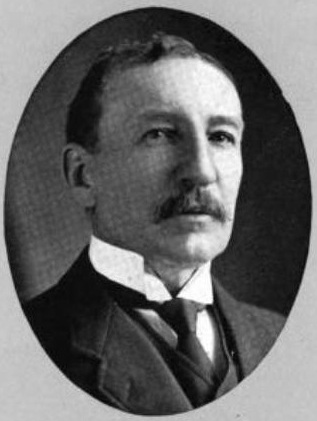
Historical · U.S. House · New York · District 23
Henry De Forest
Former U.S. Representative · New York District 23 · 1911–1913 · Republican
Henry De Forest represented New York's District 23 in the United States House of Representatives (1911–1913) for the Republican party. The page below collects sourced biographical facts, term history, committee roles, and provenance for Forest.
Bioguide ID: D000189
Key facts
- Full name
- Henry De Forest
- State
- New York
- District
- District 23
- Party
- Republican
- House service
- 1911–1913
- First House term
- 1911
- Status
- Left office
- Current term ends
- —
- Born
- 1847
- Bioguide ID
- D000189
- Committee assignments
- —
- Dataset version
- 1.20260606
Biographical narrative
856 words · sourced from the Wikipedia REST extract
Henry De Forest was a U.S. Representative from New York, serving in the House of Representatives as a member of the Republican Party. His congressional career was marked by a single term in the early 20th century, during which he represented New York's 23rd congressional district. De Forest's background as a businessman and local politician in Schenectady, New York, contributed to his political career, culminating in his election to Congress in 1911.
Early life and career
Henry Schermerhorn De Forest was born on February 16, 1847, in Schenectady, New York. He was the third son of Sarah Vedder De Forest and Obadiah Lansing De Forest. His father had a notable political career, initially serving as a deputy sheriff on the Know Nothing ticket and later being elected as the Democratic sheriff of Schenectady, holding the position for three terms starting in 1855. De Forest's paternal lineage included his grandparents, Jacob De Forest and Anna Lansing De Forest.
De Forest's early education took place at the Union Classical Institute in Schenectady. He graduated in 1864 from Eastman Business College located in Poughkeepsie, New York. Following his education, he embarked on a career that combined both agriculture and business. He became a farmer, specializing in the production of broom corn, which was a significant crop during that period.
In addition to farming, De Forest was a successful businessman. He engaged in various ventures, including real estate, where he became the largest landlord in Schenectady. His contributions to the local economy extended to the construction industry, where his company was responsible for building over 1,000 homes in the Schenectady area. Furthermore, De Forest was involved in banking, serving as a member of the board of directors for Citizens' Trust Companies. With the rise of the automobile industry, he adapted to changing market conditions by owning a Pierce automobile dealership in Schenectady.
De Forest's political career began at the local level. He served as Schenectady's City Recorder from 1883 to 1885. His leadership abilities were further recognized when he was elected Mayor of Schenectady, a position he held from 1885 to 1887 and again from 1889 to 1891. During his tenure as mayor, he played a crucial role in attracting General Electric to Schenectady. His advocacy for the company was instrumental in its decision to establish operations in the city in 1892, following the merger of several companies, including the Edison Machine Works.
House tenure
Henry De Forest's congressional career began when he was elected to the Sixty-second Congress, which lasted from March 4, 1911, to March 3, 1913. As a member of the Republican Party, he represented New York's 23rd congressional district. His election to the House of Representatives came at a time when the nation was undergoing significant changes, including social and economic transformations.
During his term in Congress, De Forest participated in various legislative activities and contributed to discussions on issues pertinent to his constituents and the nation. However, his time in the House was limited to a single term, as he was unsuccessful in his bid for reelection in 1912 to the Sixty-third Congress. Following his congressional service, he also sought the nomination for the Sixty-fourth Congress in 1914 but was not successful. Additionally, he attempted to regain a seat in the Sixty-fifth Congress in 1916 but did not secure election.
Legislative focus and committees
While specific details about the legislative focus and committee assignments during Henry De Forest's time in Congress are not extensively documented, it is understood that as a representative, he would have engaged with the pressing issues of his time. The early 1910s were characterized by significant national discussions surrounding economic reform, labor rights, and the role of government in regulating industry and commerce. Given his background in business and local governance, it is likely that De Forest's interests aligned with economic development and the needs of his constituents in New York.
De Forest's experience as a businessman and local leader would have informed his perspective on legislative matters, particularly those affecting economic growth and infrastructure development. His previous role as mayor, where he successfully advocated for the establishment of General Electric in Schenectady, suggests that he may have prioritized issues related to industrial growth and job creation during his time in Congress.
After his congressional tenure, De Forest returned to Schenectady, where he continued to be involved in local affairs until his death on February 13, 1917. He was interred in Vale Cemetery in Schenectady. His contributions to the community, both as a businessman and a public servant, left a lasting impact on the city. De Forest's legacy is reflected in his efforts to promote economic development and improve the quality of life for the residents of Schenectady during a transformative period in American history.
Henry De Forest was married to Lucie E. Van Epps on September 6, 1876. Together, they had two daughters, Beulah and Pearl, who married into other families. Lucie De Forest passed away on September 5, 1930, following her husband's death. The De Forest family remains a part of Schenectady's historical narrative, contributing to the city's development through both public service and business endeavors.
Notable legislation
Sponsored and co-sponsored legislation for Henry De Forest is pending operator curation. The biographical narrative above carries the same provenance trail until per-bill rows are written.
Sources
- [1]https://en.wikipedia.org/wiki/Henry_S._De_ForestWikipedia · retrieved 2026-06-06
Notable quotes
Sourced quotes for Henry De Forest are pending operator curation. Narrative-scope provenance remains attached below.
Sources
- [1]https://en.wikipedia.org/wiki/Henry_S._De_ForestWikipedia · retrieved 2026-06-06
Key positions
Curated policy positions for Henry De Forest are pending operator review. The biographical narrative above carries the same provenance trail until per-topic positions are written.
Sources
- [1]https://en.wikipedia.org/wiki/Henry_S._De_ForestWikipedia · retrieved 2026-06-06
Terms served
- 1911–1913U.S. House · Term 1 · Republican
Sources & provenance
Every attributable claim above carries a per-section [N] marker that resolves to the corresponding URL below. Each entry records the upstream provider, the canonical URL, and the timestamp at which the source was retrieved by the ingest pipeline.
Key facts
- https://bioguide.congress.gov/search/bio/D000189bioguide · retrieved 2026-06-06
- https://www.govtrack.us/congress/members/403301govtrack · retrieved 2026-06-06
Biographical narrative
- https://en.wikipedia.org/wiki/Henry_S._De_Forestwikipedia · retrieved 2026-06-06
Find your representative
Every U.S. state elects representatives by district. Browse New York’s delegation, the full former-representative roster, or explore the role and term length.
Related on The Candidate
- Preceded by George SouthwickEarlier holder of the New York District 23 House seat · Republican.Open
- Succeeded by Daniel OliverLater holder of the New York District 23 House seat · Democratic.Open
- Abel HuntingtonFormer U.S. Representative · New York District 1 · JacksonOpen
- Alfred ChapinFormer U.S. Representative · New York District 1 · DemocraticOpen
- Cadwallader ColdenFormer U.S. Representative · New York District 1 · FederalistOpen
- Charles FloydFormer U.S. Representative · New York District 1 · DemocraticOpen