
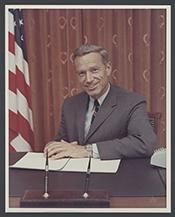
Historical · U.S. House · New York · District 23
Samuel Stratton
Former U.S. Representative · New York District 23 · 1959–1989 · Democratic
Samuel Stratton represented New York's District 23 in the United States House of Representatives (1959–1989) for the Democratic party. The page below collects sourced biographical facts, term history, committee roles, and provenance for Stratton.
Bioguide ID: S000997
Key facts
- Full name
- Samuel Stratton
- State
- New York
- District
- District 23
- Party
- Democratic
- House service
- 1959–1989
- First House term
- 1959
- Status
- Left office
- Current term ends
- —
- Born
- 1916
- Bioguide ID
- S000997
- Committee assignments
- —
- Dataset version
- 1.20260605
Biographical narrative
1,185 words · sourced from the Wikipedia REST extract
Samuel S. Stratton was an American politician who served as a U.S. Representative for New York's 23rd congressional district from 1959 until 1989. A member of the Democratic Party, Stratton had a notable career in public service, which included a significant tenure in the U.S. House of Representatives and a prior role as mayor of Schenectady, New York. His military service in the United States Navy during both World War II and the Korean War further distinguished his profile as a public servant. Stratton's legislative focus included defense issues, women's rights, and local economic concerns, reflecting the interests of his constituents throughout his lengthy congressional career.
Early life and career
Samuel Studdiford Stratton was born on September 27, 1916, in Yonkers, New York. He was the son of Reverend Paul Stratton and Ethel Irene Russell. Stratton's family relocated to Schenectady, New York, during his infancy, where he spent much of his early life. He received his education in various institutions, including local schools in Schenectady, as well as in Rochester and at Blair Academy in New Jersey. Stratton earned a Bachelor of Arts degree from the University of Rochester in 1937, where he was active in athletics as the captain of the swim team and was inducted into the honor societies Phi Beta Kappa and Psi Upsilon. He continued his academic pursuits with a Master of Arts degree in Philosophy from Haverford College in 1938, followed by another Master of Arts in Philosophy from Harvard University in 1940.
Before entering politics, Stratton served as the executive secretary to Congressman Thomas H. Eliot of Massachusetts from 1940 to 1942. His political career was interrupted by his military service, as he joined the United States Naval Reserve in mid-1942. Stratton was commissioned as an ensign and served in the South West Pacific Area during World War II as a combat intelligence officer on General Douglas MacArthur's staff. His service earned him two Bronze Stars with Valor for his contributions, including his role in the interrogation of Japanese General Tomoyuki Yamashita. After the war, he was recalled to active duty during the Korean War, serving as an instructor at the Naval Intelligence School in Washington, D.C., from 1951 to 1953. Stratton attained the rank of commander in 1955 and ultimately retired as a captain in 1976.
Following his military service, Stratton returned to Schenectady and entered local politics. He was elected to the city council in 1949 and served on the Municipal Housing Authority from 1950 to 1955, including a term as chairman in 1951. After his second stint in the Navy, he was re-elected to the city council, serving from 1953 to 1956. In 1955, he was elected mayor of Schenectady, where he supplemented his income by working as an on-air announcer and commentator for local television and radio stations. His television career included portraying a children's character named Sagebrush Sam, which involved dressing as a cowboy and entertaining young audiences.
House tenure
Stratton's congressional career began in 1958 when he was elected to represent New York's 23rd congressional district in the U.S. House of Representatives. His initial terms were marked by a compact district centered around Schenectady. However, in the early 1960s, the Republican-controlled state legislature attempted to undermine his electoral prospects through unfavorable redistricting, which extended his district into more rural and conservative areas of central New York. Despite these challenges, Stratton successfully won re-election in 1962, securing 54 percent of the vote. His ability to connect with voters in this newly drawn district contributed to his growing popularity, and he continued to win subsequent elections by significant margins.
Stratton's congressional influence grew over time, and he became the third-ranking Democrat on the Armed Services Committee. Although he lost a bid for the committee chairmanship in 1985, he chaired several subcommittees, including those focused on Procurement and Military Nuclear Systems. His expertise in defense issues was particularly relevant to his constituents, as the district included major employers such as General Electric and the Watervliet Arsenal. Stratton's electoral success was bolstered by his appeal to conservative voters and his support for defense spending, which resonated with the local economy.
Throughout his tenure, Stratton faced various electoral challenges, including a candidacy for Governor of New York in 1962 and a bid for the Democratic nomination for the U.S. Senate in 1964. Although he did not secure these nominations, his political career continued to flourish in the House. He was a proponent of the Equal Rights Amendment and played a significant role in introducing legislation that mandated the admission of women to military service academies as a rider to the 1975 defense appropriations bill. Stratton also led an effort in 1976 to cite journalist Daniel Schorr for Contempt of Congress, highlighting his commitment to congressional integrity and oversight.
Stratton's electoral success continued into the 1980s, with the state legislature ultimately placing his home into a heavily Democratic district during the 1970s redistricting process. He easily defeated the Republican incumbent in this new configuration and was re-elected multiple times without significant opposition. However, in 1988, Stratton announced his intention to run for re-election but later withdrew from the race due to health issues, marking the end of his congressional career.
Legislative focus and committees
Throughout his 30-year tenure in the U.S. House of Representatives, Stratton's legislative focus encompassed a range of issues, particularly those related to defense, women's rights, and local economic development. His position on the Armed Services Committee allowed him to influence significant defense-related legislation, which was particularly relevant given the presence of military and defense industries in his district. Stratton's expertise in military matters was recognized, and he was often consulted on issues pertaining to national security and military readiness.
Stratton's advocacy for women's rights was evident in his support for the Equal Rights Amendment, which aimed to guarantee equal legal rights for all American citizens regardless of sex. His successful introduction of legislation to allow women to attend military service academies was a significant milestone in promoting gender equality within the armed forces. This legislative achievement reflected his commitment to advancing civil rights and ensuring that women had equal opportunities in all sectors of society.
In addition to his work on defense and women's rights, Stratton was involved in various other legislative initiatives that addressed the needs and concerns of his constituents. His long-standing service in Congress allowed him to build relationships with colleagues across party lines, and he was known for his ability to navigate complex political landscapes to achieve his legislative goals. Stratton's tenure in the House was characterized by a dedication to public service and a focus on the issues that mattered most to the people he represented.
After retiring from Congress, Stratton moved to Maryland, where he lived until his death on September 13, 1990. He was buried at Arlington National Cemetery, a testament to his military service and contributions to the nation. Samuel S. Stratton's legacy as a public servant is marked by his extensive career in local and national politics, his commitment to defense and civil rights, and his enduring impact on the communities he served.
Notable legislation
Sponsored and co-sponsored legislation for Samuel Stratton is pending operator curation. The biographical narrative above carries the same provenance trail until per-bill rows are written.
Sources
- [1]https://en.wikipedia.org/wiki/Samuel_S._StrattonWikipedia · retrieved 2026-06-05
Notable quotes
Sourced quotes for Samuel Stratton are pending operator curation. Narrative-scope provenance remains attached below.
Sources
- [1]https://en.wikipedia.org/wiki/Samuel_S._StrattonWikipedia · retrieved 2026-06-05
Key positions
Curated policy positions for Samuel Stratton are pending operator review. The biographical narrative above carries the same provenance trail until per-topic positions are written.
Sources
- [1]https://en.wikipedia.org/wiki/Samuel_S._StrattonWikipedia · retrieved 2026-06-05
Terms served
- 1959–1961U.S. House · Term 1 · Democratic
- 1961–1963U.S. House · Term 2 · Democratic
- 1963–1965U.S. House · Term 3 · Democratic
- 1965–1967U.S. House · Term 4 · Democratic
- 1967–1969U.S. House · Term 5 · Democratic
- 1969–1971U.S. House · Term 6 · Democratic
- 1971–1973U.S. House · Term 7 · Democratic
- 1973–1975U.S. House · Term 8 · Democratic
- 1975–1977U.S. House · Term 9 · Democratic
- 1977–1979U.S. House · Term 10 · Democratic
- 1979–1981U.S. House · Term 11 · Democratic
- 1981–1983U.S. House · Term 12 · Democratic
- 1983–1985U.S. House · Term 13 · Democratic
- 1985–1987U.S. House · Term 14 · Democratic
- 1987–1989U.S. House · Term 15 · Democratic
Sources & provenance
Every attributable claim above carries a per-section [N] marker that resolves to the corresponding URL below. Each entry records the upstream provider, the canonical URL, and the timestamp at which the source was retrieved by the ingest pipeline.
Key facts
- https://bioguide.congress.gov/search/bio/S000997bioguide · retrieved 2026-06-05
- https://www.govtrack.us/congress/members/410455govtrack · retrieved 2026-06-05
Biographical narrative
- https://en.wikipedia.org/wiki/Samuel_S._Strattonwikipedia · retrieved 2026-06-05
Find your representative
Every U.S. state elects representatives by district. Browse New York’s delegation, the full former-representative roster, or explore the role and term length.
Related on The Candidate
- Preceded by Walter LynchEarlier holder of the New York District 23 House seat · Democratic.Open
- Succeeded by John McHughLater holder of the New York District 23 House seat · Republican.Open
- Abel HuntingtonFormer U.S. Representative · New York District 1 · JacksonOpen
- Alfred ChapinFormer U.S. Representative · New York District 1 · DemocraticOpen
- Cadwallader ColdenFormer U.S. Representative · New York District 1 · FederalistOpen
- Charles FloydFormer U.S. Representative · New York District 1 · DemocraticOpen