
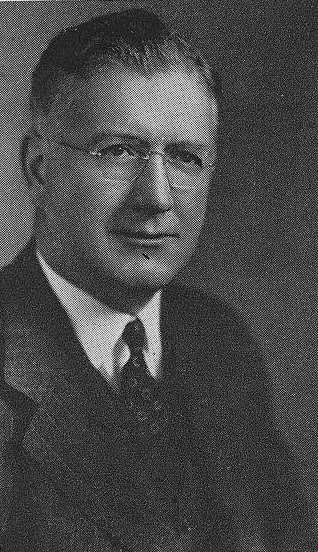
Historical · U.S. House · New York · District 23
Walter Lynch
Former U.S. Representative · New York District 23 · 1939–1951 · Democratic
Walter Lynch represented New York's District 23 in the United States House of Representatives (1939–1951) for the Democratic party. The page below collects sourced biographical facts, term history, committee roles, and provenance for Lynch.
Bioguide ID: L000537
Key facts
- Full name
- Walter Lynch
- State
- New York
- District
- District 23
- Party
- Democratic
- House service
- 1939–1951
- First House term
- 1939
- Status
- Left office
- Current term ends
- —
- Born
- 1894
- Bioguide ID
- L000537
- Committee assignments
- —
- Dataset version
- 1.20260605
Biographical narrative
874 words · sourced from the Wikipedia REST extract
Walter Lynch was an American lawyer and politician who served as a U.S. Representative for New York's 23rd congressional district from 1940 to 1951. A member of the Democratic Party, Lynch was elected to six consecutive terms in the House of Representatives, where he participated in significant legislative activities during a transformative period in American history. His career also included a brief candidacy for governor of New York and a later role as a judge on the New York Supreme Court.
Early life and career
Walter Aloysius Lynch was born on July 7, 1894. He grew up in New York City, where he received his early education at Fordham Preparatory School. Following his secondary education, Lynch pursued higher education at Fordham University, graduating in 1915. He continued his studies at Fordham Law School, from which he graduated in 1918. After completing his legal education, Lynch began practicing law in New York City, establishing himself in the legal community.
In addition to his legal practice, Lynch's early career included public service. In 1930, he served as a temporary magistrate in New York City, a position that provided him with valuable experience in the judicial system and public administration. His involvement in civic matters extended to the political arena, where he was a delegate to New York's state constitutional convention in 1938. This role allowed him to engage with significant issues affecting the state and to contribute to the shaping of New York's governance.
House tenure
Walter Lynch's congressional career began when he was elected to the 76th United States Congress in a special election held on February 20, 1940. This election was necessitated by the death of the previous incumbent, Edward W. Curley. Lynch's election marked the beginning of a significant political career in the U.S. House of Representatives, where he would serve for over a decade. Following his initial election, he was re-elected to five additional terms, serving continuously until January 3, 1951. Throughout his tenure, Lynch was involved in various legislative activities, contributing to the discussions and decisions that shaped national policy during a critical period marked by World War II and its aftermath.
During his time in Congress, Lynch participated in the Democratic National Conventions of 1944 and 1948, where he played a role in shaping the party's platform and supporting its candidates. His involvement in these conventions underscored his commitment to the Democratic Party and his influence within its ranks. Lynch's legislative work was characterized by a focus on issues pertinent to his constituents in New York, as well as broader national concerns.
Legislative focus and committees
While specific details regarding Lynch's legislative initiatives and committee assignments are not provided, it can be inferred that, as a member of the House of Representatives during a time of significant national and international change, his work would have encompassed a range of pressing issues. The years of his service included the challenges of World War II, the post-war recovery, and the beginnings of the Cold War. Members of Congress during this period were often engaged in discussions related to foreign policy, economic recovery, civil rights, and social welfare programs.
Lynch's role as a Congressman would have required him to navigate complex legislative processes and collaborate with colleagues from both parties to advance the interests of his district and the nation. His background in law likely informed his approach to legislative matters, as he would have been accustomed to analyzing legal frameworks and advocating for policy changes.
In 1950, Lynch sought to expand his political career by running for governor of New York as the Democratic nominee. However, he faced a challenging election against the incumbent Republican governor, Thomas E. Dewey, and was ultimately defeated. This loss marked a significant moment in Lynch's political trajectory, but it did not end his public service.
Following his congressional tenure, Lynch continued to be active in New York politics. In 1952, he was appointed as the chairman of the New York State Democratic Committee, a position that allowed him to influence party strategy and support Democratic candidates across the state. His leadership in this role demonstrated his ongoing commitment to the Democratic Party and his desire to shape its future direction.
In 1954, Lynch was elected to the New York Supreme Court, where he served until his death in 1957. This judicial role marked a significant transition in his career, allowing him to apply his legal expertise in a new capacity. His tenure on the bench was characterized by a commitment to justice and the rule of law, reflecting his long-standing dedication to public service.
Lynch's personal life included his marriage to Claire Rosemary Mitchell in 1920. Together, they had two sons, Walter A. Lynch Jr. and John Joseph Lynch. The family maintained a presence in New York, and Lynch's personal and professional lives were intertwined with the community he served.
Walter Lynch passed away on September 10, 1957, at his summer home in Belle Harbor, Queens. His contributions to New York and the nation were recognized posthumously, and he was laid to rest at Gate of Heaven Cemetery in Hawthorne, New York. His legacy as a public servant, lawyer, and judge continues to be remembered in the context of New York's political history.
Notable legislation
Sponsored and co-sponsored legislation for Walter Lynch is pending operator curation. The biographical narrative above carries the same provenance trail until per-bill rows are written.
Sources
- [1]https://en.wikipedia.org/wiki/Walter_A._LynchWikipedia · retrieved 2026-06-05
Notable quotes
Sourced quotes for Walter Lynch are pending operator curation. Narrative-scope provenance remains attached below.
Sources
- [1]https://en.wikipedia.org/wiki/Walter_A._LynchWikipedia · retrieved 2026-06-05
Key positions
Curated policy positions for Walter Lynch are pending operator review. The biographical narrative above carries the same provenance trail until per-topic positions are written.
Sources
- [1]https://en.wikipedia.org/wiki/Walter_A._LynchWikipedia · retrieved 2026-06-05
Terms served
- 1939–1941U.S. House · Term 1 · Democratic
- 1941–1943U.S. House · Term 2 · Democratic
- 1943–1945U.S. House · Term 3 · Democratic
- 1945–1947U.S. House · Term 4 · Democratic
- 1947–1949U.S. House · Term 5 · Democratic
- 1949–1951U.S. House · Term 6 · Democratic
Sources & provenance
Every attributable claim above carries a per-section [N] marker that resolves to the corresponding URL below. Each entry records the upstream provider, the canonical URL, and the timestamp at which the source was retrieved by the ingest pipeline.
Key facts
- https://bioguide.congress.gov/search/bio/L000537bioguide · retrieved 2026-06-05
- https://www.govtrack.us/congress/members/407021govtrack · retrieved 2026-06-05
Biographical narrative
- https://en.wikipedia.org/wiki/Walter_A._Lynchwikipedia · retrieved 2026-06-05
Find your representative
Every U.S. state elects representatives by district. Browse New York’s delegation, the full former-representative roster, or explore the role and term length.
Related on The Candidate
- Preceded by Frank OliverEarlier holder of the New York District 23 House seat · Democratic.Open
- Succeeded by Samuel StrattonLater holder of the New York District 23 House seat · Democratic.Open
- Abel HuntingtonFormer U.S. Representative · New York District 1 · JacksonOpen
- Alfred ChapinFormer U.S. Representative · New York District 1 · DemocraticOpen
- Cadwallader ColdenFormer U.S. Representative · New York District 1 · FederalistOpen
- Charles FloydFormer U.S. Representative · New York District 1 · DemocraticOpen