
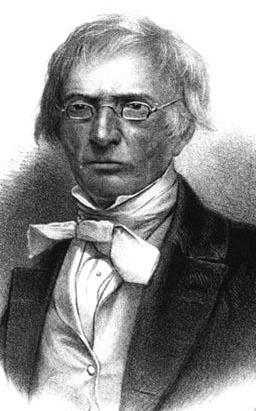
Historical · U.S. House · New York · District 23
Victory Birdseye
Former U.S. Representative · New York District 23 · 1815–1843 · Whig
Victory Birdseye represented New York's District 23 in the United States House of Representatives (1815–1843) for the Whig party. The page below collects sourced biographical facts, term history, committee roles, and provenance for Birdseye.
Bioguide ID: B000484
Key facts
- Full name
- Victory Birdseye
- State
- New York
- District
- District 23
- Party
- Whig
- House service
- 1815–1843
- First House term
- 1815
- Status
- Left office
- Current term ends
- —
- Born
- 1782
- Bioguide ID
- B000484
- Committee assignments
- —
- Dataset version
- 1.20260606
Biographical narrative
861 words · sourced from the Wikipedia REST extract
Victory Birdseye was an American politician who served as a U.S. Representative for New York's 23rd congressional district. A member of the Whig Party, Birdseye's congressional career spanned two terms, during which he was involved in various legislative activities and public service roles. His life and career were marked by significant contributions to both local and national politics, as well as a commitment to legal practice and community service.
Early life and career
Victory Birdseye was born on December 25, 1782, in Cornwall, Litchfield County, Connecticut. He received his early education in the public schools of Cornwall before pursuing higher education at Williams College, from which he graduated in 1804. Following his graduation, Birdseye studied law and was admitted to the bar in 1807. He began his legal career in partnership with Daniel Wood, Esquire, in Pompey Hill, New York, where he practiced until 1814.
In 1813, Birdseye married Electa Beebee, a resident of Pompey. The couple had a daughter, Ellen Douglas Birdseye, who later married Charles Augustus Wheaton, an abolitionist known for his efforts in the anti-slavery movement. Birdseye's legacy continued through his great-grandson, Clarence Birdseye, who is credited with developing the process for freezing food and establishing Birds Eye Frozen Foods.
Birdseye's early career was not limited to law; he also engaged in various public service roles. He served as the Postmaster of Pompey Hill from 1817 to 1838 and was the District Attorney of Onondaga County from 1818 to 1833. His involvement in local governance extended to the New York State Constitutional Convention of 1821, where he contributed to the shaping of state laws and policies. Additionally, he was elected to the New York State Assembly representing Onondaga County in 1823 and later served in the New York State Senate in 1827.
Birdseye's legal expertise was further demonstrated when he acted as special counsel in the prosecution of individuals involved in the alleged abduction of William Morgan. Morgan's disappearance, which was linked to his threats to expose the secrets of the Freemasons, ignited significant anti-Masonic sentiments across the United States and contributed to the formation of the Anti-Masonic Party.
House tenure
Victory Birdseye's political career at the federal level began when he was elected as a Democratic-Republican to the 14th United States Congress. He served as a U.S. Representative for New York's 19th congressional district from March 4, 1815, to March 3, 1817. During this initial term, Birdseye participated in legislative discussions and contributed to the political landscape of the early 19th century.
After a period of local service and involvement in state politics, Birdseye returned to the national stage as a member of the Whig Party. He was elected to the 27th United States Congress, representing New York's 23rd congressional district from March 4, 1841, to March 3, 1843. His tenure in the House of Representatives was characterized by his engagement in various legislative matters, although specific details regarding the bills he supported or opposed are not documented.
Following the conclusion of his second term in Congress, Birdseye resumed his legal practice, continuing to contribute to his community and the field of law. His experiences in Congress and local governance provided him with a broad perspective on the challenges and opportunities facing his constituents.
Legislative focus and committees
Throughout his political career, Victory Birdseye demonstrated a commitment to issues of justice and civil rights. One of his notable legislative achievements occurred during his time in the New York State Assembly, where he drafted and advocated for a bill aimed at rescuing New York State citizens who had been kidnapped and sold into slavery. This legislation was significant in the context of the growing abolitionist movement in the United States and reflected Birdseye's dedication to addressing social injustices.
The bill he championed ultimately contributed to the restoration of freedom for Solomon Northup, a man who had been enslaved in Louisiana. This case highlighted the importance of legal protections for individuals at risk of being exploited and underscored Birdseye's role in advancing civil rights during a tumultuous period in American history.
In addition to his legislative focus on civil rights, Birdseye's involvement in the New York State Senate and Assembly allowed him to engage with a variety of issues affecting his constituents. His experience as a lawyer and public servant informed his understanding of the legal and social challenges facing the community, enabling him to advocate effectively for policies that aligned with the needs of his district.
Birdseye's contributions to the legislative process were shaped by his experiences in both state and federal government, where he navigated the complexities of political life in the early 19th century. His dual roles as a legislator and legal practitioner provided him with a unique vantage point from which to address pressing issues of his time.
Victory Birdseye passed away on September 16, 1853, in Pompey, Onondaga County, New York. He was laid to rest at the Pompey Hill Cemetery, leaving behind a legacy of public service and a commitment to justice that resonated through his various roles in government and law. His life reflects the evolving political landscape of the United States during a formative period in its history.
Notable legislation
Sponsored and co-sponsored legislation for Victory Birdseye is pending operator curation. The biographical narrative above carries the same provenance trail until per-bill rows are written.
Sources
- [1]https://en.wikipedia.org/wiki/Victory_BirdseyeWikipedia · retrieved 2026-06-06
Notable quotes
Sourced quotes for Victory Birdseye are pending operator curation. Narrative-scope provenance remains attached below.
Sources
- [1]https://en.wikipedia.org/wiki/Victory_BirdseyeWikipedia · retrieved 2026-06-06
Key positions
Curated policy positions for Victory Birdseye are pending operator review. The biographical narrative above carries the same provenance trail until per-topic positions are written.
Sources
- [1]https://en.wikipedia.org/wiki/Victory_BirdseyeWikipedia · retrieved 2026-06-06
Terms served
- 1815–1817U.S. House · Term 1 · Republican
- 1841–1843U.S. House · Term 2 · Whig
Sources & provenance
Every attributable claim above carries a per-section [N] marker that resolves to the corresponding URL below. Each entry records the upstream provider, the canonical URL, and the timestamp at which the source was retrieved by the ingest pipeline.
Key facts
- https://bioguide.congress.gov/search/bio/B000484bioguide · retrieved 2026-06-06
- https://www.govtrack.us/congress/members/401465govtrack · retrieved 2026-06-06
Biographical narrative
- https://en.wikipedia.org/wiki/Victory_Birdseyewikipedia · retrieved 2026-06-06
Find your representative
Every U.S. state elects representatives by district. Browse New York’s delegation, the full former-representative roster, or explore the role and term length.
Related on The Candidate
- Succeeded by Orville RobinsonLater holder of the New York District 23 House seat · Democratic.Open
- Abel HuntingtonFormer U.S. Representative · New York District 1 · JacksonOpen
- Alfred ChapinFormer U.S. Representative · New York District 1 · DemocraticOpen
- Cadwallader ColdenFormer U.S. Representative · New York District 1 · FederalistOpen
- Charles FloydFormer U.S. Representative · New York District 1 · DemocraticOpen
- Representatives from New YorkEvery former U.S. Representative who has represented New York.Open