
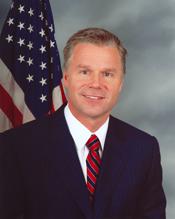
Historical · U.S. House · New York · District 26
Christopher Lee
Former U.S. Representative · New York District 26 · 2009–2011 · Republican
Christopher Lee represented New York's District 26 in the United States House of Representatives (2009–2011) for the Republican party. The page below collects sourced biographical facts, term history, committee roles, and provenance for Lee.
Bioguide ID: L000568
Key facts
- Full name
- Christopher Lee
- State
- New York
- District
- District 26
- Party
- Republican
- House service
- 2009–2011
- First House term
- 2009
- Status
- Left office
- Current term ends
- —
- Born
- 1964
- Bioguide ID
- L000568
- Committee assignments
- —
- Dataset version
- 1.20260605
Biographical narrative
999 words · sourced from the Wikipedia REST extract
Christopher J. Lee is a former American politician who served as a Republican member of the United States House of Representatives for New York's 26th congressional district. His tenure in Congress began in January 2009 and concluded with his resignation on February 9, 2011. Lee's political career was marked by his conservative voting record and his involvement in various legislative initiatives, but it was ultimately overshadowed by a scandal that led to his resignation.
Early life and career
Christopher John Lee was born on April 1, 1964, in Tonawanda, New York. He grew up in a politically engaged family, which likely influenced his later career in politics. His father was involved in campaign finance for various political figures, including former U.S. Representative Jack Quinn, and his sister held a position in regional affairs for former Governor George Pataki. This familial background provided Lee with an early exposure to the political landscape of New York.
Lee pursued higher education at the University of Rochester, where he earned a Bachelor of Arts degree in economics and finance. He later obtained a Master of Business Administration from Chapman University in California. During his time at the University of Rochester, he was a member of the Psi Upsilon fraternity, which is known for fostering leadership and networking among its members.
Following his education, Lee entered the business world, initially working for Ingram Micro in Buffalo, New York. His tenure there ended controversially when he was fired for misconduct involving unauthorized access to customer accounts. After this incident, he relocated to California, where he took on a role as director of sales for Microtek. Lee eventually returned to New York in 1995 to join Enidine, Inc., a company founded by his father. Over the years, he held various positions within the company, including Pacific Rim sales manager and general manager, contributing to its growth into a global enterprise.
In 2003, Lee became the automation group president of International Motion Control (IMC), another company established by his father. He played a significant role in the acquisition of Evolutionary Concepts Inc., a solenoid valve firm, and continued to lead IMC until its sale to the ITT Corporation in 2007 for a substantial sum. In addition to his corporate responsibilities, Lee served as a director for the Patrick P. Lee Foundation, which focuses on raising awareness and funding for cancer and mental health initiatives in Western New York.
House tenure
Lee announced his candidacy for the Republican nomination for the United States House of Representatives in New York's 26th congressional district in April 2008. His campaign received strong backing from key figures within the Republican Party, including the retiring incumbent, Thomas M. Reynolds, and the state GOP Chairman, Stephen Minarik. Lee's candidacy was particularly appealing in an election year when the Republican Party sought candidates who could self-finance their campaigns. He successfully won the election and began his first term in Congress in January 2009.
During his time in the House, Lee was known for his conservative stance, aligning with the Republican Party approximately 93% of the time during his first term. He voted against several significant pieces of legislation, including the repeal of "Don't Ask, Don't Tell," the Lilly Ledbetter Fair Pay Act, and various health care reform bills. However, he also crossed party lines on certain issues, supporting measures to expand the State Children's Health Insurance Program, provide compensation to 9/11 responders, and enhance the nation's food safety system.
Lee's approach to fiscal policy was characterized by a commitment to budgetary conservatism. Despite this, he successfully secured approximately $29.7 million in federal earmarks for his district, which was more than the Democratic representatives in neighboring districts. He argued that earmarks could stimulate job growth and provide necessary funding for local projects, including a small arms practice range for an Air Reserve station and initiatives to support local defense contractors. Lee was a member of the House Republican Economic Group and the House Ways and Means Committee, where he advocated for tax reductions and support for small businesses.
In August 2010, Lee proposed a plan aimed at revitalizing manufacturing jobs in the United States. His proposal included lowering corporate tax rates, offering student loan forgiveness for graduates entering manufacturing fields, and implementing trade reforms to expand market access for American goods. Additionally, he was involved in discussions with online travel agencies to ensure compliance with regulations requiring transparency about regional airline operations.
Legislative focus and committees
Throughout his congressional career, Lee's legislative focus reflected his conservative values and commitment to fiscal responsibility. He was an active participant in the House Ways and Means Committee, where he worked on issues related to taxation and economic policy. His voting record demonstrated a blend of traditional conservative positions and pragmatic support for certain bipartisan initiatives.
Lee's involvement in earmarking funds for his district indicated a willingness to leverage federal resources for local benefit, despite the general Republican skepticism towards earmarks. He maintained that such funding was essential for promoting job creation and supporting local industries. His efforts to secure federal funding for various projects were part of a broader strategy to enhance economic development in his district.
In the wake of the tragic shooting of U.S. Representative Gabrielle Giffords in January 2011, Lee expressed concerns about gun safety and the need for thorough background checks to prevent access to firearms by individuals deemed unstable. This statement reflected a nuanced approach to a contentious issue, highlighting his awareness of the complexities surrounding gun legislation.
However, Lee's congressional career came to an abrupt end in February 2011 when he resigned following revelations of inappropriate conduct involving solicitation of sexual encounters through Craigslist. This incident not only led to his resignation but also marked a significant turning point in his political trajectory, overshadowing his legislative accomplishments and contributions during his time in office. Lee's departure from Congress serves as a reminder of the personal and professional consequences that can arise from public scrutiny and ethical considerations in political life.
Notable legislation
Sponsored and co-sponsored legislation for Christopher Lee is pending operator curation. The biographical narrative above carries the same provenance trail until per-bill rows are written.
Sources
- [1]https://en.wikipedia.org/wiki/Chris_Lee_(New_York_politician)Wikipedia · retrieved 2026-06-05
Notable quotes
Sourced quotes for Christopher Lee are pending operator curation. Narrative-scope provenance remains attached below.
Sources
- [1]https://en.wikipedia.org/wiki/Chris_Lee_(New_York_politician)Wikipedia · retrieved 2026-06-05
Key positions
Curated policy positions for Christopher Lee are pending operator review. The biographical narrative above carries the same provenance trail until per-topic positions are written.
Sources
- [1]https://en.wikipedia.org/wiki/Chris_Lee_(New_York_politician)Wikipedia · retrieved 2026-06-05
Terms served
- 2009–2011U.S. House · Term 1 · Republican
- 2011–2011U.S. House · Term 2 · Republican
Sources & provenance
Every attributable claim above carries a per-section [N] marker that resolves to the corresponding URL below. Each entry records the upstream provider, the canonical URL, and the timestamp at which the source was retrieved by the ingest pipeline.
Key facts
- https://bioguide.congress.gov/search/bio/L000568bioguide · retrieved 2026-06-05
- http://chrislee.house.govhouse.gov · retrieved 2026-06-05
Biographical narrative
- https://en.wikipedia.org/wiki/Chris_Lee_(New_York_politician)wikipedia · retrieved 2026-06-05
Find your representative
Every U.S. state elects representatives by district. Browse New York’s delegation, the full former-representative roster, or explore the role and term length.
Related on The Candidate
- Preceded by Thomas ReynoldsEarlier holder of the New York District 26 House seat · Republican.Open
- Succeeded by Kathleen HochulLater holder of the New York District 26 House seat · Democratic.Open
- Abel HuntingtonFormer U.S. Representative · New York District 1 · JacksonOpen
- Alfred ChapinFormer U.S. Representative · New York District 1 · DemocraticOpen
- Cadwallader ColdenFormer U.S. Representative · New York District 1 · FederalistOpen
- Charles FloydFormer U.S. Representative · New York District 1 · DemocraticOpen