
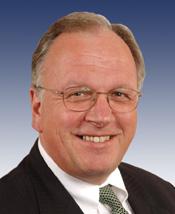
Historical · U.S. House · New York · District 26
Thomas Reynolds
Former U.S. Representative · New York District 26 · 1999–2009 · Republican
Thomas Reynolds represented New York's District 26 in the United States House of Representatives (1999–2009) for the Republican party. The page below collects sourced biographical facts, term history, committee roles, and provenance for Reynolds.
Bioguide ID: R000569
Key facts
- Full name
- Thomas Reynolds
- State
- New York
- District
- District 26
- Party
- Republican
- House service
- 1999–2009
- First House term
- 1999
- Status
- Left office
- Current term ends
- —
- Born
- 1950
- Bioguide ID
- R000569
- Committee assignments
- —
- Dataset version
- 1.20260605
Biographical narrative
949 words · sourced from the Wikipedia REST extract
Thomas M. Reynolds is a former American politician who served as a U.S. Representative for New York's 26th congressional district. A member of the Republican Party, Reynolds held office from 1999 until his retirement in 2009. Over his five terms in Congress, he was known for his conservative voting record and his leadership role as chairman of the National Republican Congressional Committee during a pivotal election cycle. His tenure was marked by significant political events, including the redistricting of his congressional seat and the controversies surrounding the House page scandal.
Early life and career
Thomas M. Reynolds was born on September 3, 1950, in Bellefonte, Pennsylvania. He graduated from the Springville-Griffith Institute, a local high school, and later served in the New York Air National Guard from 1970 to 1976. His early involvement in politics began in 1974 when he was elected to the town board of Concord, New York. This initial foray into public service laid the groundwork for a lengthy political career.
In 1982, Reynolds was elected to the Erie County legislature, where he continued to build his political profile. His ascent in local politics continued as he became a member of the New York State Assembly, representing the 147th district from 1989 to 1998. During his time in the Assembly, he participated in five consecutive legislative sessions and served as the Minority Leader from June 1995 until March 1998. His leadership role in the Assembly further established his reputation within the Republican Party in New York.
Reynolds's political career was characterized by a commitment to conservative principles, which would later define his actions in Congress. His experience at various levels of government provided him with a solid foundation for his subsequent run for the U.S. House of Representatives.
House tenure
Reynolds entered the U.S. House of Representatives after winning the election in 1998. He succeeded Bill Paxon, who had stepped down from his leadership position amid controversy. Reynolds had previously managed several of Paxon's campaigns, which contributed to his endorsement as Paxon’s successor. However, his candidacy was not without its challenges; he faced scrutiny due to the fact that his residence was located outside the district he sought to represent. It was only after the election that he moved into the district, purchasing a home in Clarence, New York.
During his time in the House, Reynolds served on the Ways and Means Committee, which is one of the most influential committees in Congress, overseeing issues related to taxation and revenue. He was also a member of the Subcommittee on Select Revenue Measures and the Subcommittee on Trade. His committee assignments allowed him to play a significant role in shaping fiscal policy and trade legislation.
Reynolds was re-elected multiple times, navigating the complexities of redistricting and changing political landscapes. In 2000, a proposed redistricting plan threatened to make his district more favorable to Democratic candidates. To counter this, Reynolds and his allies sought to redraw the district lines to better secure his position, resulting in a district that allowed him to maintain a conservative voting record. He was re-elected in 2002 and again in 2004, though his margins of victory varied. His 2004 campaign against Jack Davis was particularly competitive, with Reynolds winning by a narrower margin than in previous elections.
In 2006, Reynolds faced Davis once more, winning by a smaller percentage amid the backdrop of the Mark Foley page scandal, which had implications for the Republican leadership in Congress. The scandal, which involved allegations against fellow Republican Mark Foley, created a challenging environment for Reynolds and his party.
As his time in Congress drew to a close, Reynolds announced in March 2008 that he would not seek a sixth term. His decision was influenced by various factors, including the fallout from the Foley scandal and financial irregularities involving the National Republican Congressional Committee, which he had chaired. Despite the controversies, Reynolds left office with a legacy shaped by his conservative positions and leadership roles.
Legislative focus and committees
Throughout his congressional career, Thomas M. Reynolds maintained a conservative voting record, earning an 83 percent rating from the American Conservative Union. This rating positioned him among the most conservative members of the New York delegation in Congress. His alignment with conservative principles was evident in his legislative priorities and committee work.
Reynolds's role as chairman of the National Republican Congressional Committee from 2003 to 2006 was a significant aspect of his tenure. Under his leadership, the committee experienced both successes and setbacks. In the 2004 elections, the Republicans gained seats, enhancing their majority in the House. However, the 2006 elections resulted in a substantial loss of seats for the Republican Party, leading to a shift in control to the Democrats.
The controversies surrounding Reynolds's leadership were compounded by the House page scandal, which involved allegations against Mark Foley. Reynolds's involvement in the matter drew scrutiny, particularly regarding his communications with other Republican leaders about the allegations. While he was cleared of any wrongdoing by the House Committee on Standards of Official Conduct, the scandal nonetheless affected his political standing and contributed to his decision to retire.
After leaving Congress, Reynolds transitioned into a lobbying career, joining the firm Holland and Knight as a senior policy advisor in 2017. His experience in public service and legislative affairs positioned him well for this new role, allowing him to continue influencing policy from outside the legislative branch.
In summary, Thomas M. Reynolds's political career was marked by a commitment to conservative values, significant leadership roles, and a complex legacy shaped by both achievements and controversies. His time in the U.S. House of Representatives reflected the challenges and dynamics of American politics in the early 21st century.
Notable legislation
Sponsored and co-sponsored legislation for Thomas Reynolds is pending operator curation. The biographical narrative above carries the same provenance trail until per-bill rows are written.
Sources
- [1]https://en.wikipedia.org/wiki/Thomas_M._ReynoldsWikipedia · retrieved 2026-06-05
Notable quotes
Sourced quotes for Thomas Reynolds are pending operator curation. Narrative-scope provenance remains attached below.
Sources
- [1]https://en.wikipedia.org/wiki/Thomas_M._ReynoldsWikipedia · retrieved 2026-06-05
Key positions
Curated policy positions for Thomas Reynolds are pending operator review. The biographical narrative above carries the same provenance trail until per-topic positions are written.
Sources
- [1]https://en.wikipedia.org/wiki/Thomas_M._ReynoldsWikipedia · retrieved 2026-06-05
Terms served
- 1999–2001U.S. House · Term 1 · Republican
- 2001–2003U.S. House · Term 2 · Republican
- 2003–2005U.S. House · Term 3 · Republican
- 2005–2007U.S. House · Term 4 · Republican
- 2007–2009U.S. House · Term 5 · Republican
Sources & provenance
Every attributable claim above carries a per-section [N] marker that resolves to the corresponding URL below. Each entry records the upstream provider, the canonical URL, and the timestamp at which the source was retrieved by the ingest pipeline.
Key facts
- https://bioguide.congress.gov/search/bio/R000569bioguide · retrieved 2026-06-05
- http://reynolds.house.govhouse.gov · retrieved 2026-06-05
Biographical narrative
- https://en.wikipedia.org/wiki/Thomas_M._Reynoldswikipedia · retrieved 2026-06-05
Find your representative
Every U.S. state elects representatives by district. Browse New York’s delegation, the full former-representative roster, or explore the role and term length.
Related on The Candidate
- Preceded by David MartinEarlier holder of the New York District 26 House seat · Republican.Open
- Succeeded by Christopher LeeLater holder of the New York District 26 House seat · Republican.Open
- Abel HuntingtonFormer U.S. Representative · New York District 1 · JacksonOpen
- Alfred ChapinFormer U.S. Representative · New York District 1 · DemocraticOpen
- Cadwallader ColdenFormer U.S. Representative · New York District 1 · FederalistOpen
- Charles FloydFormer U.S. Representative · New York District 1 · DemocraticOpen